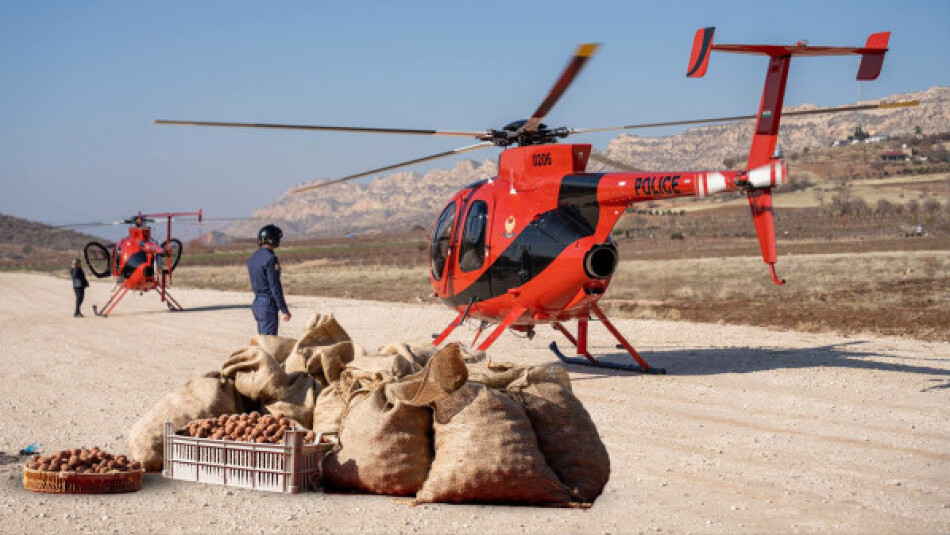
High above a historic town known as a homeland for Iraq’s Christians, a group of dedicated young men and women are undertaking a demanding mission in a rugged mountain range.
From a helicopter, they release clay balls packed with seeds, fertilizer, and nutrients. Their aim is to restore the barren mountain overlooking Alqush, which has gradually lost its greenery and now appears almost desert-like to residents.
The initiative, organized by the Zila organization with government backing, seeks to reforest Mount Alqosh, located 40 kilometers north of Mosul in Nineveh Province. The town, with thousands of years of history, was once a prominent commercial center.
Volunteers from Christian, Ezidi (Yazidi), and Muslim communities are working together to counter climate change and safeguard part of their city’s heritage by planting half a million seeds through this clay ball technique.
Saeed Yousef, 26, a Zila volunteer, explained: “This initiative aims to restore forests in the mountains surrounding Alqosh to protect us from desertification, air pollution, and the impacts of climate change.” The project is currently in progress.
The idea behind the clay balls
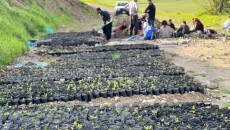
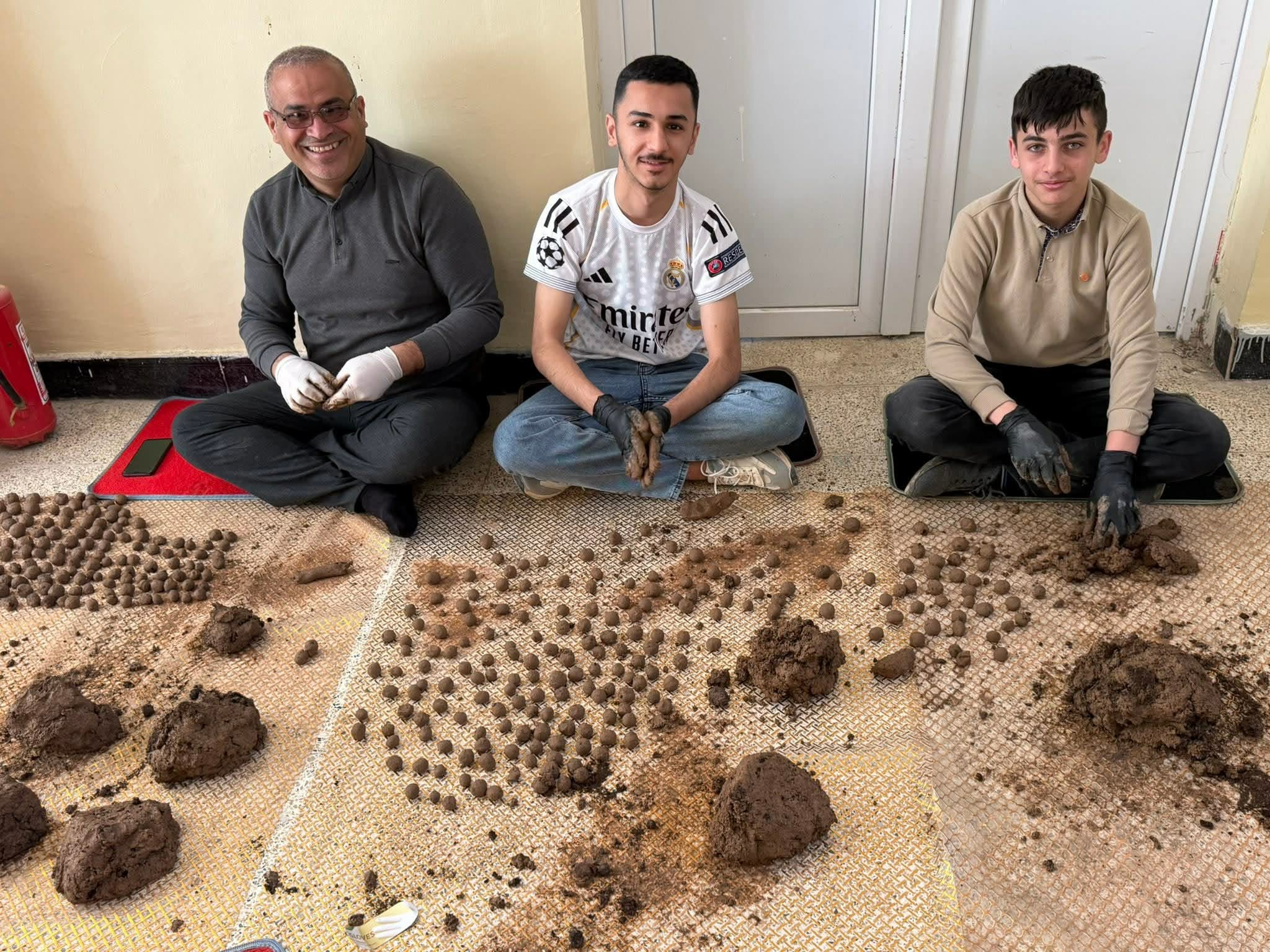
The work requires teamwork and determination. Volunteers collect large amounts of soil, mix it with water, and shape it into balls. Seeds are inserted into each ball, which is then coated with fertilizer and nutrients.
The seeds include mulberry, wild almond, pine, and terebinth—species suited to dry conditions, high temperatures, and mountainous terrain. Saeed noted, “After thoroughly kneading the clay and forming the balls, we ensure each one contains seeds.” He added that participants from different religious and ethnic backgrounds share the belief that these small clay spheres will one day grow into large trees, a hope that keeps them motivated despite the physical strain.
Before 2014, prior to the ISIS conflict, Alqosh had a population of about 62,000. Many residents, particularly Christians, later emigrated to Europe and the United States.
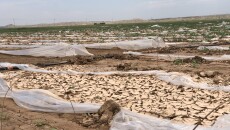
Located in a conflict-affected region, Alqosh has endured years of instability. Its environment—characterized by semi-mountainous and plains climates—has faced shrinking green areas and increasing pollution over the past decade.
Lara Yousef Ishaq, from the Chaldean community and the campaign’s supervisor, told Kirkuk Now, “Our ambition is not limited to planting a few trees. We want to create a fundamental environmental transformation in the region.”
Why Mount Alqosh?
The Alqosh sub-district includes 34 villages and three settlements and falls administratively under Tel Keif District in the Nineveh Plain. Years of displacement during ISIS control and declining rainfall have significantly reduced vegetation cover.
Lara explained that Mount Alqosh was selected because its climate influences the broader surrounding area. Additionally, its difficult terrain makes it less accessible, reducing the likelihood of human damage to new trees.
According to United Nations data, Iraq ranks among the five countries most severely affected by climate change, facing drought, rising temperatures, pollution, and other environmental challenges. More than 20,000 Iraqis have reportedly been displaced due to drought alone.
Helicopters speed up the effort
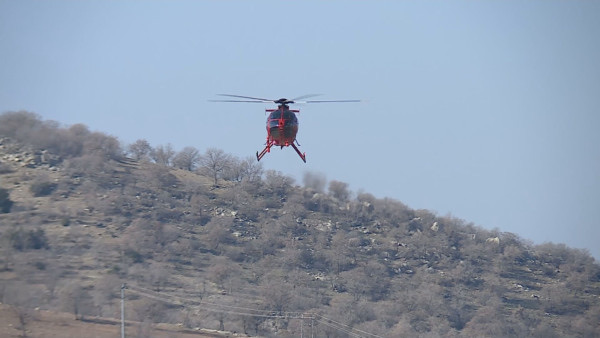
Given the steep and rocky landscape of Mount Alqosh, helicopters are used to distribute the clay balls efficiently.
“The clay coating protects the seeds from heat, drought, and birds until rainfall allows them to germinate,” Lara said. She added that the campaign does not end with scattering seeds. Teams of environmental and agricultural specialists monitor the mountain each season to track growth and progress.
“We trust nature,” Lara concluded. “The seed varieties we chose are resilient and capable of adapting to local climate conditions.”
For residents like 36-year-old Mina Razouki, the mountain holds deep emotional significance. “Mount Alqosh is not just stone to us—it’s part of our identity,” she said. “Our region suffers from environmental decline. Summers are extremely hot, and forests would help cool the climate and reduce dust reaching our homes.”