

By Rozhgar Abdullah
By Rozhgar Abdullah
Rwnak Rasul endured years of worry and hardship before discovering a way to help her three deaf daughters learn to speak—at a time when she had nearly given up hope of ever hearing their voices.
Married in 1999, Rwnak comes from the village of Galnaghaj in the Aghjaler area of Chamchamal district, Sulaymaniya northern province. She is the mother of five children—three daughters and two sons—and became determined to teach her born-deaf daughters to communicate through lip movements.
Her eldest daughter, Shawgar, was born in 2001. For the first two years, the family did not realize she was deaf until her mother in law pointed it out. This marked the beginning of Rwnak’s emotional struggle. While pregnant with her second child, she feared the same condition might occur again. Sadly, her fears were confirmed when her second daughter was also born deaf.
Although the family initially decided not to have more children, encouragement from others led Rwnak to have a third daughter, Nigar, in 2007—who was also deaf. Medical reports later confirmed that all three girls had complete hearing loss.
“We decided not to have any more children, but people kept saying God is merciful, so I gave birth to my daughter Nigar in 2007, who was also deaf.”
Despite these challenges, Rwnak remained determined. When Shawgar turned ten, she took her to a childcare center for speech training. There, a Korean doctor reassured her that deaf children could learn to speak with proper training. His confidence inspired Rwnak, who then committed herself fully to helping her daughters develop speech.
According to the medical report, Rwnak Rasul's three daughters have 100 percent hearing loss.
One step and perseverance
In 2010, Shawgar underwent cochlear implant surgery and began using hearing aids, followed by speech therapy. With guidance from the doctor, Rwnak practiced daily exercises with her daughters, focusing on lip movement instead of sign language. She would point to objects, touch them, and clearly pronounce their names, gradually helping them connect words with meaning.
“I just moved my mouth and didn't use sign language. I started with their body parts. For example, I would put my hand on their hair and say hair. I used to touch things and use my mouth to mention the names like tea or the bowl.”
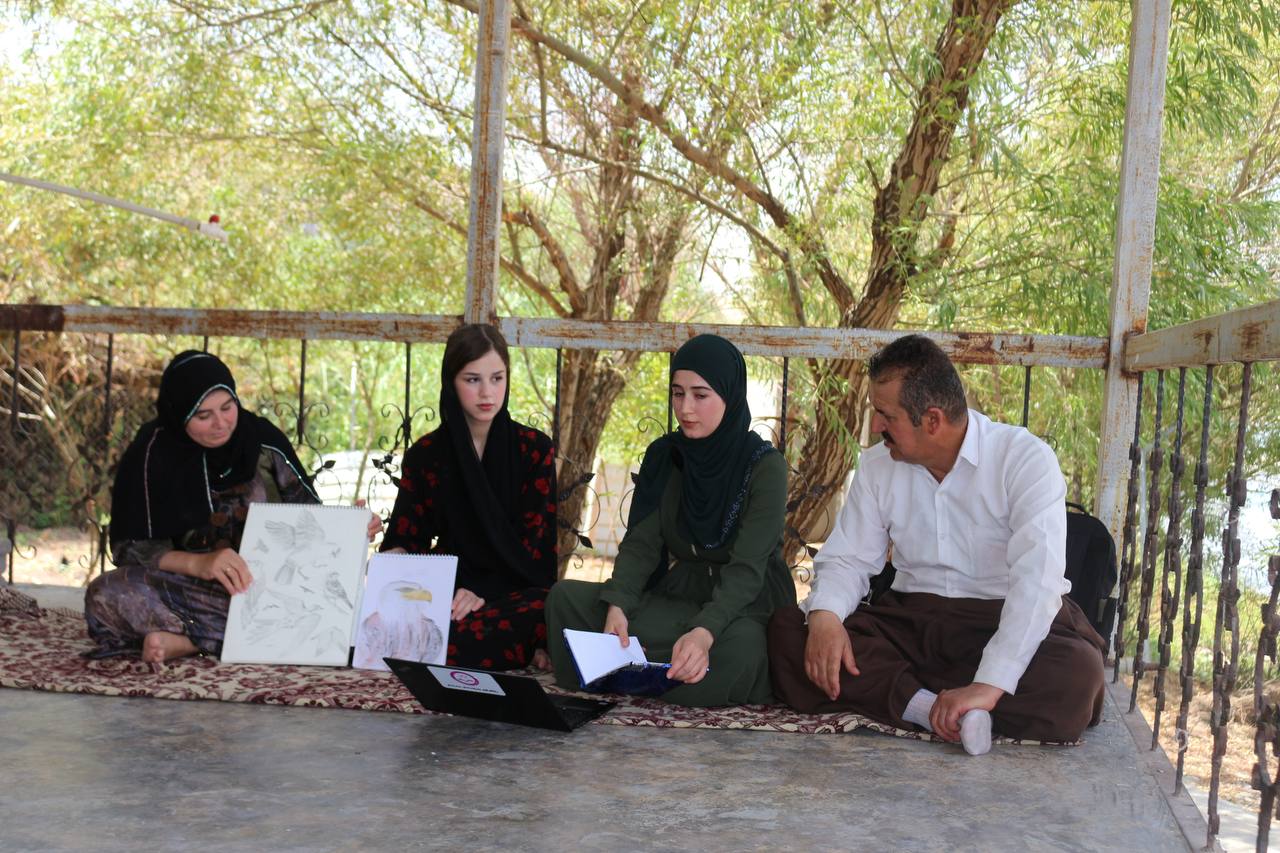
Shawgar and Nigar with their parents in Galnaghaj village. Rozhgar Abdullah
After six months, Rwnak returned to the center and amazed the doctor with her daughters’ progress. He praised her dedication and the results she had achieved.
According to Mohammed Nawzad, a speech and language pathologist, "no deaf person will learn to speak until he/she has his hearing restored through surgery.”
Over time, the girls overcame many obstacles. Initially, they struggled socially and found it difficult to communicate, but supportive teachers helped them continue their education.
“No one would mix with us, only with my sisters but the teachers were very helpful."
Shawgar went on to study business administration at Chamchamal Technical Institute, while her sister Sumaya completed school up to the seventh grade before starting a family.
All three daughters eventually learned to speak, a milestone that brought great joy to their family. Meanwhile, Rwnak’s two sons, born later, did not experience hearing issues.
“My mother tried to teach us to speak by introducing things. For example, if she closed the door, she would say this is the door. Close it,” Shawgar recalls. “She would introduce us and say this is an orange and we gradually learned to talk.”
Hearing loss did not hinder progress
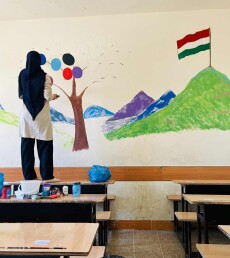
Shawgar developed a passion for art, particularly painting and calligraphy, and even learned Arabic and English through watching films and reading. Her teachers recognized her talent, noting her creativity and artistic contributions to her school.
Medical experts explain that hearing loss affects about three in every 1,000 children. "The problem may be genetic, or due to meningitis, or a head injury that causes hearing loss," said the speech and language specialist.
"Some of them, especially those with allergic problems, will get better with cochlear implants or hearing aids, but those with auditory nerve problems will not get better with cochlear implants. There is another surgery that is not done in Iraq "Those who have undergone surgery in Kurdistan have generally had constipation problems and the surgery has been useful for them."