



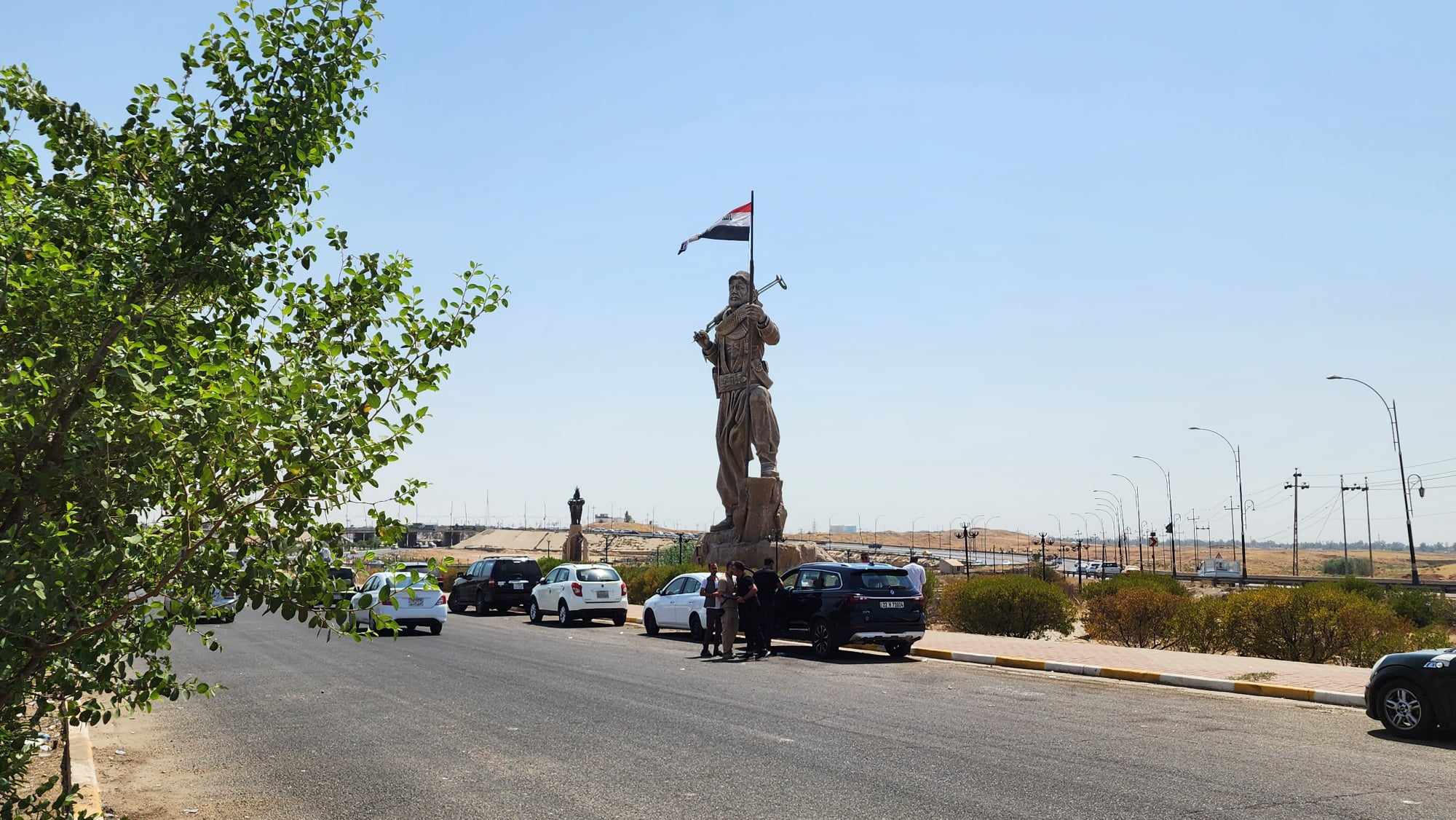
Once celebrated as a powerful symbol of bravery and endurance, the Peshmerga statue in Kirkuk has gradually become a source of political and social disagreement. The controversy centers on which flag should fly atop the monument—the Iraqi federal flag or the flag of the Kurdistan Region of Iraq KRI.
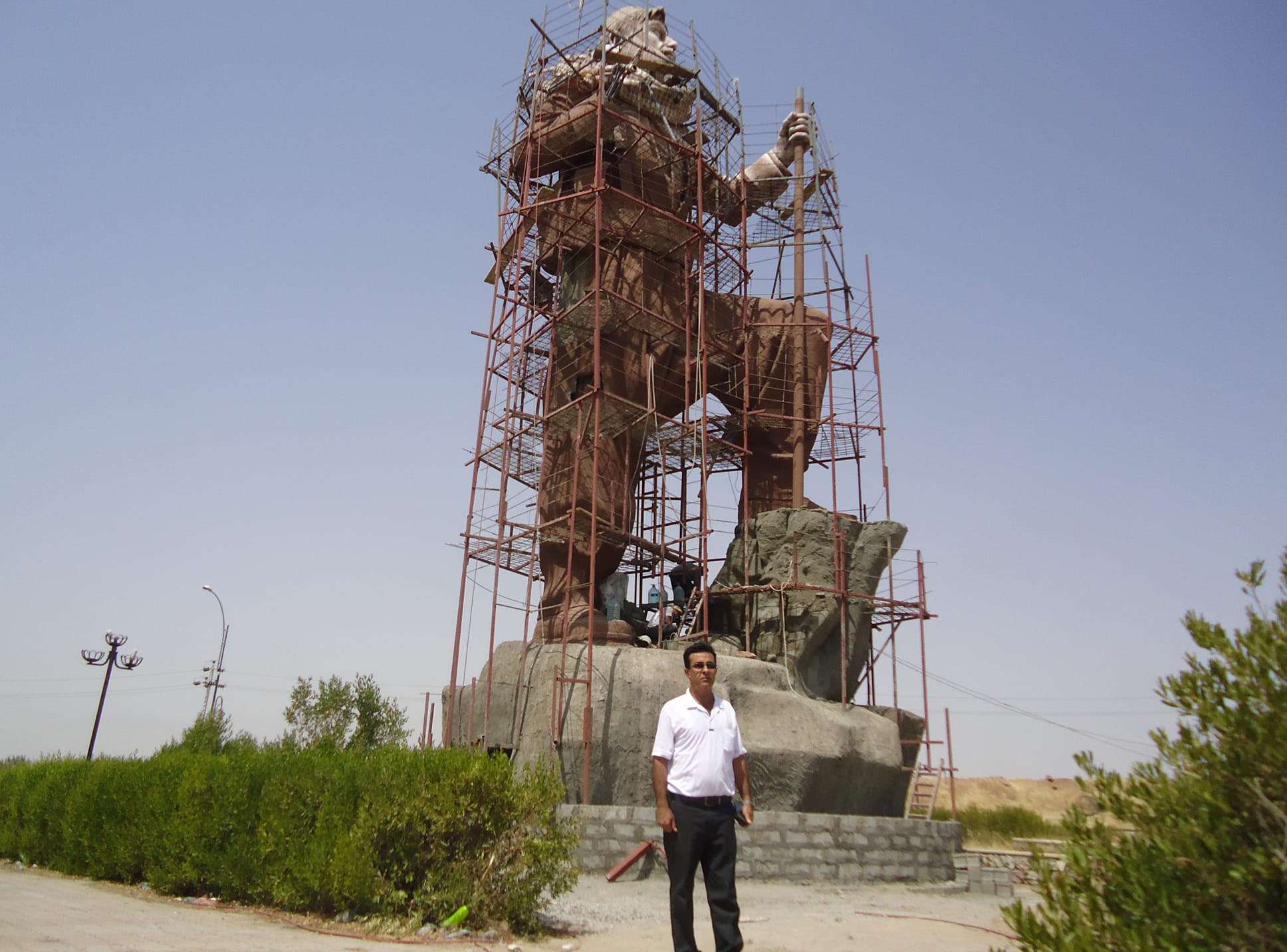
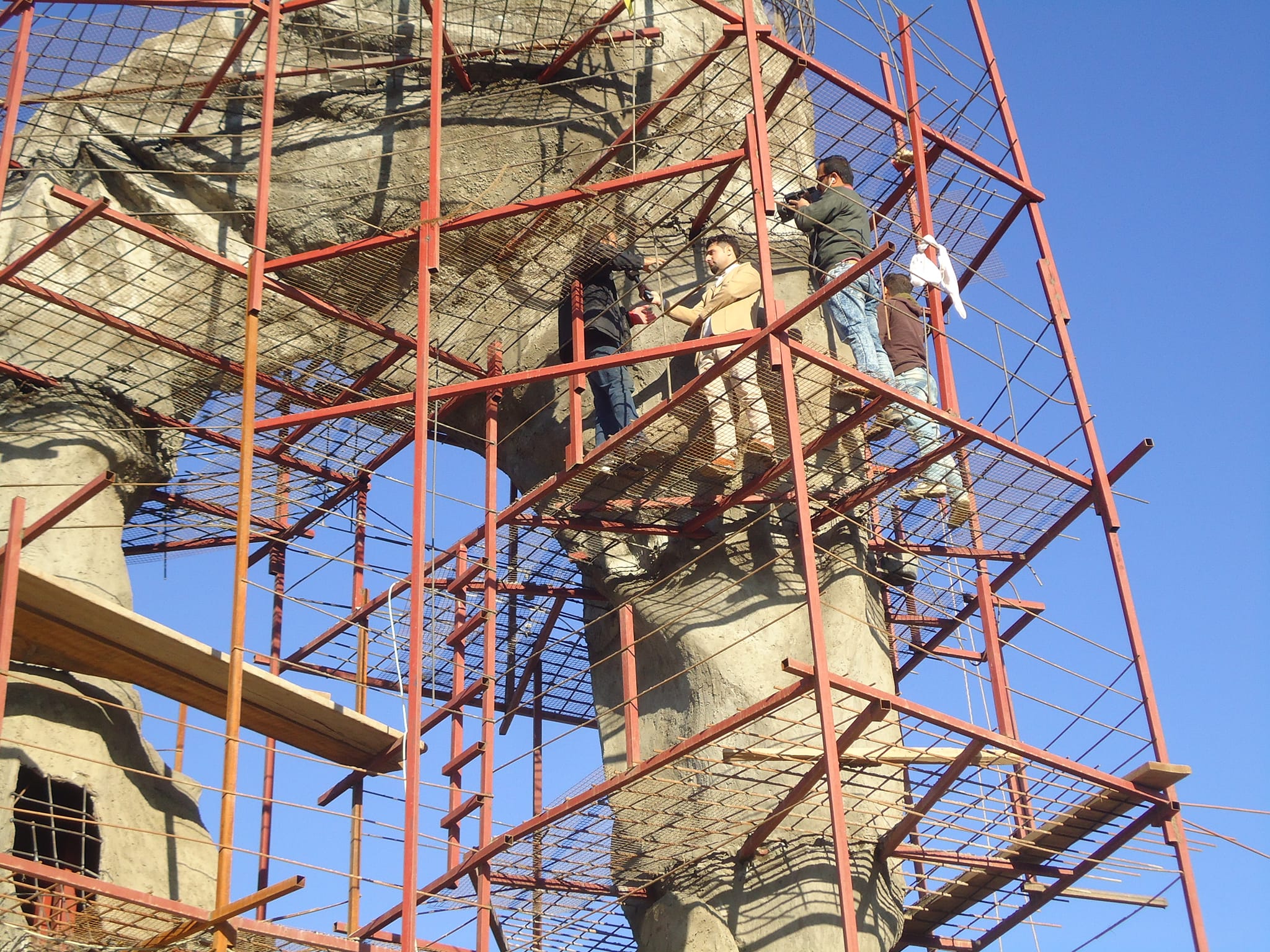
Standing 23 meters tall and stretching 10 meters wide, the statue is regarded as the largest warrior monument in Iraq. Built on a 15-square-meter base, it portrays a Peshmerga fighter dressed in traditional Kurdish attire and originally holding the Kurdistan Region flag. The monument was erected at the entrance of Kirkuk along the main road connecting the city to Erbil, honoring the Peshmerga forces for their role in defending Kirkuk against the threats by the extremist militants of the Islamic State of Iraq and Syria ISIS.
The statue’s construction took place during one of the city’s most critical periods. Between 2014 and 2017, ISIS militants controlled nearly one-third of Kirkuk province. In June 2014, the Iraqi army withdrew from large areas of Nineveh and Kirkuk, prompting Peshmerga forces aligned with the Kurdistan Regional Government KRG to step in and halt the militants’ advance.
Sculptor Man Ahmed Hamid Dalo began working on the monument in 2015 with a team of six individuals. Funded by several well-known figures from Kirkuk, including Ramadan Haji Rashid, the project was completed in September 2017.
The statue was built using concrete, iron, reinforced concrete, and fiberglass, at a total cost of 100 million Iraqi dinars. According to Dalo, its foundation extends three meters below ground level.
Originally, the statue showed the fighter holding the KRI flag in his left hand and a Kalashnikov rifle resting on his right shoulder. However, the Kurdistan flag remained in place for only one month. On October 17, 2017, following the return of Iraqi forces to Kirkuk and the withdrawal of the Peshmerga, the Kurdistan flag was removed and replaced with the Iraqi national flag. Since then, the monument has become a recurring point of tension, particularly among some of the city’s youth and security forces.
The debate resurfaced on Wednesday, December 17, 2025, coinciding with Kurdistan Flag Day. A group of young men from Kirkuk’s Rahimawa neighborhood attempted to remove the Iraqi flag and raise the Kurdistan flag on the statue. Security forces intervened, preventing the act and briefly detaining those involved.
The incident occurred amid broader Flag Day celebrations across the KRI and the disputed territories. Local authorities allowed Kurdish-language schools to organize special events, while flags appeared in markets, streets, and on vehicles throughout the city.
Speaking to Rudaw TV during the Flag Day ceremonies, Kirkuk Governor Rebwar Taha emphasized the need for coordination with the federal government to resolve the issue. “We must find a solution so that disagreements between communities do not interfere with our service projects,” he said, adding that the matter would be addressed in the near future.
The northern, oil-rich, ethnically mixed province of Kirkuk is home to about 1,77 million Arabs, Kurds, and Turkmen. Located 238 kilometers north of Baghdad, Kirkuk has long been at the center of disputes between the federal government in Baghdad and the Erbil-based Kurdistan Regional Government KRG.