


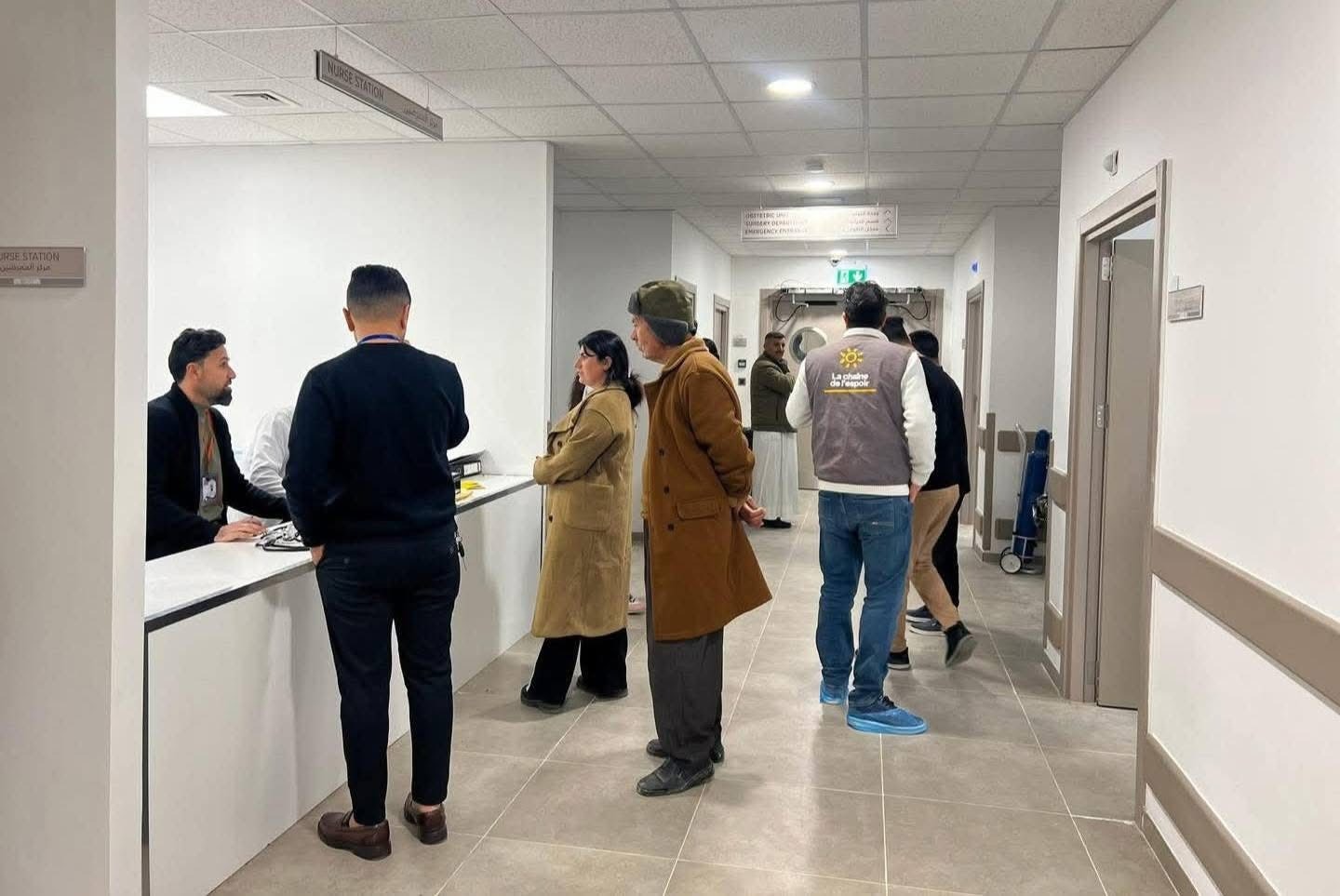

Residents of Shingal district, Nineveh Province are celebrating a major improvement in healthcare access with the inauguration of a 100-bed hospital on Monday, February 3, ending nearly a decade of hardship that forced patients to travel long distances for medical treatment.
The French Medical Center in Shingal, constructed on a 8-hectare site, officially began receiving patients after its construction started in 2022. The project was implemented by the French Organization Chain of Hope in cooperation with the Nadia Initiative and Iraq’s Ministry of Health MoH. Funding was provided by the Crisis and Support Centre (CDCS) of the French Ministry for Europe and Foreign Affairs, along with the European Union.
Hassan Khudida, a local resident from the Sinuny sub-district, expressed his relief at the hospital’s opening, saying that although it should have been completed earlier, it remains a significant and positive development.
“Residents will now be able to receive medical care in Shingal instead of traveling to cities such as Mosul or Dohuk.”
Health authorities in Shingal confirmed that the new hospital offers a range of medical services that were previously unavailable in the district. Khudida, who is a father of six, emphasized the need for experienced medical staff and adequate supplies of medicines to ensure effective treatment.
Only a month ago, Khudida had to travel 211 kilometers to Erbil so his son could undergo surgery. “The lack of specialist doctors in Shingal had long forced families to seek treatment in other cities, increasing both financial and physical strain. The hospital’s presence is vital for the community.”
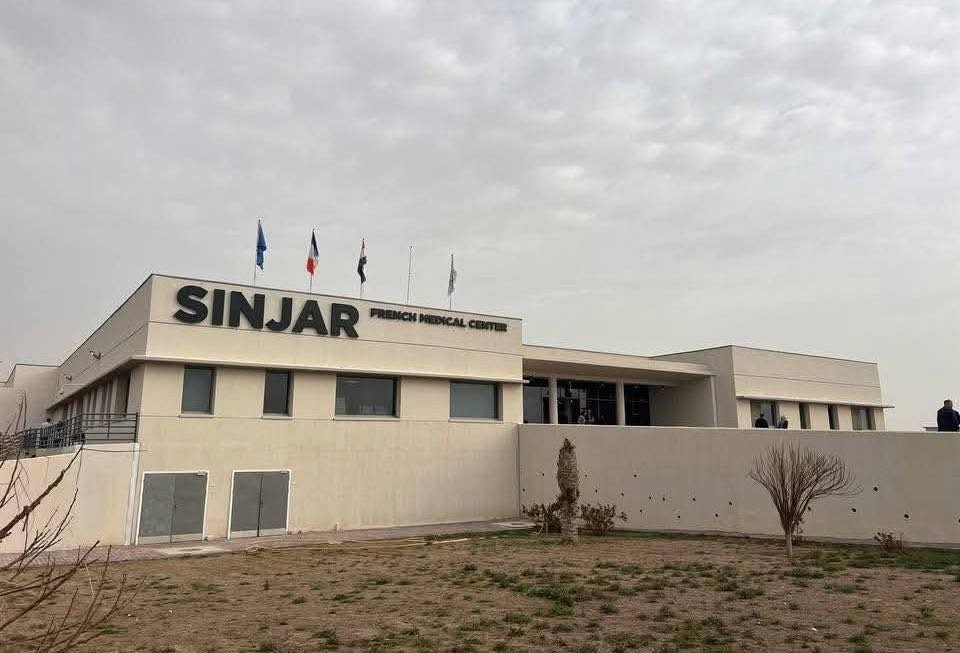
February 4, 2026: The opening of the French Hospital in Sinjar. Nineveh Health Department
Iraq’s healthcare sector, once regarded as one of the strongest in the region, is currently facing a deep and ongoing crisis. Hospitals suffer from inadequate infrastructure, shortages of medicines, and a lack of qualified medical personnel. Years of conflict, political instability, and the emigration of skilled professionals have severely weakened the system.
Following the political turmoil after 2003, a significant number of Iraqi doctors left the country. Estimates indicate that around 15,000 of the 52,000 registered physicians chose to migrate abroad, preferring opportunities for training and a better quality of life over long-term employment within the state system.
Shingal district, northwest of Mosul and home mainly to Ezidis (Yazidis), suffered extensive destruction in 2014 when the extremist militants of the Islamic State in Iraq and Syria ISIS swept through the area, devastating infrastructure and public services, including healthcare facilities.
The newly opened hospital includes multiple departments such as general surgery, cardiology, internal medicine, ophthalmology, ENT, urology, gynecology, orthopedics, emergency care, radiology, operating theaters, and administrative and data management units. Although construction was completed by the end of 2024, the hospital’s opening was delayed until February 2026 due to procedural requirements and the need for additional equipment.
Falah Hassan, media officer for the Nadia Murad Initiative NI, stated that all departments are now fully operational and serving the public. He highlighted that the hospital addresses a critical gap in Shingal ’s healthcare system by eliminating the need for residents to travel long distances for treatment.
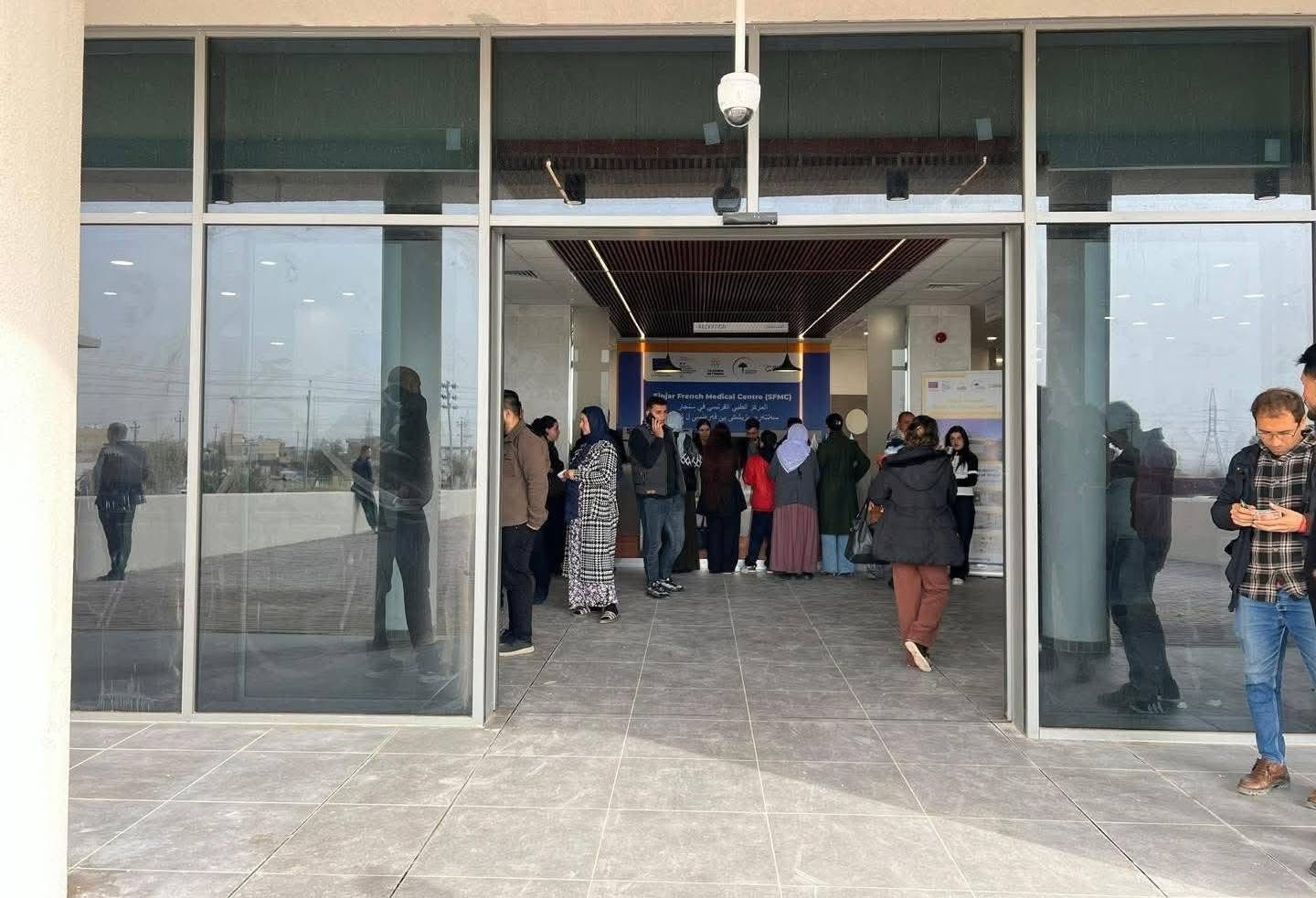
Nineveh, February 4, 2026: The French Hospital in Shingal Opened doors. Health Department
In 2019, the Iraqi government dedicated only 2.5% of its $106.5 billion national budget to the Ministry of Health, while allocating 18% to the security sector and 13.5% to the oil ministry. A similar distribution of spending priorities was observed in 2014.
According to data from the World Health Organization (WHO), Iraq’s central government has, over the past decade, consistently spent significantly less on healthcare per person than neighboring countries with fewer resources. On average, Iraq spent about $161 per citizen annually, compared with $304 in Jordan and $649 in Lebanon, as reported by Reuters.
Currently, Shingal district has 20 health centers and two hospitals, staffed by around 4,000 healthcare workers and a number of specialist physicians. According to Dr. Jamal Hussein, head of Shingal ’s health sector, many medical staff from Shingal General Hospital will be reassigned to the French Hospital, while the pediatric department will remain at the general hospital.
“Some advanced services, such as MRI scans and intensive care, are still unavailable locally, meaning certain patients will continue to seek treatment outside the district. However, the new hospital will meet the needs of most residents and provide essential care within Shingal.”