


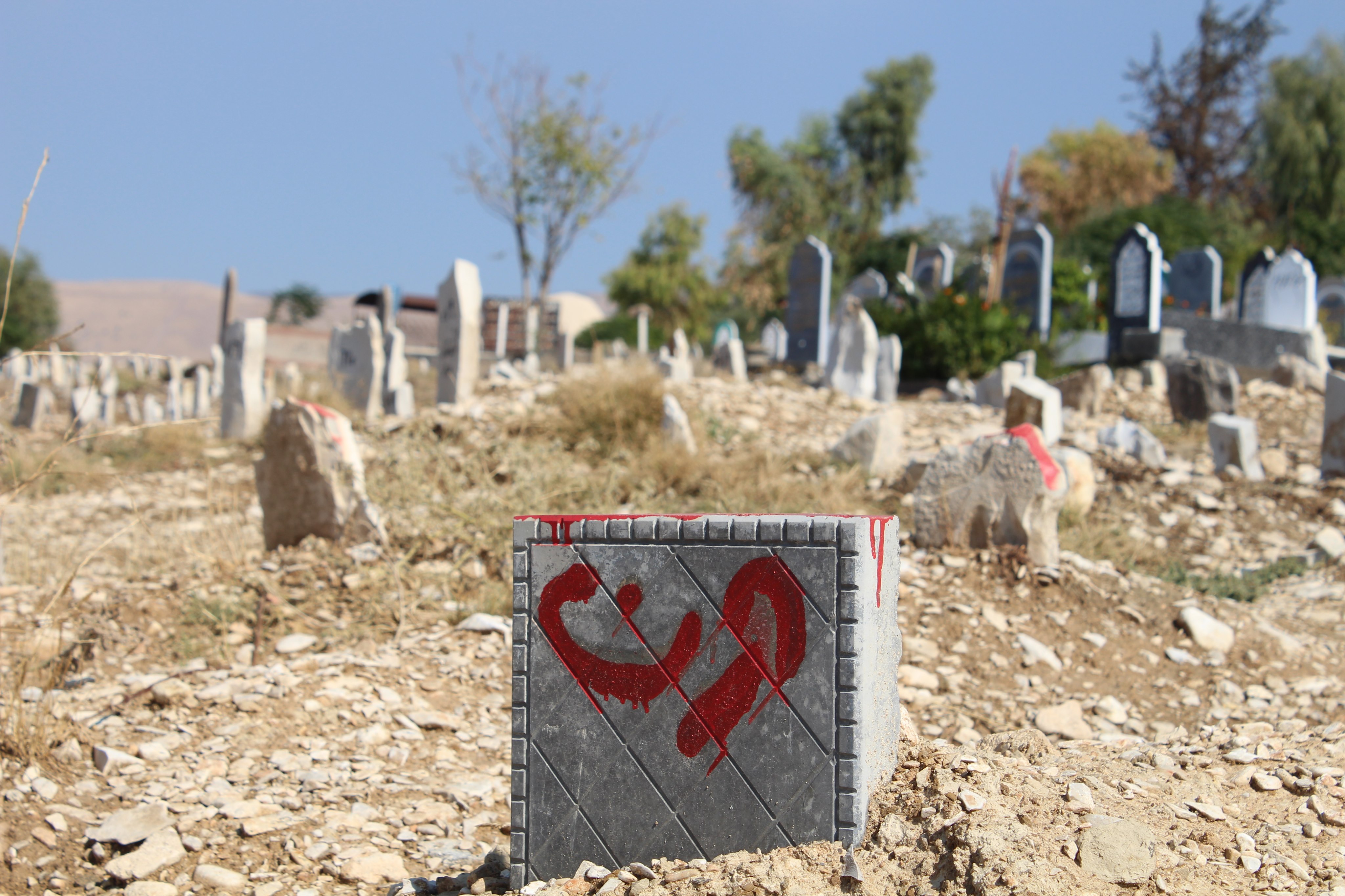

In the Kurdistan Region of Iraq (KRI), statistics indicate that, on average, a woman is killed every five days, raising serious alarm among women’s rights advocates about the continued targeting of women.
During the 12 months of 2025, the March 8 Network documented the killing of 69 women across the Kurdistan Region. In the first two months of this year alone, another 13 women were murdered, bringing the rate to roughly one woman killed every five days.
The March 8 Network—a coalition of organizations dedicated to defending women’s rights—describes the figure as “shocking.” The network argues that despite repeated claims by Kurdistan Regional Government (KRG) officials about protecting women’s rights and promoting gender equality, the region cannot yet be considered a safe environment for women.
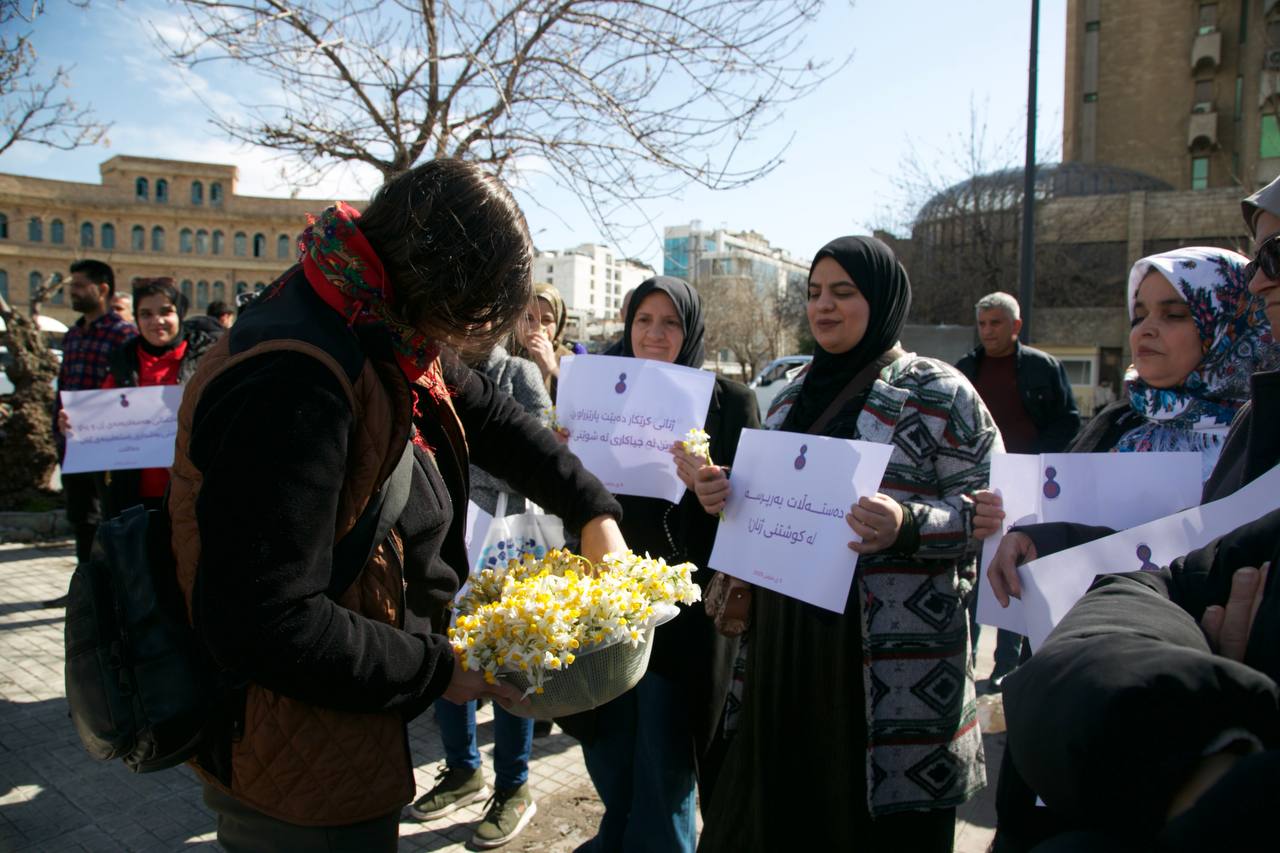
On International Women’s Day (March 8), activists once again highlighted these figures, warning that they reflect a “dangerous” reality for women in the Kurdistan Region.
“This statistic is deeply worrying,” said women’s rights activist Bahar Munzir. “Wherever men and women do not enjoy equal rights—whether economic, political, social, cultural, or legal—discrimination continues, and women pay the price with their lives.”
Munzir believes that many killings are linked to tribal attitudes that justify violence against women, particularly in cases labeled as “honor” crimes.
According to her, the absence of a comprehensive strategy to combat such crimes remains a major concern. “These issues are often discussed only superficially,” she said. “Many efforts have been made, but they have not been effective because there are social and structural obstacles that prevent real progress.”
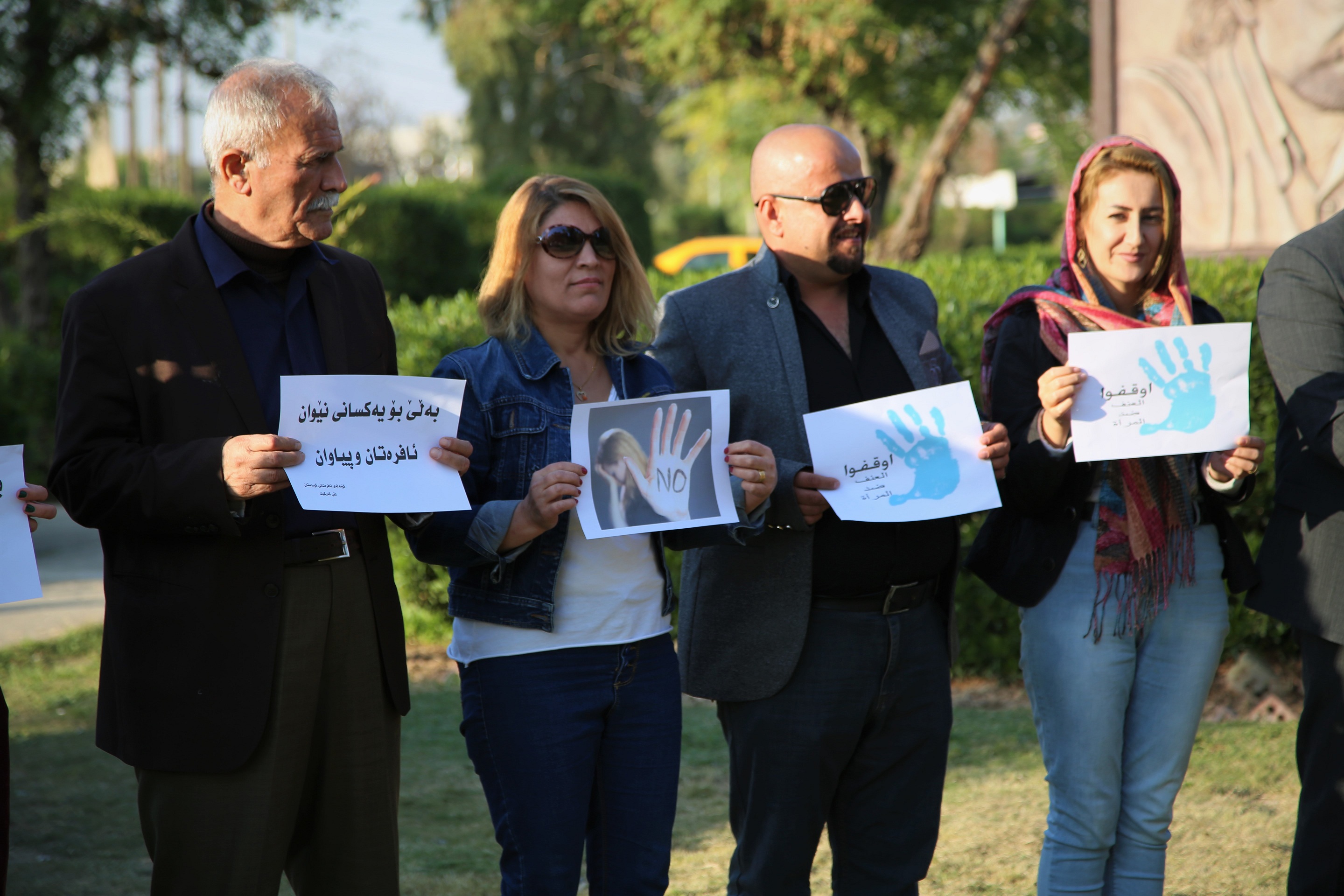
Kirkuk, November 2019 – A rally during the 16-day campaign to combat violence against women. KirkukNow
Munzir also criticized the use of tribal reconciliation to resolve cases involving the killing of women. She argued that such settlements frequently deny justice and may even interfere with court proceedings, especially when the accused belongs to powerful tribes or enjoys political backing.
Lawyer and women’s rights activist Gasha Dara Hafid stressed that punishment is meant to deter crime. However, she warned that when the law is not applied equally, violence will persist.
“One of the biggest governance challenges in the Kurdistan Region is impunity,” she said. “Women are often the ones who suffer the most from this problem.”
Hafid added that political protection for perpetrators—particularly in cases of violence against women—encourages further crimes. “When criminals escape accountability, it sends a signal that such acts can be repeated.”
Former members of the Kurdistan Parliament have also raised concerns about gaps in legislation and its enforcement. During earlier parliamentary terms, lawmakers pushed to ensure that individuals convicted of killing women would not benefit from general amnesty laws.
Razaw Gule, lawyer and activist, agrees that weak legislative oversight contributes to the problem. She believes the parliament has not been able to sufficiently amend laws or effectively monitor the government’s implementation of them.
“When a legislative institution cannot properly hold perpetrators accountable, it inevitably contributes to an increase in killings,” she said.
Gule noted that in the past the Kurdistan Region sought to demonstrate progress in protecting women’s rights on the international stage. As a result, several legal reforms were introduced, including amendments to the personal status law, legislation addressing the misuse of communication devices, and a law to combat domestic violence. Despite these steps, killings of women continue.
For the past four years, the Kurdistan Regional Government has reportedly instructed directorates responsible for combating violence against women not to publish statistics on killings. Accordingly, KirkukNow has been unable to obtain updated official figures.
The last confirmed numbers released by the Directorate for Combating Violence against Women reported 44 women killed in 2022 and at least 30 in 2023, according to various government sources.
Khanzad Ahmad from the High Council of Women, an institution affiliated with the Council of Ministers that advocates for women’s rights, reiterated the government’s commitment to the United Nations’ International Women’s Day theme of rights, justice, and action.
She said the KRG aims to ensure women’s access to education, employment opportunities, financial resources, and safe working environments. Ahmad emphasized that achieving justice also requires closing legal loopholes and properly enforcing existing laws.
In 2025, both the Public Prosecution Office and the Independent Human Rights Commission called for restrictions on publicizing cases of women’s killings. In September, the Council of Ministers issued a directive instructing ministries and institutions not to publish or cover such incidents.
Some activists fear that these measures are causing cases of violence against women to receive less public attention.
Arsalan Rahman, media researcher, argues that the killing of women cannot be ignored by the media, but he stresses the need for journalists to receive specialized training when reporting on gender-based violence GBV.
“Society must be aware of what is happening around them,” he said. “Silencing coverage of violence can create conditions that allow it to continue.”
At the same time, Rahman believes Kurdish media outlets have not fully developed effective approaches for reporting on violence in ways that raise awareness and help prevent further harm.
Dilsoz Zangana, director of the Dabin Organization for Women’s Rights, believes civil society groups may also need to rethink their strategies. “For years we have been calling for an end to the killing of women, yet the response has been limited,” she said.
Bahar Munzir emphasizes that education plays a crucial role in shaping attitudes toward women. She believes children and teenagers should be taught to develop a respectful and humane understanding of women.
“Women’s issues should be incorporated into school curricula,” she said. “I also encourage women’s organizations to adopt new strategies that attract broader support for women’s rights, because they cannot confront the rising wave of violence against women on their own.”