


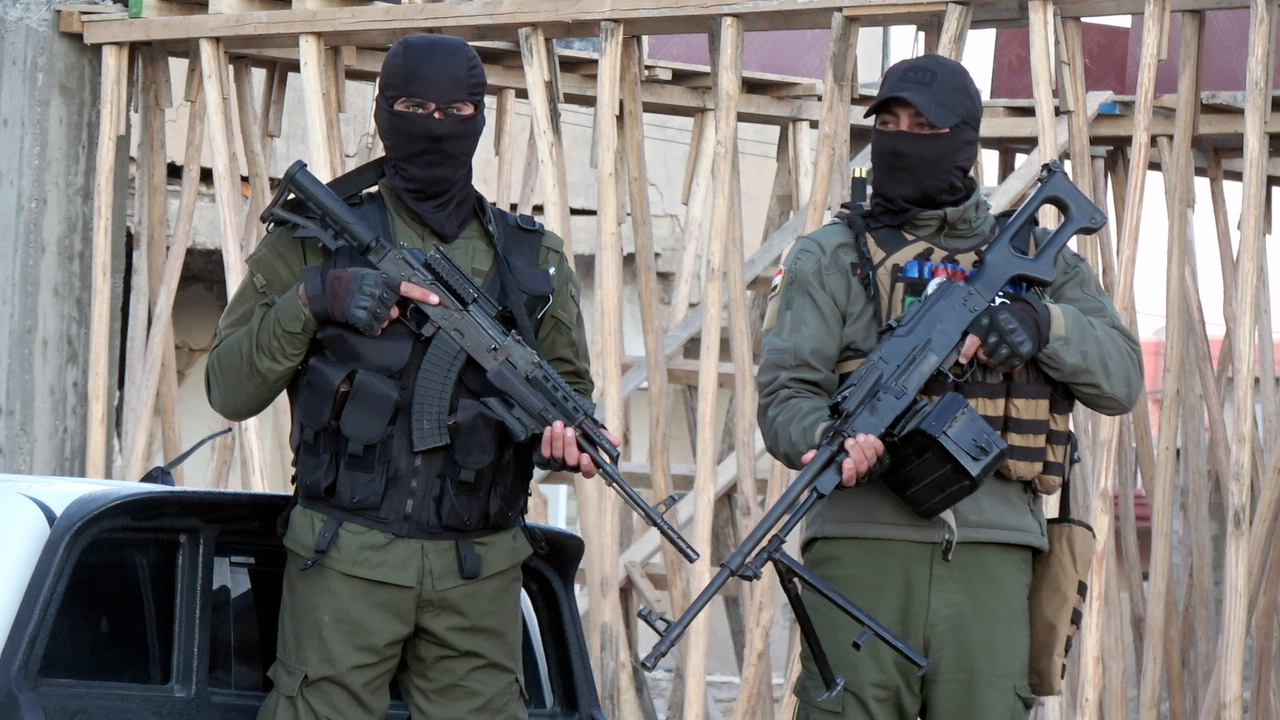

According to reports by KirkukNow, Iraqi security forces decided to suspend the registration of light arms and the handover of heavy weapons in Shingal following objections from Ezidi residents.
Last year, the Iraqi Ministry of Interior began an awareness campaign aimed at registering small arms and confiscating heavy weapons from civilians, tribal groups, and some non-governmental forces. However, the implementation of this decision has now been paused.
Khudeda Chuki, the mayor of the Sinuny sub-district of SHingal district, Nineveh province, told KirkukNow that he recently met with the Joint Operations Command in Nineveh.
“They confirmed that the plan to collect weapons from civilians would be temporarily suspended. The commander of operations announced the halt of the weapon registration process.”
The Interior Ministry’s original objective was to ensure that weapons remain exclusively in the hands of official security forces in order to protect citizens. The ministry also emphasized that heavy weapons should not be possessed by groups operating outside Iraq’s official security and defense structures.
The policy triggered strong reactions among the Ezidi (Yazidi) population, especially in light of recent developments in Syria, ongoing clashes between armed factions there, and the transfer of the Islamic State of Iraq and Syria ISIS prisoners from Syria to Iraq. Many Ezidis fear that these developments could lead to a repeat of the tragic events of August 2014.
Ghazal Rasho, a member of the Shingal Resistance Units (YBŞ), told KirkukNow that the Ezidi community does not oppose Iraqi government laws. However, he said “the policy should not be applied only to Shingal or appear to target the area specifically, which is unacceptable.”
Rasho also noted that Iraq is facing significant pressure—particularly from Turkey—to collect these weapons, but emphasized that the Ezidi community will not agree to being left defenseless.
In 2014, the Islamic State in Iraq and Syria (ISIS) seized vast areas of northern Iraq and carried out systematic atrocities against ethnic and religious minorities, particularly Ezidis and Christians. In Shingal district of Nineveh province, Ezidis were subjected to mass killings, abductions, sexual violence, and forced displacement in what later came to be recognized as genocide.
In early February, Turkish Foreign Minister Hakan Fidan urged the Iraqi government to carry out a limited military operation in Shingal, similar to actions taken by Syrian government forces against the Syrian Democratic Forces (SDF).
The Iraqi government criticized the remarks as interference in its internal affairs. Shortly afterward, the Turkish ambassador in Baghdad clarified that Fidan’s statement had been misunderstood and that he was referring to the Kurdistan Workers’ Party (PKK), after being summoned by the Iraqi Foreign Ministry.
Several forces are currently present in and around Shingal, including local police, the Iraqi army, Popular Mobilization Forces PMF Hashd al-Shaabi forces, the Shingal Resistance Units—often considered close to the PKK—and Peshmerga forces from the Kurdistan Regional Government (KRG).
Rasho added that the suspension of both weapon registration and confiscation occurred after the government realized the Ezidi community strongly opposed the measure. He stated that Ezidis rely on these weapons for self-defense, just as they used them during the fight against ISIS. Without them, he said, the community would be unable to protect itself.
In December 2025, the Interior Ministry announced that it was working with the judiciary to reduce tribal conflicts and reiterated that unauthorized weapons would not be permitted.
According to a 2024 estimate from the ministry, more than 15 million weapons are owned by civilians across the 15 Iraqi provinces under federal control, where the population is about 35 million.
Officials say many of these weapons were obtained during past conflicts or through trade. As part of efforts to control weapons, the government has also attempted to shut down arms markets and ban online advertisements related to buying and selling firearms.
Ezidis in Iraq are concentrated mainly in Shingal and the Nineveh Plain. According to the KRG figures, Iraq’s Ezidi population stands at around 550,000. Since 2014, approximately 360,000 have been displaced, and more than 100,000 have migrated abroad.
The KRG’s Office for the Rescue of Ezidi Kidnapped Persons reports that only 3,580 of the 6,417 Ezidis abducted by IS have been rescued. At least 2,293 were killed, while the fate of thousands remains unknown.
Last January, KirkukNow reported that due to developments in Syria, some Ezidis have begun seeking weapons out of fear that ISIS could again attack their communities, similar to the assault in August 2014.
Khalid Saeed, the police chief of the Sunni district, stated that they have not yet received any official directive to resume the weapon registration or collection process. He added that if an official order is issued, the authorities will inform the public.