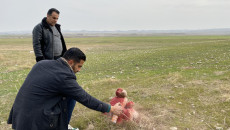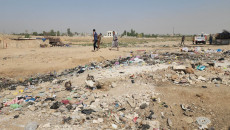



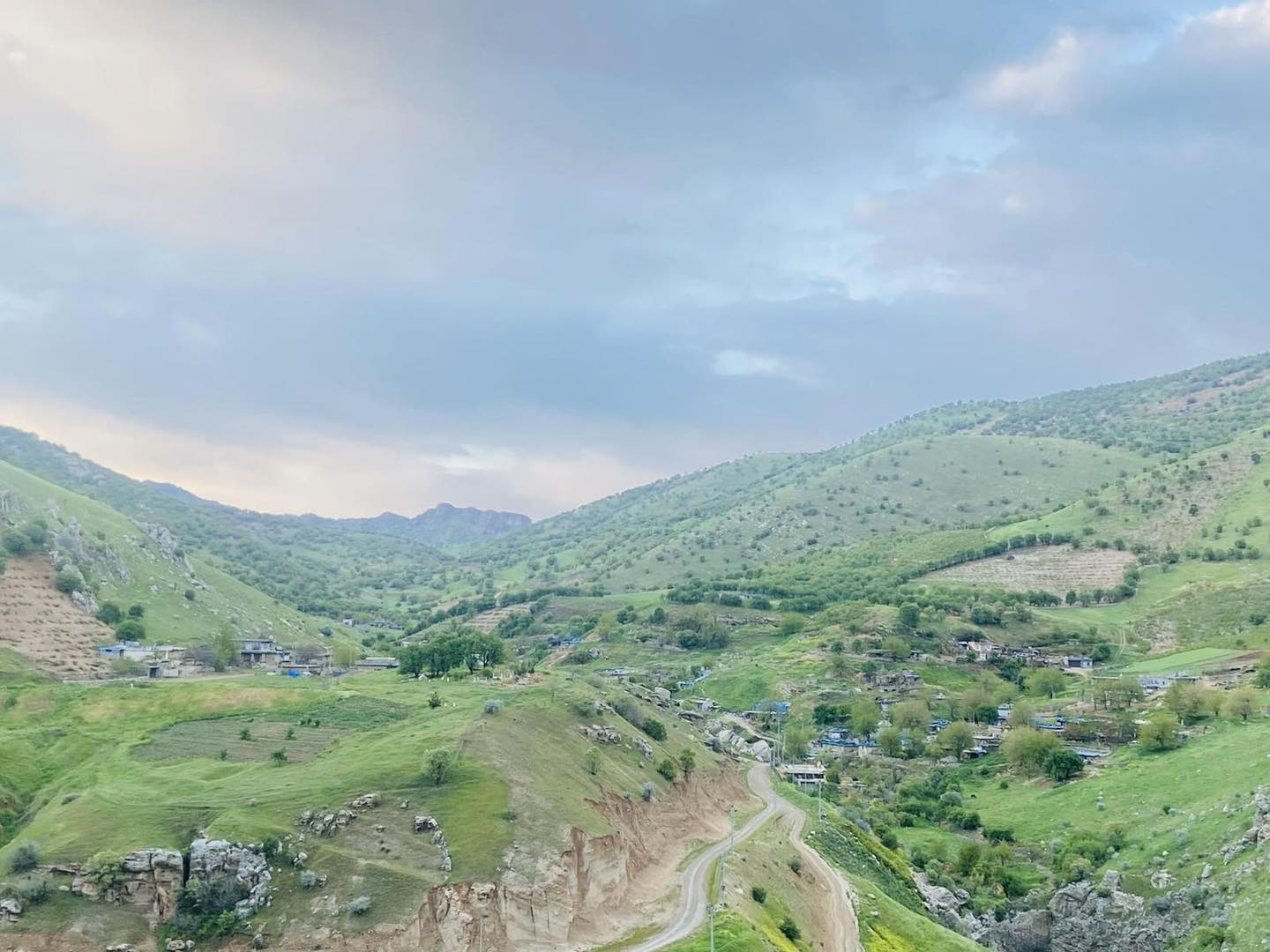

In the quiet village of Wilaghlu, located in the Sharbazher area of Sulaymaniyah northern prvovince, tragedy has left a lasting mark. Twenty-four years ago, a devastating explosion shattered the calm: “A mine detonated, killing three young men.”
For Ismet Fatah, this news meant losing all three of his sons. They had gone into the mountains with two other villagers to extract gunpowder from landmines—a dangerous task they relied on for income. As he recalls that day, emotion overwhelms him, as though the loss has just occurred.
“This was their daily work,” he explained. “We were not in desperate need, but they had learned the trade and wouldn’t stop—especially my eldest, Salem.”
After searching the site, villagers confirmed that Salem and another young man died instantly, while the others survived. Salem had previously survived two mine explosions, but the third claimed his life.
Wilaghlu, in the Mawat district of the Sharbazher region, is known as one of the most hazardous areas due to widespread landmines. Since 1992, villagers of Willaghlu estimate that 21 people have been killed and 32 others injured or permanently disabled.
Once home to around 150 families, the village now has only 15 remaining.
On April 4, World Mine Awareness Day, officials warned that vast areas of Sulaimani province remain contaminated. Of the 234 million square meters identified as mined land, only 117 million have been cleared since 1992—just over half.
Across Iraq, landmines have claimed approximately 30,000 lives. Around 6,000 kilometers of land remain contaminated, with only half cleared so far, according to the Ministry of Environment.
Despite his loss, Ismet expressed gratitude that two of his sons survived. He offered a warning: “Stay away from mines—no one should ever face such a tragedy again.”
Mine-affected zones in Sulaimani stretch from adjacent Naw Shuan in Kirkuk province through Taqtaq, Dukan, Raperin, Mawat, Sharbazher, Penjwen, and Darbandikhan, according to officials, Mohsin Abdulkarim, head of the mine agency, told KirkukNow.
Residents frequently criticize the slow pace of demining efforts. Authorities cite harsh weather—snow, rain, and extreme heat—as major obstacles. “This year, no areas have been cleared due to difficult conditions,” Abdulkarim said, adding that Iraq has the resources to address the problem but progress remains limited.
Penjwen district, bordering Iran, has the highest number of mines and casualties. Many of these explosives date back to the Iran-Iraq war of the 1980s.
In Sulaimani province alone, 6,720 people have died due to landmines, and 1,576 have been disabled—the highest figures in the Kurdistan Region of Iraq KRI.
Victims receive limited financial support, around 150,000 Iraqi dinars IQD (USD100) per month, under social welfare programs. Meanwhile, mine clearance workers lack specific legal protections despite the dangers they face. Since 1992, 76 workers have been killed or injured during operations.
Overall, landmines have killed 13,600 people in the KRI since 1992, with Sulaimani bearing the greatest burden.
Jabar Mustafa, head of the General Agency for Mine Affairs in the Kurdistan Region, said that the total area of mined areas was 776 square kilometers, 576 kilometers have been cleared so far. There are 200 kilometers left, the most in Sulaimani province, which is 82 kilometers.
"Sixty percent of the total number of mines and war remnants are located in Sulaimani province, because the territory of this border was the main battlefield between Iran and Iraq and the Peshmerga forces were present in these areas during successive Iraqi governments."
“The financial crisis has hampered the work, and the biggest problem is the lack of vehicles to transport the teams... While we have 35 teams, but not all of them are working due to transportation problems,” Jabar said.
The head of the General Mine Agency urged citizens to avoid gathering spring weeds, especially in mine sign areas and not to risk their lives.