



The Kirkuk Agriculture Department has declined a request from the Provincial Council Chairman to suspend procedures related to the termination of agricultural land contracts.
In a letter dated March 30, 2026, Council Chairman Muhammad Ibrahim al-Hafiz called on the department to halt actions concerning the cancellation of contracts for unused farmland. This request was based on a memorandum submitted by Zahir Anwar al-Assi, head of the council’s legal committee.
Responding on April 5, Kirkuk Agriculture Director Zahir Ali stated that agricultural land matters are a “sovereign issue” that fall exclusively under the authority of Iraq’s Ministry of Agriculture. He stressed that the ministry alone is responsible for setting implementation mechanisms, guided by Federal Court rulings and interpretations.
"The Ministry of Agriculture is the entity responsible for developing the necessary implementation procedures, based on the decisions and interpretations of the Federal Court."
The Agriculture Directorate also referenced decisions made by the High Committee overseeing Article 140 of the Constitution. These decisions determined that all agricultural contracts issued under the former Northern Affairs Committee in Kirkuk are invalid, and that the Ministry of Agriculture has no authority to renew them.
These directives were initially communicated by the Council of Ministers in July 2023 and later reinforced by the Ministry of Agriculture in July 2024 through official correspondence with provincial agricultural offices.
Despite this stance, the Kirkuk Agriculture Directorate noted that any directives from higher authorities would still be reviewed by the governor and the provincial council to ensure compliance with existing laws and regulations.
During the late 1970s, decisions issued by the Revolutionary Command Council and the Committee for Northern Affairs under the Ba’ath government led to agricultural lands of Kurdish and Turkmen farmers being redistributed to Arab settlers from central and southern Iraq. This policy accompanied the forced displacement of Kurdish and Turkmen families.
In 2025, Iraq’s parliament passed the Land Return Law, overturning decrees from the former Revolutionary Command Council under Saddam Hussein. The law mandates the return of confiscated lands in Kirkuk and other disputed territories to their original owners.
Its implementation is expected to restore at least 300,000 dunams (75,000 hectares) of land in Kirkuk, primarily to Kurdish and Turkmen owners, while also leading to the dismissal of numerous legal cases against farmers from these communities.
Abdullah Mirwais, a Provincial Council member from the “Kirkuk Our Strength and Will” bloc, supported the Agriculture Department’s position. He stated that coordinated efforts, including involvement from Kirkuk Governor Rebwar Taha, helped block actions that could harm farmers or violate the law.
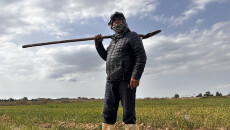
Meanwhile, Sateh Naseh, representing farmers from Topzawa village in Dibis district, had earlier urged authorities to reject the council chairman’s request. He argued that the proposal aimed to obstruct the termination of contracts on irrigated lands and described it as “a political move hindering the enforcement of existing decisions.”
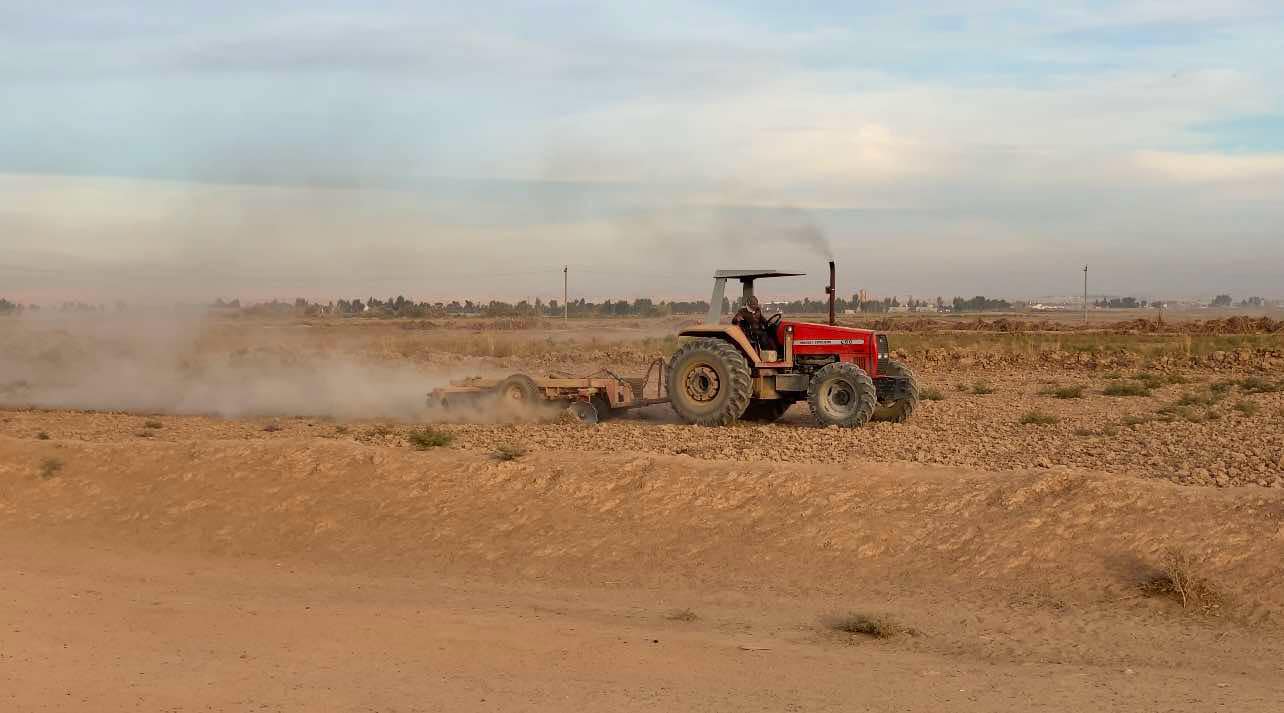
Agricultural land disputes remain among the most complex issues in Khanaqin and other disputed territoies such as Kirkuk. Conflicts over land ownership have sparked numerous disputes among Kurdish, Arab, and Turkmen farmers.
Resolving these disputes is considered part of the early stages of implementing Article 140 of the Iraqi Constitution, which addresses the status of disputed territories.
The northern, oil-rich, ethnically mixed province of Kirkuk is home to about 1,77 million Kurds, Turkmen, and Arabs. Located 238 kilometers north of Baghdad, Kirkuk has long been at the center of disputes between the federal government in Baghdad and the Erbil-based Kurdistan Regional Government KRG.