



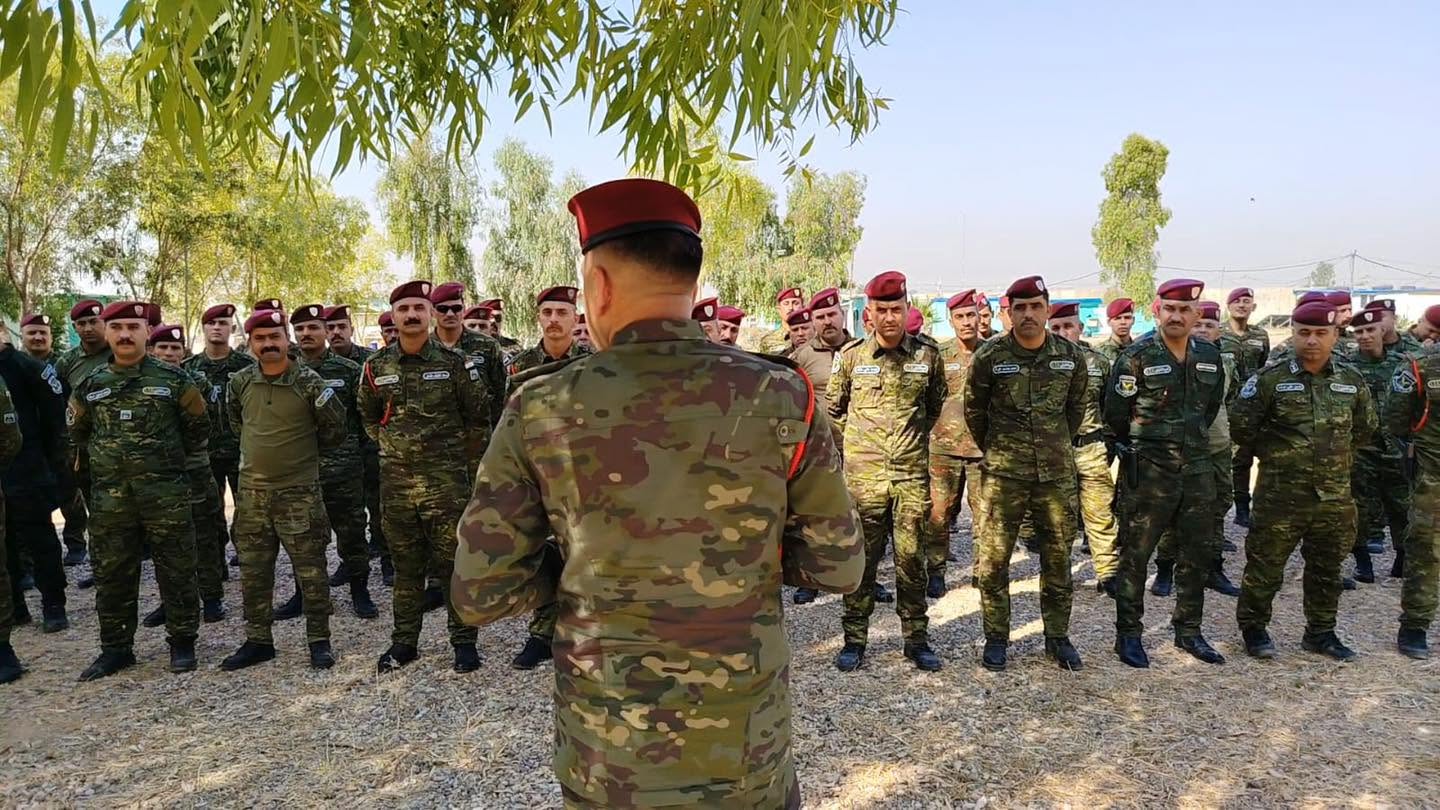

Kirkuk's police force says it is ready to take full responsibility for security across the province as part of the Iraqi Ministry of Interior's plan to transfer security duties from the army to local police. However, disagreements over the pace and scope of the transition continue, with military leaders and some political groups favoring a gradual handover.
The Ministry of Interior recently established a high-level committee to oversee the process. After holding several meetings in Kirkuk, the committee prepared a report outlining a phased transfer of security responsibilities.
According to two senior security officials in Kirkuk, police representatives informed both the committee and the Joint Operations Command that they are prepared to secure Kirkuk city, its districts and sub-districts, as well as manage all security checkpoints.
"The army command proposed not handing over the security file completely at present, but rather implementing the process in stages,” one official anonymously told KirkukNow. “However, the police expressed their readiness to maintain security in the city center, districts, and sub-districts, as well as all checkpoints."
"The final agreement is to hand over the city and checkpoints to the police in the first phase, but this requires discussing the Interior Ministry committee's report and determining the final decision."
The army command proposed not handing over the security file completely at present
Iraqi Ministry of Defense Spokesperson Major General Tahsin al-Khafaji recently confirmed that the government intends to continue transferring security responsibilities within cities from the Ministry of Defense to the Ministry of Interior. Under the plan, local police would oversee security inside urban areas, while the army would remain stationed outside cities and at military bases.
Al-Khafaji said the goal is to place urban security under the Interior Ministry, noting that the ministry has demonstrated its ability to manage such responsibilities. He added, however, that regional security conditions have delayed implementation in some areas.
Security officials describe Kirkuk as a particularly sensitive case due to its ethnic diversity, ongoing political disputes, and the continued presence of ISIS cells in parts of the province. These factors, along with support from some military commanders and political parties for a more cautious approach, have complicated the transfer process.
"The aim of this step is for the Interior Ministry to be the entity managing the security file... The Interior Ministry has made significant progress and achieved success in managing this file," but "the circumstances in the region have led to delays in implementing some steps," according to al-Khafaji.
The northern, oil-rich, multi-ethnic Kirkuk Province, home to more than 2.34 million Arabs, Kurds and Turkmen, remains one of Iraq’s disputed territories between the federal government and the Kurdistan Regional Government. Its future status is tied to Article 140 of the Iraqi Constitution, which outlines a process involving normalization, census-taking, and public referendums.
The source, speaking to Kirkuk Now, said, "The situation in Kirkuk has become somewhat complicated. The province is multi-ethnic and is witnessing political and security conflicts. The threat of ISIS remains in some areas.”
“Moreover, some political factions prefer postponing the operation to a later date or implementing it in stages. This view is supported by some army commanders."
Al-Khafaji confirmed that "the army will have a presence in some cities until the conditions for assuming security responsibility are met," without specifying which cities he was referring to.
Member of Parliament Mazen Gharib, who serves on the Iraqi Parliament's Security and Defense Committee, said, "Discussions about the operation are ongoing. We are working diligently and must wait, but the operation has not yet reached its final form."
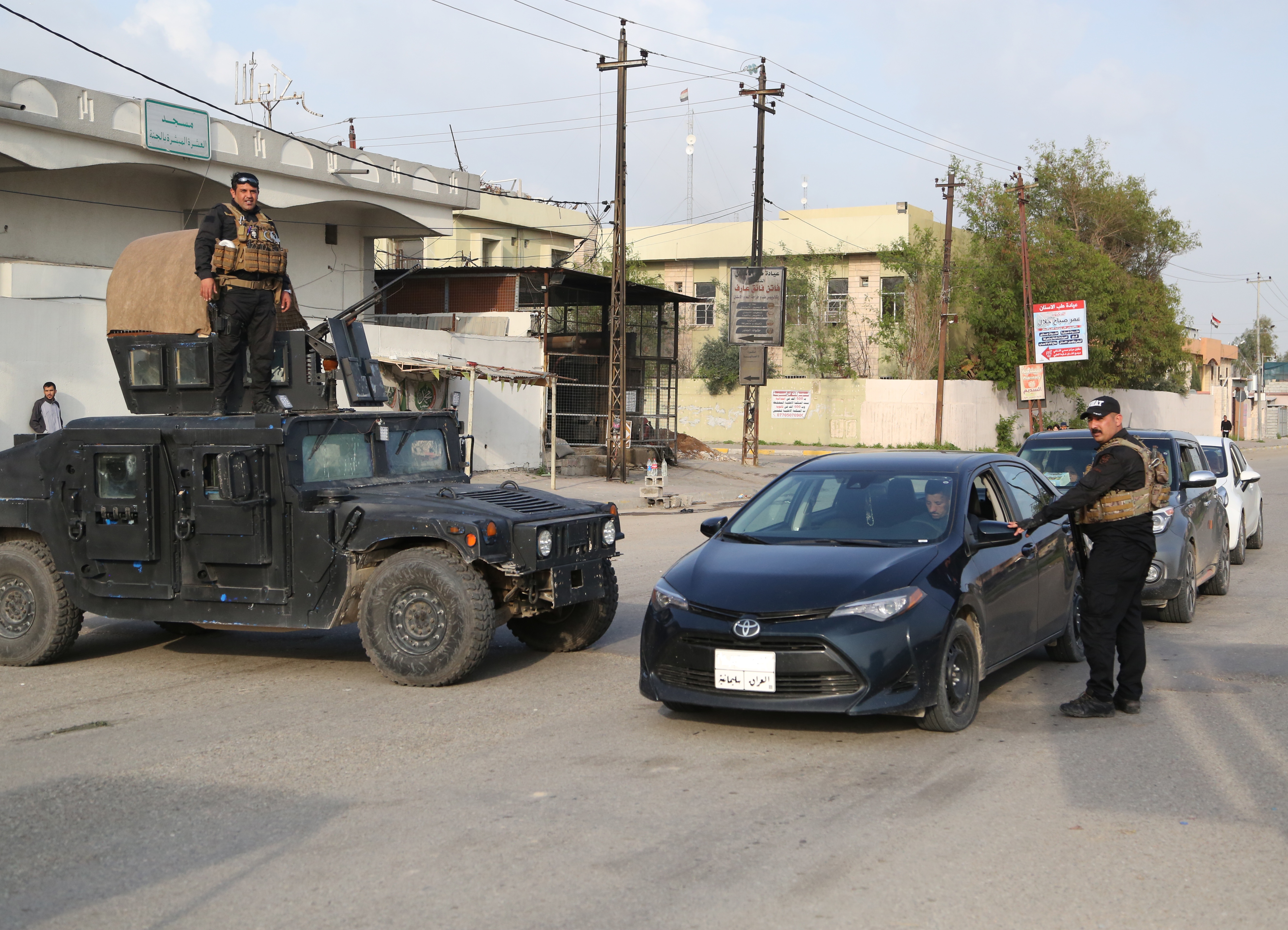
At present, the Joint Operations Command retains overall responsibility for security in Kirkuk. The army oversees city security, checkpoints, customs facilities, and other strategic locations.
Speaking during a protest by local farmers over treatment at checkpoints, Gharib argued that such responsibilities should not fall to the military. He said the army's primary mission is to protect Iraq's borders and preserve overall security rather than administer checkpoints and customs operations, adding that residents have grown increasingly frustrated with the current situation.
Ahmed Kirkuki, a member of the Kirkuk Provincial Council representing the Patriotic Union of Kurdistan (PUK), also criticized checkpoint operations, alleging that some personnel have engaged in bribery and extortion. The Joint Operations Command has not publicly responded to those accusations.
Local police are familiar faces, while many soldiers come from outside the province
Many residents view the local police more favorably than the army, largely because police officers are drawn from the local community. Over recent years, military patrols, temporary checkpoints, identity checks, and nighttime searches have occasionally fueled tensions between residents and security forces.
Ali Zurab, a 41-year-old employee at a private gas station, said, “local police are familiar faces, while many soldiers come from outside the province. Reducing the military presence within the city would help residents feel more comfortable.”
Despite these concerns, the army has played a significant role in combating ISIS in Kirkuk. The militant group once controlled roughly one-third of the province and continues to pose security threats in some areas.
Provincial council member Abdullah Mirwais said security conditions have improved enough for the police to assume responsibility for the city. “The PUK supports transferring the security file from the Ministry of Defense to the Ministry of Interior.”
The PUK is also expected to assume leadership of the Kirkuk Police Command. According to Mirwais, all necessary procedures have been completed, and the appointment only awaits approval from the Iraqi prime minister.
The proposal to transfer security responsibilities from the army to local police is not new. It formed part of Prime Minister Mohammed Shia al-Sudani's government program, which envisioned withdrawing the army, Popular Mobilization Forces PMF known as Al-Hashd al-Shaby, and Federal Police from city centers while assigning urban security to local police under the Ministry of Interior. Although the policy has long been discussed, its implementation has been repeatedly delayed, with Kirkuk remaining one of its most challenging cases.