


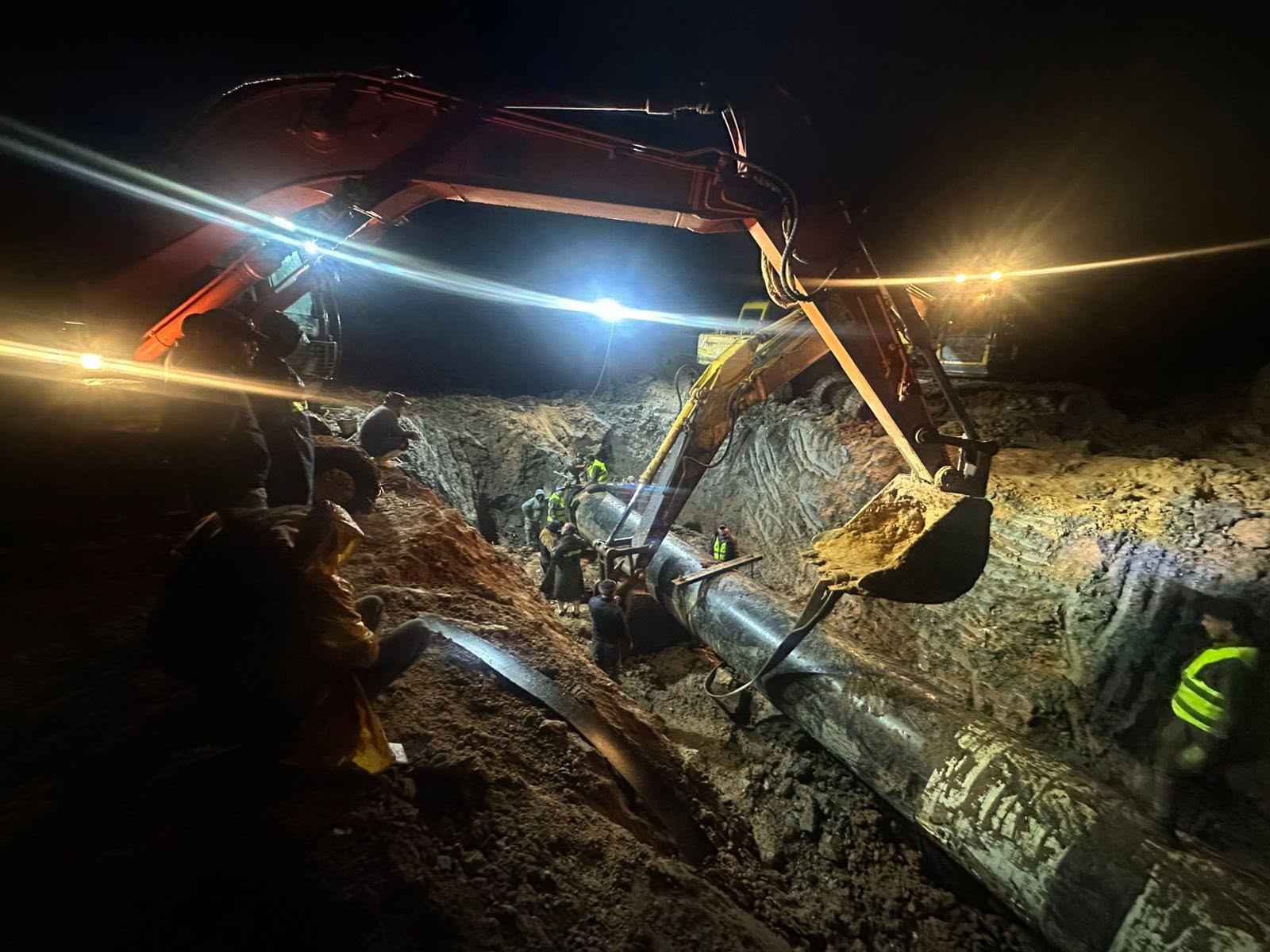

Rehabilitation of the Kirkuk-Ceyhan oil pipeline has been completed, with officials confirming that the line is technically ready to resume crude oil exports following a final inspection conducted this week.
A joint inspection team from the North Oil Company and the Oil Projects Company began assessing the pipeline on Sunday, July 19, covering the route from Kirkuk to the Nineveh Plain. According to two sources within the North Oil Company, the inspection concluded within two days, and the pipeline was deemed ready for operation.
An official from the North Oil Company told KirkukNow on the condition of anonymity that Ali Ward Hamoud, Director of the Oil Projects Company, personally supervised the inspection. The assessment confirmed that the pipeline is fully prepared for oil exports.
The Iraqi federal government assumed control of the Kirkuk-Ceyhan pipeline in 2018 and subsequently launched plans to rehabilitate the infrastructure. Restoration efforts accelerated significantly in March 2026 after Iraqi oil exports through the Strait of Hormuz were suspended following the outbreak of the U.S.-Israeli war with Iran.
According to a source familiar with the project, Ali Ward stated during a recent meeting that the pipeline is ready to transport crude oil to Turkey's Ceyhan port, pending formal approval from the Iraqi government and the Ministry of Oil.
On Tuesday, July 21, the inspection committee submitted its technical report to Baghdad outlining the pipeline's condition and its readiness for export operations. The Director of the Oil Projects Company remains in Baghdad to discuss the findings with government officials.
Despite the pipeline's technical readiness, officials stress that restarting exports depends on more than engineering assessments. A senior source at the North Oil Company said security arrangements and political authorization remain essential before operations can resume. The pipeline crosses multiple areas controlled by different political and security actors, making comprehensive security guarantees a prerequisite for reopening the export route.
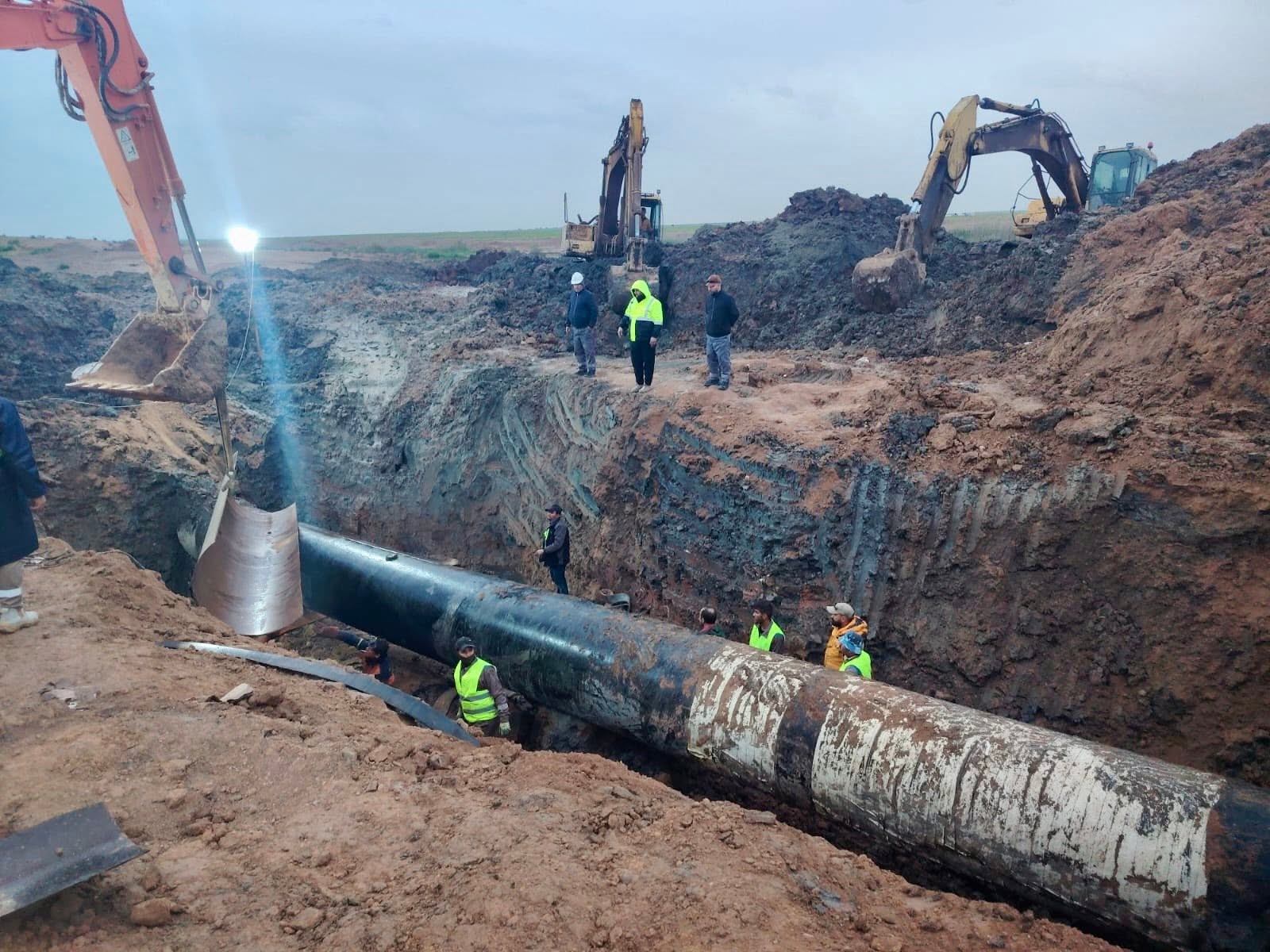
The Kirkuk-Ceyhan pipeline undergoes its final inspection. Oil Projects Company
The Ministry of Oil has previously disclosed that nearly 4,000 illegal breaches were discovered along the Kirkuk-Ceyhan pipeline, many of them linked to oil theft following attacks by terrorist organizations and later by armed groups operating in Iraq.
Pipeline security continues to pose a significant challenge for Iraq's energy sector. Repeated attacks targeting pipelines, oil fields, and energy companies have disrupted operations and contributed to the withdrawal of several international oil giants.
A source with knowledge of developments in the oil sector said that while officials do not publicly attribute these attacks to armed groups, unofficial assessments indicate that such groups have played a role. The source further claimed that “some armed factions have established economic interests in oil fields and wells, effectively securing control over valuable energy assets under various justifications.”
The announcement of the pipeline's readiness comes shortly after Faisal Hamadi al-Jibouri assumed leadership of the state-owned North Oil Company in mid-June, replacing Amer al-Muhairi. Al-Jibouri, an engineer with nearly 30 years of experience at the company, is originally from the Bajwan area west of Kirkuk and has previously served in several senior administrative positions.
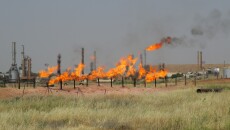
The North Oil Company manages five major oil fields across multi-ethnic, oil-rich Kirkuk province: Avana, Bai Hassan, Qubba Baba, Jambur, and Khabbazah.
British Petroleum BP is responsible for rehabilitating and developing four of these fields. However, the company withdrew its foreign personnel in March 2026 amid security concerns related to the U.S.-Israeli conflict with Iran.
BP's agreement with Iraq extends beyond crude oil production. The contract also covers investment in associated gas from fields operated by the North Gas Company. According to Iraq's Deputy Minister of Oil, the project is designed to process up to 400 million standard cubic feet of gas per day over a 16-year period. It additionally includes the evaluation, rehabilitation, and expansion of North Gas Company facilities to increase natural gas utilization and reduce gas flaring.
In March 2026, Iraq exported 2,772,217 barrels of crude oil from Kirkuk fields to Turkey, marking the first exports after a 35-month suspension of pipeline shipments through the Kurdistan Region.