



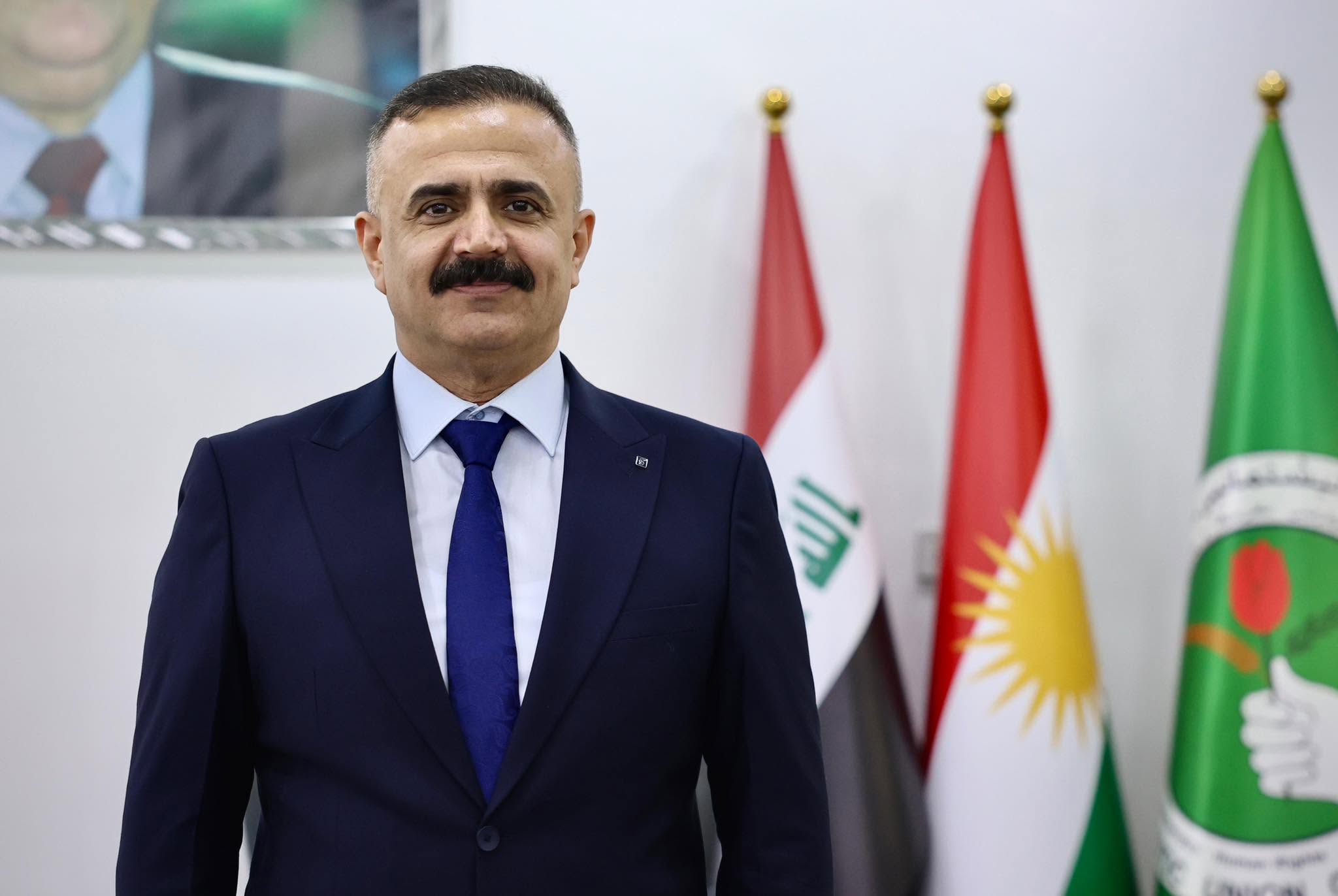

Mazen Gharib, a member of the Iraqi Parliament’s Security and Defense Committee, said that responsibility for Kirkuk’s security is expected to be transferred to the local police in the near future.
He expressed support for the move, arguing that “the army cannot properly deal with people,” while warning of “a significant security vacuum and movements by ISIS militants in Kirkuk province.”
Gharib made the remarks in an exclusive interview with KirkukNow, in which he discussed several key security concerns, including reported ISIS activity in parts of the province, plans to transfer security responsibilities to the local police, and the arrest of several police officers and personnel over alleged corruption.
KirkukNow: What is the latest on transferring Kirkuk’s security responsibilities to the police? Why has the process been delayed?
Mazen Gharib: The proposal to transfer Kirkuk’s security responsibilities is not new; it has been under discussion for about three years. The Iraqi government and Ministry of Interior have begun a process aimed at returning security responsibilities in all provinces to the Interior Ministry.
The ministry believes it is capable of addressing the problems citizens face, particularly because military forces have not been performing their duties adequately and are not well suited to managing civilian affairs.
For this reason, several committees have visited Kirkuk in recent months to prepare the forces affiliated with the Ministry of Interior to assume security responsibilities in the province soon. We support this step because we have experienced many problems with the army in our areas.
KirkukNow: How would you describe the current security situation in Kirkuk? Have ISIS or other armed groups been active within the province? How serious is the threat?
Mazen Gharib: There are no genuine large-scale threats at present, but there have been movements. For example, we recently witnessed activity in the village of Qara Salem, east of Altun Kupri sub-district, as well as in several other villages in Altun Kupri (Pirdy) and Daquq district.
As you know, our main problem is the large security gaps along the 660-kilometer administrative boundary between the Kurdistan Region and Kirkuk. These gaps have provided safe havens for terrorist and outlawed groups, which occasionally launch attacks or carry out kidnappings, such as the recent incident in Altun Kupri.
These are serious problems, and I have raised the issue both in Parliament and before the Security and Defense Committee. God willing, these issues will be addressed soon.
KirkukNow: What is the latest regarding the appointment of Kirkuk’s police chief? Why has the appointment not yet been completed?
Mazen Gharib: The issue will be settled soon. We encountered some minor obstacles, but God willing, the position of Kirkuk police chief will soon be restored to its rightful holder.
KirkukNow: What is your position on the recent arrests of Kirkuk police officers and personnel?
Mazen Gharib: The operation was carried out by the Integrity Commission. We support any effort aimed at combating corruption, but we also insist that no officer or employee in the province should be targeted unfairly.
It is true that some individuals are arrested from time to time, but the investigations will determine whether these people and officers are actually guilty. We are therefore waiting for the investigation results. God willing, anyone else involved in similar cases will also be identified and removed, particularly from certain institutions.
KirkukNow: Who currently controls the checkpoints, and what problems exist at customs points and border crossings?
Mazen Gharib: Our concern is not with the checkpoints managed by the local police. The issue concerns customs points and border crossings where the army or national security forces are stationed.
These locations have effectively become gateways between the country and the federal government. There are unresolved issues between the Iraqi government and the Kurdistan Regional Government, including the ASYCUDA system. If these matters are resolved soon, the problems at the checkpoints should also be resolved.
KirkukNow: There are frequent claims of an ethnic imbalance in police appointments. Are there efforts to address this?
Mazen Gharib: As a member of Parliament, I gathered signatures from several MPs and submitted an official letter to the Prime Minister’s Office, signed by the Speaker of Parliament.
We hope that future appointments will take into consideration the proportional representation of all communities when allocating positions in our province and the disputed territories. Kurds, Arabs, Turkmen, and other minorities should all receive their rights in a balanced and fair manner.
KirkukNow: There has been limited activity by the provincial council in terms of holding sessions and issuing decisions and directives. As representatives responsible for overseeing the province, how do you view this situation?
Mazen Gharib: This issue does not fall within our responsibilities. If a problem arises in the province, we intervene. The members of the provincial council are representatives of Kirkuk just as we are, and they are capable of addressing their own issues.
There is a governor and a provincial council, and they have the authority to resolve the province’s problems.
KirkukNow: Many projects and contracts in Kirkuk remain stalled. Are there efforts by Baghdad to release funds and pay contractors?
Mazen Gharib: Don't talk about money. Iraq is going through a difficult situation. For at least the next two years, we should not be talking about money.
Even if the Strait of Hormuz were to reopen today, it would still take considerable time to restart the projects. Work can resume only when sufficient funding is available through the operational budget. Overall, however, the country’s financial situation is extremely difficult.