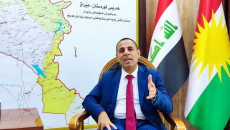




Tensions in Khanaqin district of Diyala province have eased after days of political statements, threats of demonstrations, and arrests. Planned protests have been suspended indefinitely following the submission of a 12-point memorandum to the Iraqi president and the release of two detainees on bail.
The security and political situation in Khanaqin had become increasingly tense since last week. The tensions followed controversial statements by politicians, reports of possible changes to Arabic-language signs, and concerns among activists and political figures about possible arrests.
Controversy over televised remarks
The latest tensions began after a television program in which Karwan Yarwais, head of the Patriotic Union of Kurdistan (PUK) headquarters in Khanaqin, discussed Arabization and challenges facing Kurdish political parties in disputed areas of Diyala province.
During the program on Rudaw, Yarwais compared the situation in several areas of Diyala with Jufar Sakhr, a village in northern Babil province that has long been associated with armed groups.
Jurf Sakhr was retaken from ISIS fighters in October 2014, but many of its original residents remain displaced and unable to return. The area is now largely treated as a restricted military and security zone.
Yarwais, along with Akbar Haider, head of the Kurdistan Democratic Party KDP’s 15th branch in Khanaqin, also discussed what they described as continued demographic changes in disputed territories of Diyala, which are home to Kurdish, Arab, and Turkmen communities. They referred to increased Arab migration to the areas and the purchase of property and agricultural land.
The remarks prompted strong reactions from several Arab political figures in the region, including figures associated with the Badr Organization.
“Every Iraqi citizen is free to live wherever they want. In Diyala province, they are free to live in Baquba or Khanaqin,” said Omar Krui, chairman of the Diyala Provincial Council.
The disputed territories are closely tied to Article 140 of the Iraqi Constitution, which outlines a three-step process for determining the status of Kirkuk and other disputed territories. The process includes normalization, a population census, and a referendum.
Under the normalization phase, families who are not originally from Kirkuk—often referred to as "newcomers / settlers"—would be expected to return to their areas of origin. At the same time, families displaced during the Ba'athist era would be allowed to return to Kirkuk and other disputed territories, with compensation provided to both those returning and those relocating.
Although the Constitution set the end of 2007 as the deadline for implementing Article 140, the normalization stage was never completed. In 2019, Iraq's Federal Supreme Court reaffirmed that the article remains valid until all constitutional procedures are fully carried out.
Arrests and planned demonstrations
The controversy intensified after Kamran Wais Murad, also known as Abu Muntazer, a businessman from Khanaqin and former head of the Badr and Asaib offices in the district, posted a video calling for opposition to the arrival of Arabs in the area and encouraging residents to demonstrate. He was arrested the following day.
On Saturday, August 29, demonstrations were being planned from two different directions. One was supported by PUK-affiliated platforms, while the other was backed by Kurdish activists. Despite their different organizers, both were focused on similar demands.
Kurdish political parties in Khanaqin had set Monday, August 31, as the date for demonstrations calling for the implementation of Article 140 of the Iraqi Constitution and an end to what they described as demographic changes in the district. They also opposed separating Jalawla and Qar Tapa sub-districts from Khanaqin.
The planned demonstrations coincided with a meeting of activists advocating similar demands, while reports circulated about a possible campaign of arrests targeting activists. Authorities had not officially confirmed such a campaign.
In addition to Abu Muntazer, a young Kurdish man was also detained. He had previously changed the sign of his shop from Arabic to Kurdish, although it remains unclear whether this was the reason for his arrest. Both were later released on bail.
Protest suspended
Late Sunday, organizers of the Khanaqin activists issued a statement announcing that they would meet with Iraqi President Nizar Amedi and the head of the committee responsible for implementing Article 140 instead of holding the planned demonstration.
The protests were therefore suspended indefinitely, a move supported by Kurdish political parties.
The organizers said the decision was also influenced by concerns over security preparations.
“We are not against the Arabs,” Karzan Hamdan, one of the demonstration organizers, told KirkukNow. “There was a misunderstanding about the demands of the people of Khanaqin. Our Arab brothers interpreted them differently. We are not against Arabs; rather, we oppose demographic changes in the area and demand the preservation of Khanaqin’s identity.”
Hamdan also said activists had received information about the detention of dozens of people, prompting some Khanaqin activists to leave the city for the Kurdistan Region.
Efforts to ease tensions
The situation in Khanaqin has since begun to calm, particularly after local authorities and the Diyala Provincial Council became involved and representatives of the district traveled to Baghdad to present their demands.
“Khanaqin is a city of peaceful coexistence, and we will never allow any unwanted situation to occur,” Khanaqin mayor Jawad Faizullah told KirkukNow.
On Wednesday, the Diyala Provincial Council summoned the Khanaqin mayor for a meeting to discuss the situation. According to a video of the meeting, council members urged him to manage the situation and take responsibility for developments in the district.
“You are responsible for what happens in Khanaqin from today because some people want to disrupt the peaceful situation in Khanaqin,” one council member said.
On Tuesday, September 1, representatives from Khanaqin headed to Baghdad and submitted a 12-point memorandum of demands to the Iraqi president and the head of the committee responsible for implementing Article 140.
Following the submission of the memorandum, the planned demonstrations were suspended indefinitely. The representatives are now awaiting responses from the Iraqi authorities before deciding whether to resume demonstrations.
Key demands in the 12-point memorandum
Among the demands presented by Khanaqin representatives were:
- Limiting responsibility for Khanaqin’s security affairs to official security agencies.
- Establishing a joint civilian administration to oversee the military and security file in Khanaqin.
- Suspending the decision to convert Qar Tapa and Jalawla into separate districts.
- Activating the Article 140 office established under the Iraqi Constitution.
- Suspending the transfer of national identity cards and changes involving food and housing records.
- Suspending decisions concerning the registration of agricultural land in Khanaqin.