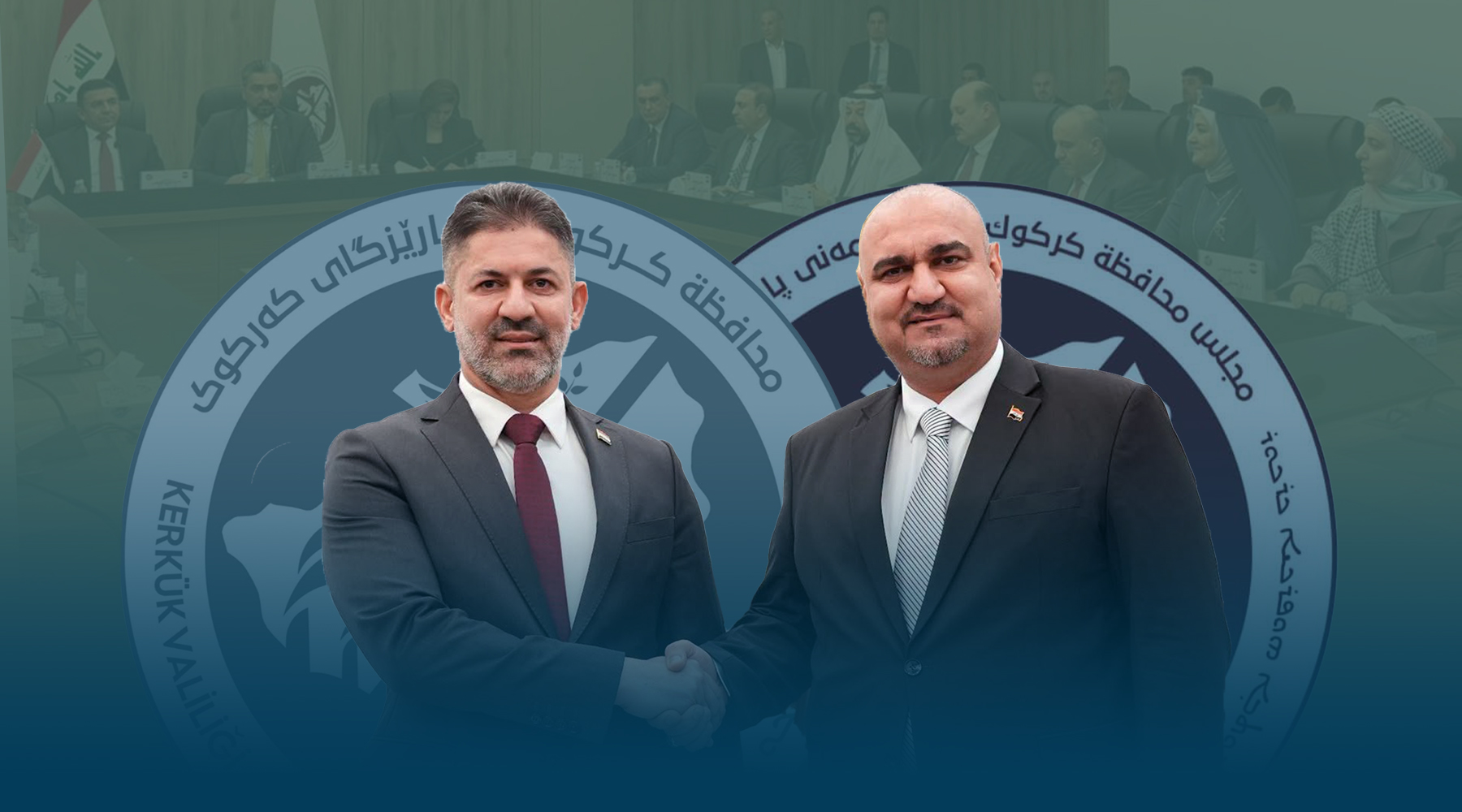

Qahtan Wahbi al-Wandawi has taken office as the new Governor of Kirkuk, representing the Turkmen community. Although his tenure is expected to last only 47 days, he has already outlined several commitments and priorities. Meanwhile, the Arab component is anticipating the transfer of the governorship to its representative at the beginning of the new year.
Al-Wandawi, nominated by the Iraqi Turkmen Front ITF, was elected on Saturday afternoon, November 14, 2026, after receiving 14 of the 15 votes cast by Provincial Council members present at the session. His election followed the Council’s formal approval of Mohammed Samaan Agha’s resignation from the governorship.
Samaan, who also heads the ITF, recently assumed the position of Minister of State in the federal government, creating an opportunity for another candidate from his political party to take over the governorship. The arrangement forms part of a broader political agreement aimed at rotating the position among Kirkuk’s different ethnic and political components.
The appointment came after several weeks of political negotiations and disagreements over the selection of the Turkmen candidate. These differences resulted in the postponement of two Provincial Council sessions before the political parties eventually reached an understanding.
A Governorship Lasting Only 47 Days
Al-Wandawi’s time in office will be relatively short, as his appointment is intended to cover the remaining period allocated to the Turkmen component under the existing political agreement. His tenure is expected to conclude on December 31, 2026, approximately 47 days after his election. Following that date, the governorship is expected to pass to a candidate representing the Arab component at the beginning of 2027.
Raad al-Saleh, a member of the Kirkuk Provincial Council representing the Arab bloc, told KirkukNow that Al-Wandawi’s election fulfils the Turkmen community’s entitlement to the position until the end of December 2026. He stressed that the governorship should subsequently be transferred to the Arab component and called on all political parties to respect the agreement.
Kirkuk’s current local administration was established on August 10, 2024, during a Provincial Council meeting held at Baghdad’s Al-Rashid Hotel. Nine of the Council’s 16 members participated in the session, including five representatives of the Patriotic Union of Kurdistan (PUK), three members representing Arab political factions—Al-Qiyada, Taqaddum, and Al-Uruba—and the representative of the Christian quota.
The remaining seven members, representing the Arab Alliance bloc with three seats, the Kurdistan Democratic Party (KDP) with two seats, and the ITF with two seats, did not participate in the agreement. Instead, they established an opposition bloc, boycotted Council sessions, and pursued legal action. The political dispute continued until mid-April of this year.
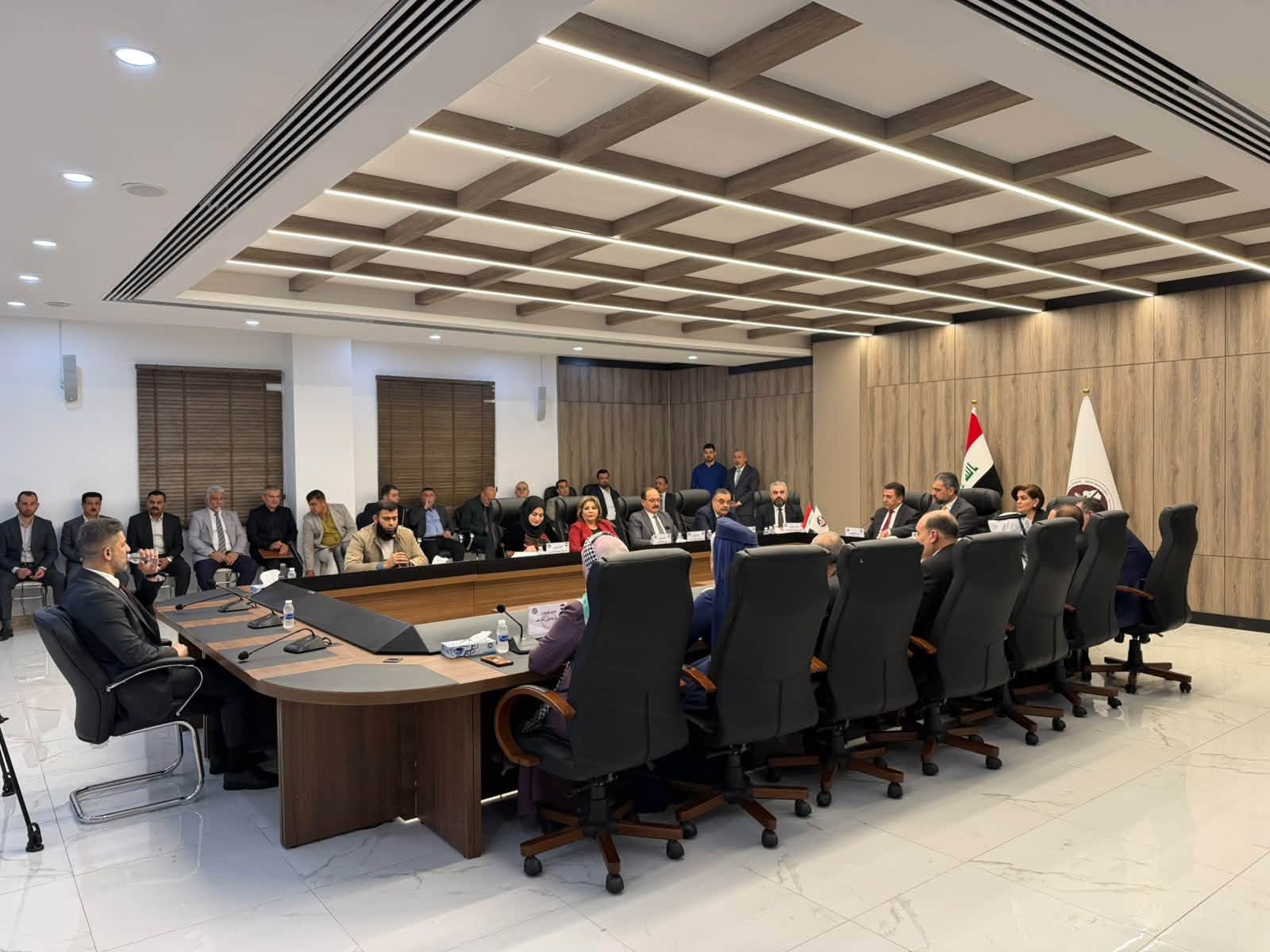
Nashat Shahwez, Deputy Chairman of the Provincial Council and head of the PUK bloc, said Al-Wandawi’s election reflects the political understandings reached among Kirkuk’s various components regarding their respective rights. He confirmed that the governorship would remain with the Turkmen component until the end of the year, after which the agreed rotation would take place.
In April 2026, during negotiations surrounding the election of the President of the Republic—a position ultimately secured by the PUK candidate—the PUK had agreed to transfer the Kirkuk governorship to the ITF.
Speaking at a press conference attended by a KirkukNow correspondent, Provincial Council Chairman Mohammed Ibrahim Al-Hafiz described the election of the new governor as an important development in Kirkuk’s political and administrative history. He expressed the Council’s support for the incoming administration and noted that the political parties and guarantors of the agreement establishing the local government would determine the timing of the transfer of the position to the Arab component.
It is worth mentioning that relations between Al-Hafiz and former Governor Mohammed Samaan were reportedly strained, with repeated disagreements and mutual accusations, many of which were circulated through various Facebook-based media platforms.
Ahmed Ramzi, a Provincial Council member representing the Iraqi Turkmen Front, also told several journalists, including a KirkukNow correspondent, that his party remains committed to the political agreement and supports the planned transfer of the governorship at the beginning of next year.
Three Governors Since August 2024
Since the establishment of Kirkuk’s local administration on August 10, 2024, the governorship has been held by three different individuals under the political power-sharing arrangement among the governorate’s various components.
Taha was the first governor appointed under this agreement, representing the Kurdish component, specifically the PUK. He remained in office until mid-April 2026, serving for approximately one year and eight months. Following his departure from the position, he assumed the role of First Deputy Governor, which he continues to hold.
Samaan’s Administration Faced Financial and Security Challenges
On April 17, 2026, the governorship was transferred to Mohammed Samaan Agha, the ITF’s candidate. His appointment followed an agreement with the Taqaddum Alliance and the PUK, bringing an end to months of political disagreements over the distribution of administrative positions.
The agreement concluded a prolonged period of political tension characterized by a 20-month boycott, legal challenges, and an intense media dispute that had brought the Provincial Council close to administrative paralysis.
Samaan remained governor for nearly seven months. In mid-October 2026, he was sworn in as Minister of State in the federal government. However, he did not immediately resign from the governorship, raising questions about the legal status of his position and the extent of his authority. The situation was eventually resolved when the Provincial Council formally accepted his resignation and proceeded to elect his replacement.
With the latest Council session, Wandawi became Kirkuk’s third governor since August 2024 and the second member of the Turkmen community to hold the position during this period, following Samaan Agha.
Under the existing political arrangements, a representative of the Arab component is expected to assume the governorship in early 2027 and remain in office until the next Provincial Council elections, scheduled for the end of that year.
Major Challenges Await the New Administration
In his first address after assuming office, Wandawi pledged to work closely with all communities in Kirkuk. He emphasized that his administration would represent Arabs, Kurds, Turkmens, and Chaldean-Assyrians alike, stressing the importance of cooperation, equal treatment, stronger partnerships, and a unified approach to addressing the governorate’s challenges.
The new governor identified several priorities for his administration, including creating employment opportunities, addressing the situation of volunteer lecturers, resolving outstanding contractual matters involving the North Oil Company, and advancing the allocation of residential land to journalists. He also highlighted the importance of securing Kirkuk’s share of the initiative to distribute one million residential plots, alongside ensuring the governorate receives its full allocations of fuel and electricity.
Nevertheless, the incoming administration faces a substantial backlog of unresolved matters. These include completing the procedures for 7,000 contract-based employment opportunities, the absence of an approved budget, delays affecting several development projects, an ongoing fuel shortage, and other pressing administrative and service-related challenges.
In his farewell remarks, former Governor acknowledged that his administration had operated under difficult financial and security circumstances. He stated that the administrative procedures concerning the 7,000 employment positions had been completed and that the official announcement would follow once the remaining requirements from the Ministry of Finance had been fulfilled.
Agha also referred to several projects completed or advanced during his administration. These included the construction of fuel stations of Prdy (Altun Kupri) and Baba Gurgur, the establishment of an oncology hospital, and progress concerning residential land allocations.
Following his appointment as Minister of State for Foreign Affairs, Agha pledged to remain engaged with Kirkuk’s affairs and to communicate the demands and concerns of the governorate’s different communities to the federal government.
Distribution of Administrative Positions Among Kirkuk’s Components
At present, senior administrative positions in Kirkuk are distributed among its main ethnic communities. The governorship is held by a representative of the Turkmen community, supported by two deputy governors, one representing the Kurdish component and the other the Arab component.
Of Kirkuk Governorate’s four districts, the Central District and Daquq are administered by Kurdish representatives, while Dibis and Hawija are administered by Arab representatives. Kurds, Arabs, and Turkmens collectively occupy most senior administrative positions across government departments.
By comparison, the Christian community, despite being one of Kirkuk Governorate’s principal constituent groups, remains the least represented in the local administration and has a relatively limited role in managing the governorate’s affairs.
Historically, during the former Ba'ath regime, the majority of key administrative and political positions in Kirkuk were controlled by the Arab community, without elections being held. Following the fall of the regime in 2003, the Kurds assumed the governor’s office and retained it until 2017.
The Arab component subsequently regained control of the position when Rakan Saeed al-Jubouri, who had served as Deputy Governor, was appointed Governor of Kirkuk. In 2024, the position returned to the Kurdish component with the appointment of Taha. Currently, it is held by a representative of the Turkmen community.
Kirkuk Province, with a population exceeding two million, remains a disputed territory between the Iraqi federal government and the Kurdistan Regional Government (KRG). The resolution of its status is linked to the implementation of Article 140 of the Iraqi Constitution, which establishes a three-stage process involving normalization, a population census, and a referendum.