



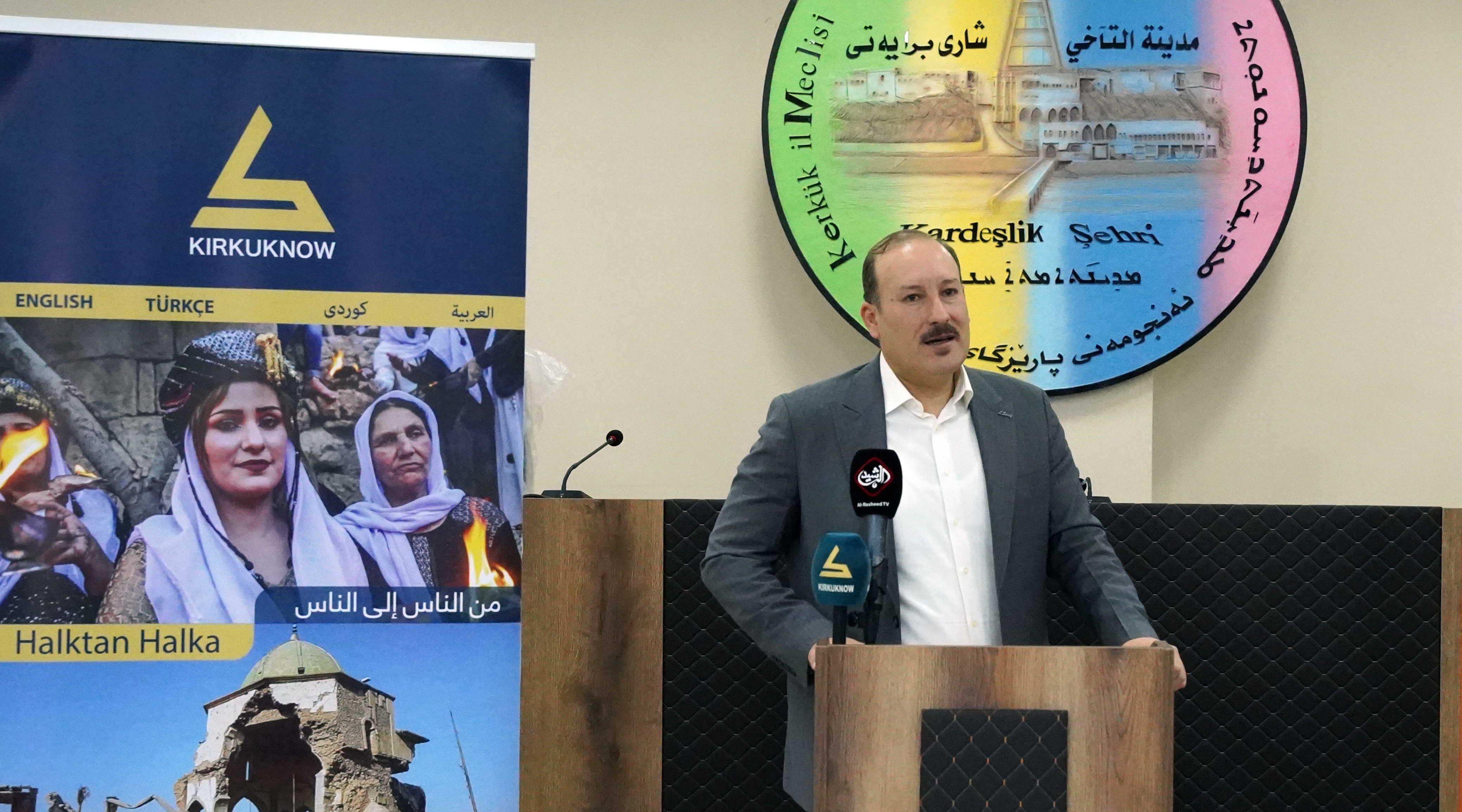

Kirkuk Provincial Council member Raad Al-Saleh says the council is committed to promoting transparency and ensuring accountability across government institutions. He also clarified that responsibility for the province's 7,000 job positions has now been transferred to the Ministry of Finance, placing the matter outside the council's authority.
Interviewed by KirkuKNow, Al-Saleh explained that the Provincial Council actively monitors the performance of government departments through its specialized committees. As chairman of the Finance, Trade, Economy, and Investment Committee, he said his committee regularly investigates concerns, prepares reports, and submits recommendations to the governor.
According to Al-Saleh, oversight begins when committee members receive complaints, identify irregularities, or observe potential violations. “Preliminary inquiries are conducted by assigning individuals to verify the allegations before formal action is taken.”
He cited the Investment Department as an example, noting that multiple complaints from investors prompted field investigations, the collection of evidence, and the securing of documents to prevent possible tampering.
“When violations are confirmed, the responsible committee reviews the findings and prepares recommendations that must be endorsed by all committee members and approved by the council chairman before legal procedures are initiated.”
Addressing the issue of holding department directors accountable, Al-Saleh said “disciplinary action, including dismissal, is possible when supported by sufficient evidence.”
Cases involving financial corruption or the misuse of public funds fall within the Provincial Council's oversight authority. “If officials fail to provide satisfactory explanations during questioning, the council may vote on their removal from office.”
Al-Saleh emphasized that while the Provincial Council is not an executive body, it has a legal responsibility to supervise the work of local government institutions. This includes monitoring public projects, combating corruption, and overseeing implementation. He added that the council has approved a measure requiring all development projects to receive council approval before proceeding and continues to monitor their execution.
Regarding the long-delayed recruitment of 7,000 employees, Al-Saleh acknowledged public criticism directed at the Provincial Council but stressed that the council's role is limited to oversight.
“The council has submitted official inquiries and requested updates from executive authorities to establish a clear timeline for announcing successful applicants.”
“All procedures within the council's jurisdiction have been completed and that responsibility now rests with the executive authorities, who must finalize the process and submit the necessary documentation to the Ministry of Finance.”
Once that occurs, he said, the recruitment file will no longer fall under the Provincial Council's responsibility.