



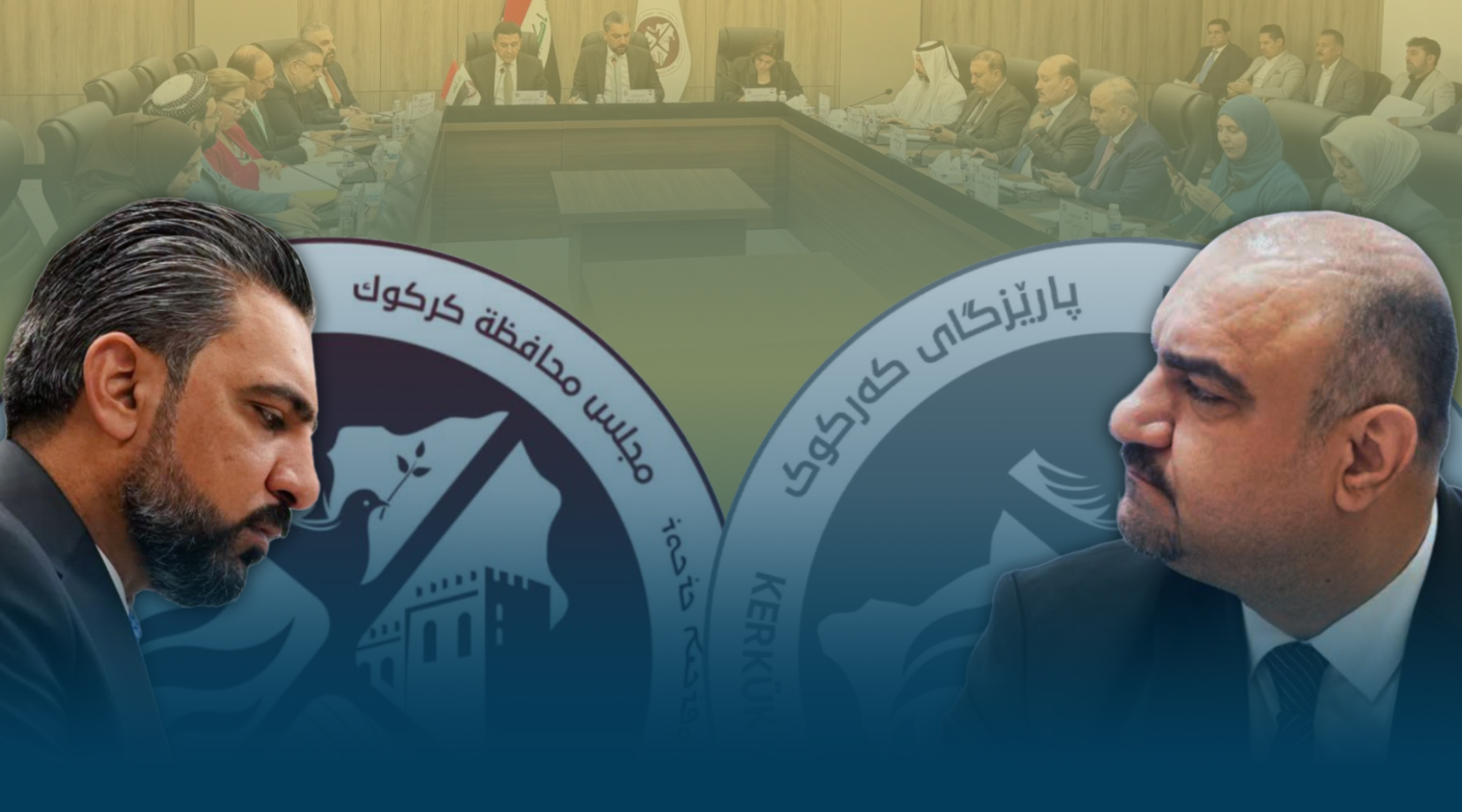

When Mohammed Samaan Agha took office as Kirkuk governor last April, his relationship with Provincial Council Chairman Mohammed Al-Hafiz was framed around cooperation and a shared commitment to serve the province. Less than five months later, that message of partnership has given way to increasingly public disagreements and a growing media confrontation.
The dispute emerged during a period of political reshuffling in Kirkuk, when the province witnessed the appointment of a Turkmen governor for the first time. At the time, both Samaan and Al-Hafiz spoke of working together to address the governorate’s problems and improve services for residents. Recently, however, supporters of both sides have exchanged accusations across social media platforms.
According to KirkukNow’s monitoring, several Facebook pages have been involved in an increasingly intense campaign of criticism against opposing political figures. The escalation follows disagreements over a range of issues, including the allocation of 7,000 government jobs, the failure to release budget funds, stalled development projects, the fuel shortage, and other administrative and service-related challenges.
Bickering Moves from Council Rooms to Social Media
The disagreement between the Provincial Council and the Governor’s Office has not been confined to official meetings. It has increasingly spilled into the media, with statements and accusations appearing under different names across social media platforms.
Supporters of both sides—particularly those aligned with the Taqaddum (Progress) Party and the Iraqi Turkmen Front ITF—have contributed to the escalation.
At the Provincial Council’s latest meeting on September 8, 2026, Chairman Mohammed Al-Hafiz, who represents the Arab component and the Taqaddum Party, devoted part of his remarks to criticizing the governor.
Al-Hafiz said there was now a “gap” between the Council and the governorate administration. He accused the administration of failing to respond to official correspondence from the Council and of not implementing some of its decisions.
He specifically referred to a Council resolution calling for a review of the professional qualifications and backgrounds of department heads who have remained in their positions for four years. According to Al-Hafiz, several Council decisions remain unimplemented despite repeated requests.
He warned that the Council could turn to the courts if the situation was not resolved.
We will initiate legal proceedings in court
“If we do not receive a response by next week, we will initiate legal proceedings in court through the Provincial Council’s legal representative,” Al-Hafiz said.
He also criticized the governor’s frequent absence from Kirkuk, saying that Samaan was occupied with matters outside the province that were unrelated to the administrative issues directly affecting citizens.
According to Iraqi law governing governorates that are not organized into regions, the Provincial Council is the highest legislative and oversight authority in the governorate, while the governorate administration is responsible for executive functions. The two institutions are therefore expected to work together rather than operate at odds with one another.
Al-Hafiz has maintained that the dispute is not personal and that his criticism is not intended to undermine Samaan or his administration. Instead, he says, the Council is seeking to “correct the course” of government operations and ensure that both institutions can perform their duties effectively.
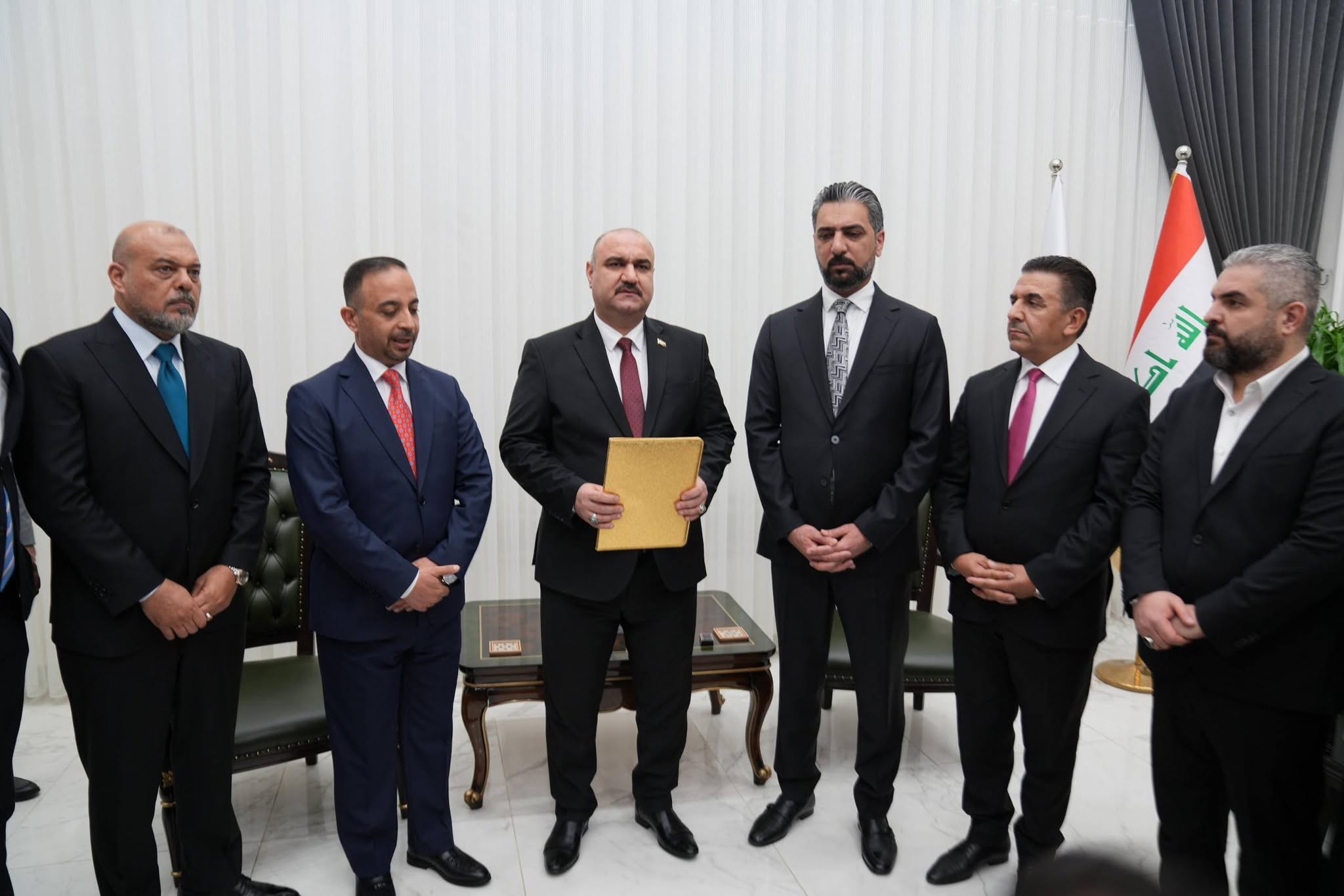
Samaan’s Absence: Neglect or External Engagement?
One of the main points of contention is Samaan’s frequent absence from Kirkuk.
Since taking office, the Turkmen governor has traveled several times to Turkey and the Gulf and has spent considerable time in Baghdad. Critics argue that his absence has affected the functioning of the governorate.
Supporters of Samaan, however, reject that interpretation.
Ahmed Ramzi, a Provincial Council member affiliated with the ITF, argued that the governor’s absence does not necessarily mean he is neglecting his responsibilities.
According to Ramzi, Samaan’s participation in conferences and official events outside Kirkuk is intended to represent the province, defend its interests, and attract additional projects and services.
Ramzi acknowledged that the governor’s physical presence is important but argued that the province has sufficient administrative personnel to maintain its operations in his absence. He pointed to the two deputy governors, five assistants, and seven advisers who can oversee various affairs.
He also accused some media outlets of using Samaan’s absence as an opportunity to intensify political attacks.
Samaan Agha became governor on April 17, succeeding Rebwar Taha. His appointment followed an agreement involving the ITF, the Taqaddum Party, and the Patriotic Union of Kurdistan (PUK). The agreement ended months of political disputes over the distribution of senior positions, following roughly 20 months of boycotts, legal disputes, and media confrontations that had pushed the Provincial Council toward paralysis.
However, not all members of the Council share Ramzi’s assessment.
Nashat Shahwez, Deputy Chairman of the Provincial Council and a representative of the Kurdish quota affiliated with the PUK, said the governor’s absence had become a source of dissatisfaction.
According to Shahwez, some government departments have turned to the Provincial Council for assistance in carrying out their work, while Samaan has attributed his absence to external commitments intended to secure Kirkuk’s interests.
Shahwez said the Council would continue to investigate the issue and seek clarification over the governor’s failure to regularly report to the governorate headquarters.
One Statement, Two Interpretations
As of the publication of this report, the Arab Group within the Kirkuk Provincial Council was the only body to have issued an official statement on the dispute.
The group expressed its support for Samaan Agha and reaffirmed its commitment to partnership with the Turkmen component.
The statement, published on Saturday, September 12, on the page of the Arab Alliance led by Rakan al-Jubouri, said the group supported Samaan and believed in cooperation with the Turkmen community. It also stated that the group’s positions were based on official institutions representing the Turkmen community rather than on individual figures or unofficial positions.
The statement was not signed.
The Arab group supported Samaan and believed in cooperation with the Turkmen community
Pages close to the Taqaddum Party subsequently reported, citing various sources, that the statement had been drafted and published at the initiative of bloc member Rakan al-Jubouri and that most members of the bloc did not support it.
The Arab Group was established several months ago and consists of six Arab members of the Provincial Council. Its formation followed almost two years of internal divisions and mutual accusations among Arab representatives.
Mohammed Ali al-Nuaimi, an Iraqi member of parliament from the Azm Alliance, was among the first political figures to publicly comment on the statement. In a Facebook post published on September 12, he welcomed the Arab Group’s position and stressed the importance of maintaining balance among Kirkuk’s communities.
He also called for attention to issues directly affecting residents, particularly the allocation of 7,000 government positions.
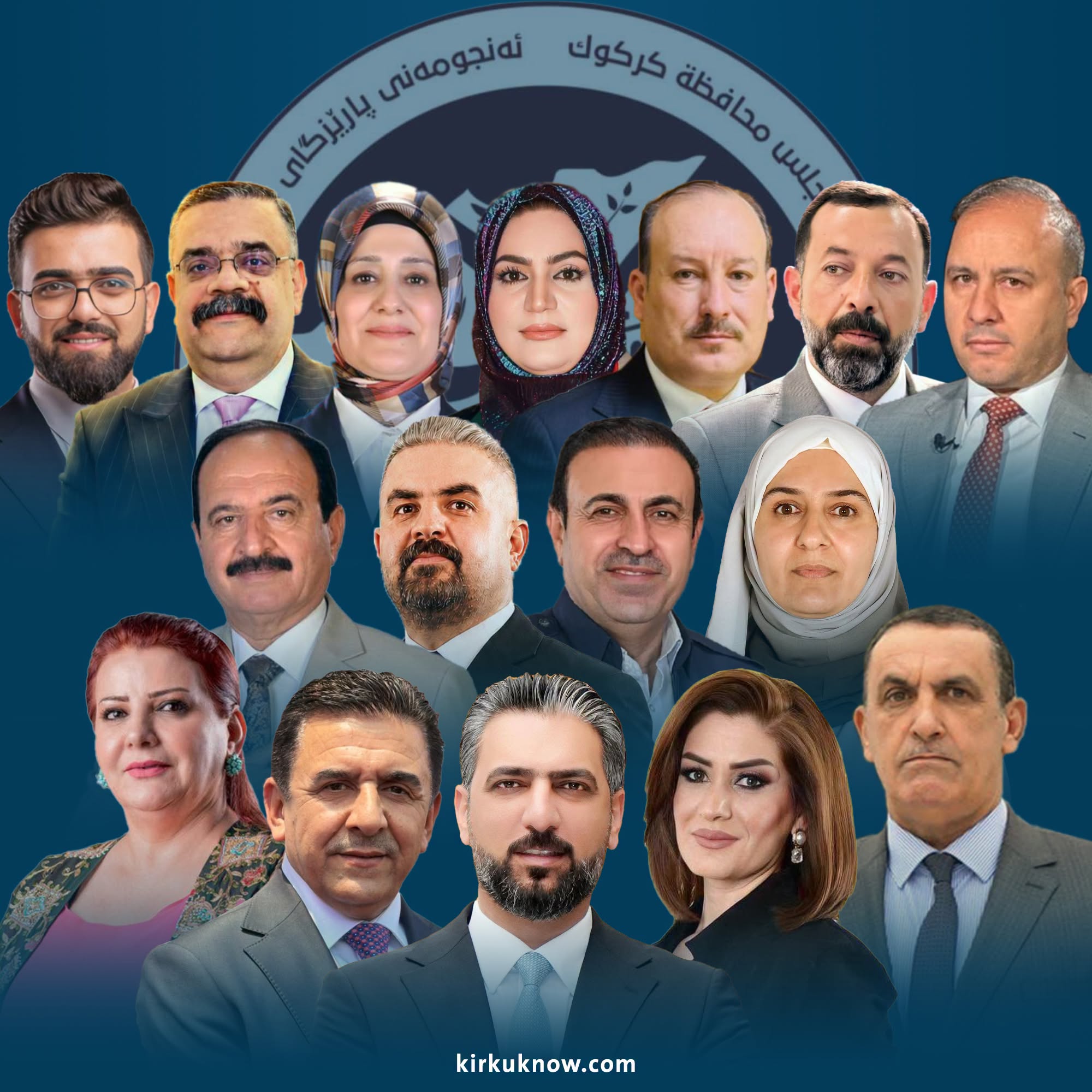
The 16 members of the Kirkuk Provincial Council pictured together.
Calls for Restraint
The disagreement between the Provincial Council and the governorate administration has already begun affecting other areas of government business, with several matters remaining unresolved and the possibility of further confrontation looming.
A recent example involved the Council’s attempt to summon Kirkuk’s police chief.
The police chief, who represents the Arab component, was asked to appear before the Council twice following a request from Ahmed Ramzi, a Turkmen Front member and chairman of the Security and Defense Committee. He did not attend, citing various reasons, and the Council is now preparing to summon him for a third time.
Arshad al-Salihi, head of the Turkmen bloc in the Iraqi Parliament, said summoning or hosting government officials and governors is a normal institutional procedure intended to identify obstacles and hear officials’ demands.
He referred to a parliamentary committee’s request to meet with the Kirkuk governor as an example, urging lawmakers to focus on communicating citizens’ needs and avoiding political interpretations of routine oversight procedures.
Kirkuk is already facing numerous challenges, including electricity shortages, a gasoline crisis, and continuing protests over the filling of thousands of vacant government positions. The Provincial Council is responsible for addressing many of these issues under its bylaws and the relevant laws.
At the same time, numerous administrative positions in the province remain awaiting Council approval, while other unresolved problems require government directives and political decisions.
Ahmed Kirkuki, a Provincial Council member representing the PUK bloc, issued a statement on September 12 calling for respect for the respective powers and responsibilities of the Council and the Governor’s Office.
He criticized social media pages and some media outlets for worsening the dispute and deepening political divisions. Kirkuki argued that successful administration and improved services benefit all residents of Kirkuk and stressed that disagreements between officials should remain within legal and institutional channels.
An Old Political Rivalry Re-emerges
The latest dispute is not the first confrontation between figures affiliated with Taqaddum and the ITF.
In recent months, the two sides have repeatedly exchanged accusations over the distribution of positions and appointments within Kirkuk’s government departments, despite the fact that both parties, together with the PUK, are central to the formation and administration of the current provincial government.
The distribution of senior positions reflects Kirkuk’s complex political and ethnic balance. The governor is currently Turkmen, while his two deputies are divided between Kurdish and Arab representatives.
Of the governorate’s four district commissioners, two are Kurdish—Kirkuk Center and Daquq—and two are Arab—Hawija and Dibis. Department leadership is similarly distributed primarily among the three major communities.
Christians, despite being one of Kirkuk’s established demographic groups, hold comparatively few senior administrative positions.
The distribution of power in Kirkuk has changed considerably over the past decades. Under the Ba’ath regime, senior administrative positions were largely held by Arabs, with officials appointed rather than elected. After 2003, Kurds held the province’s top executive position until 2017.
The Arab community then regained the governorship when Deputy Governor Rakan Saeed al-Jubouri assumed the position. In 2024, the post returned to the Kurdish community with the appointment of Rebwar Taha. It is now held by a Turkmen official.
Between Political Balance and Public Demands
Kirkuk’s political tensions cannot be separated from its broader demographic and constitutional complexities.
The governorate has a population of more than 2.034 million and remains one of Iraq’s most politically sensitive areas. It is disputed between the federal government in Baghdad and the Kurdistan Regional Government KRG.
The constitutional framework for resolving Kirkuk’s status is Article 140, which envisages three stages: normalization, a population census, and a referendum.
Against this backdrop, disagreements between the Governor’s Office and the Provincial Council carry significance beyond ordinary administrative disputes. What began in April with promises of cooperation now appears to have developed into a broader political and media confrontation.
For Kirkuk’s residents, however, the central question is less about which political camp prevails and more about whether the competing institutions can return to cooperation and address the unresolved issues—jobs, services, budgets, stalled projects, fuel, and vacant administrative positions—that continue to affect daily life.
The “pledge” of partnership made when Samaan took office remains the key test: whether Kirkuk’s political forces can turn their agreement on paper into practical cooperation in government.