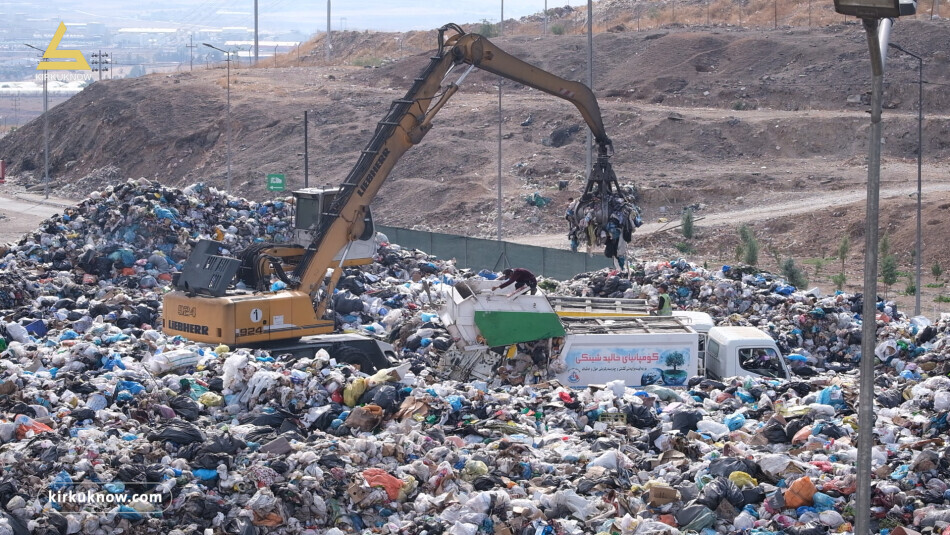
As waste volumes continue to rise in cities within the Kurdistan Region of Iraq KRI, local authorities are working to manage it effectively and limit environmental harm—particularly by reducing burning and smoke emissions.
Every day, nearly 4,000 tons of waste are gathered in the urban centers of Erbil, Sulaimaniyah, Duhok, and Halabja. This growing volume poses a serious environmental risk, prompting each province to adopt its own strategies for disposal and control.
Erbil: Testing a Japanese Model
In the capital of the Iraqi Kurdistan Region, between 2,100 and 2,200 tons of waste are collected daily, with food waste accounting for around 39 percent.
“We introduced a Japanese system to address environmental challenges,” said Zhyar Jalal, Director of Services and Environmental Protection. “It involves drilling 250 gas wells at the Kani Qirzhala landfill to capture gas produced by decomposing waste.”
He explained that the gas is burned under controlled conditions, preventing the release of smoke and reducing air pollution. In addition, the Erbil administration is working to establish a recycling facility, though financial constraints remain a hurdle.
Sulaimaniyah: Ending Waste Burning and Expanding Recycling
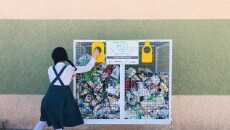
Authorities in Sulaimaniyah have halted waste burning in recent years and instead focus on recycling as a cleaner alternative.
“About 1,000 tons of waste are collected daily,” said municipal spokesperson Zardasht Rafiq. “Rather than being burned, all waste is transferred directly to the recycling plant in the Tanjaro area.”
At the facility, waste is sorted, and materials that cannot be reused are disposed of using scientifically approved methods. According to Rafiq, these efforts have helped position Sulaimaniyah as one of Iraq’s cleanest cities.
Recycling both solid waste and organic materials is considered a key method for reducing pollution. UN data indicates that Iraq ranks among the regions most affected by climate change impacts.
Duhok: Recycling Efforts and Tourism Pressures
Duhok collects around 450 tons of waste each day, a figure that can rise to 500 tons during peak tourism periods.
All collected waste is transported to a recycling facility in the Kwashe area. “Waste collection is handled by a private company,” said municipal spokesperson Sherwan Hassan.
He added that strict regulations are imposed on oil refineries to maintain air quality, including mandatory use of filtration systems. However, one of the main challenges remains public behavior. “Some residents and tourists dispose of waste improperly, contributing to environmental pollution,” Hassan noted.
Data from the Kurdistan Region’s Ministry of Health shows that 9,911 new cancer cases were recorded in 2023 alone.
Halabja: Promoting Environmental Awareness
Halabja generates about 90 tons of waste daily. While some of it is recycled through small-scale plastic and nylon processing facilities, the city’s cleanliness is largely attributed to strong public awareness and its environmental setting.
“Excessive use of plastic is one of Halabja’s major concerns, as it has negatively affected the Sirwan River,” said municipal spokesperson Farhan Izzat.