


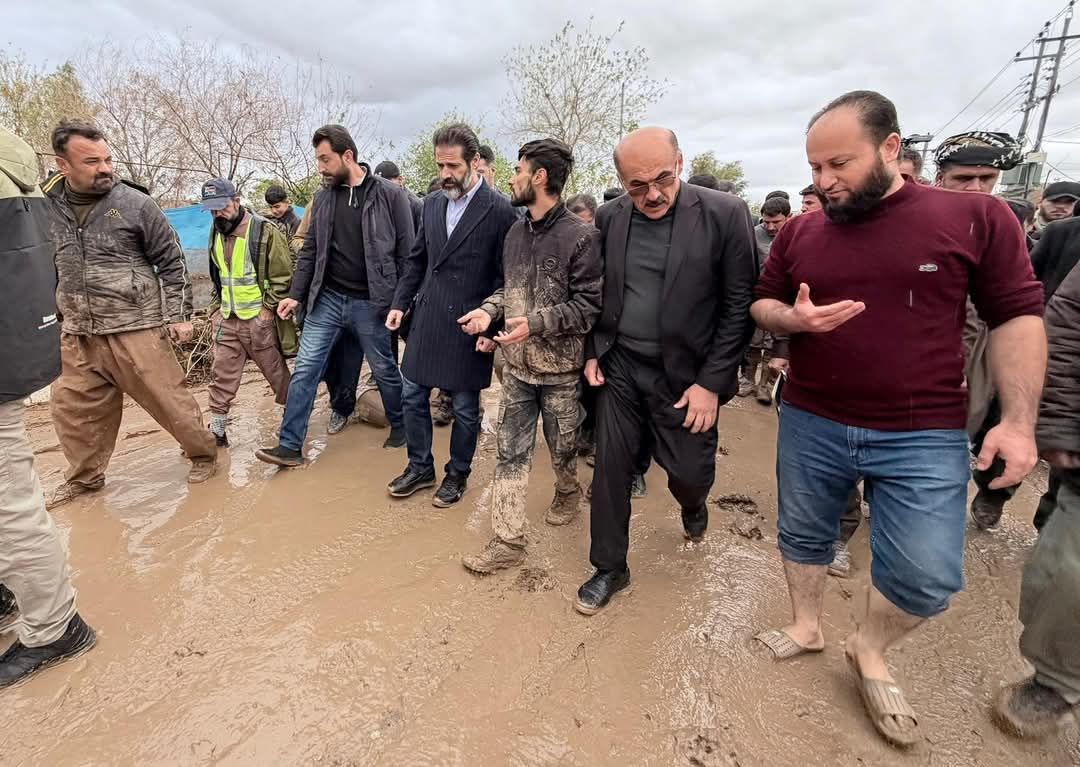

The Kurdistan Regional Government KRG has effectively withdrawn from its responsibilities during the December 10 floods of Chamchamal district of Sulaymaniyah northern province, leaving relief efforts largely in the hands of charitable organizations and media outlets.
Despite parliamentary support for more than three decades, authorities have failed to establish a national aid institution to manage disaster relief. As a result of the government’s noncompliance with parliamentary laws and its inability to fulfill its duties, the task of assisting flood victims in Chamchamal has become entangled in political rivalries and media competition.
Relief efforts are now fragmented and driven by partisan agendas rather than coordinated national action.
Under the Kurdistan Red Crescent Society Law, passed by the Kurdistan Parliament in October 1993, a national body was meant to be established to collect and distribute aid to victims and vulnerable groups, while also coordinating with local and international organizations. However, more than 30 years later, this institution remains nonexistent. Instead, the government has authorized dozens of political party-affiliated and family-run charities to operate in the humanitarian sector.
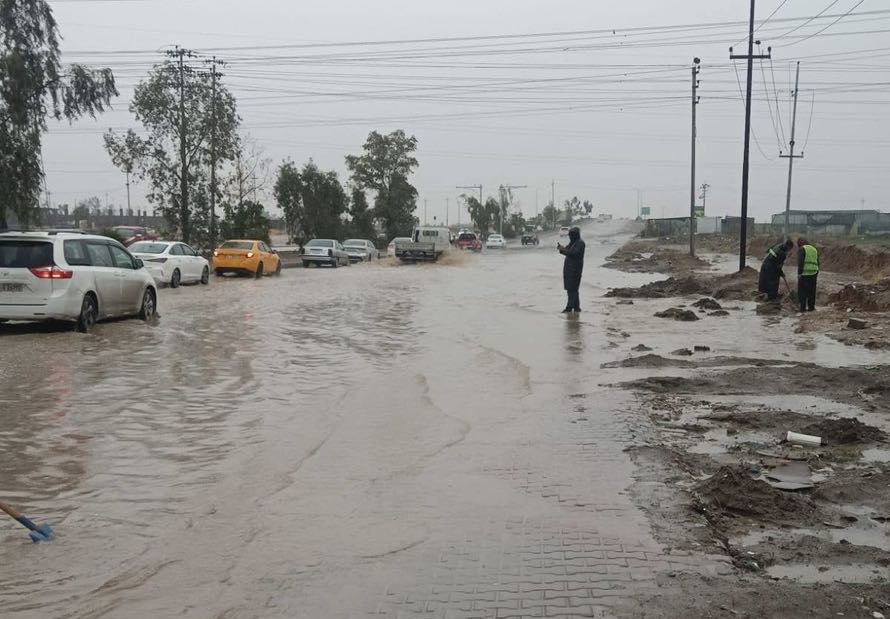
On December 10, torrential rainfall measuring 127 millimeters within 24 hours triggered severe flooding across Chamchamal, Shorish, and Takya. The floods claimed two lives, injured 12 people, damaged 1,607 homes, and destroyed 540 vehicles.
From the first day of the disaster, numerous organizations—many with direct ties to political parties—began collecting donations. Yet the absence of a central authority has resulted in disorder, with each organization independently gathering and distributing aid according to its own priorities.
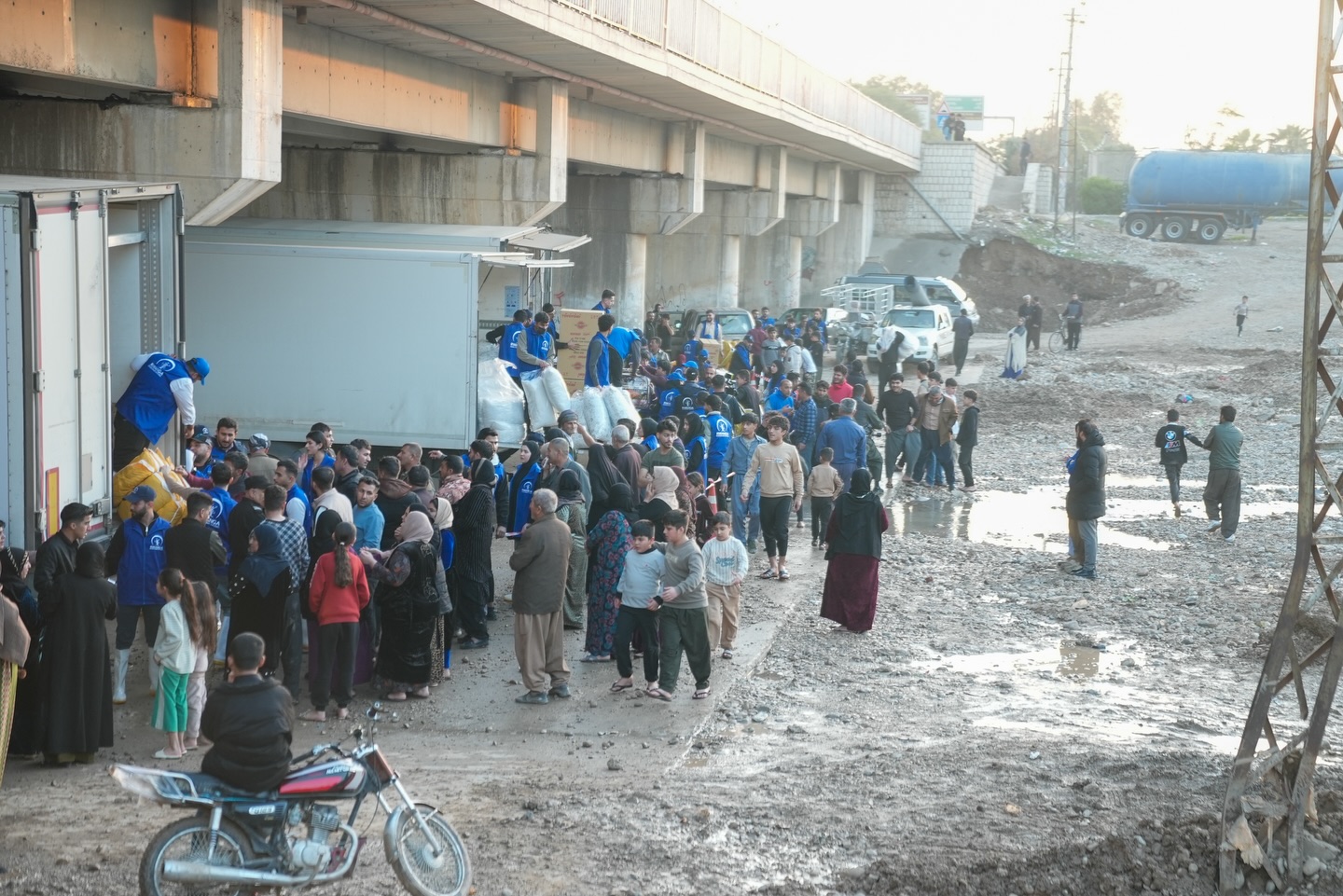
Sulaimaniyah, December 11, 2025: Ruwanga Organization distributing aid to the people of Chamchamal. Media of Ruwanga
“There is a hidden party struggle behind the delivery of aid to Chamchamal,” said Sarwar Abdulrahman, Head of Pay Institute for Education and Development, a non-profit non-governmental organization NGO, noting that charitable organizations affiliated with ruling parties often undermine one another. While he acknowledged the positive intention behind collecting aid, he emphasized that the situation unfolding in Chamchamal is deeply concerning.
The organizations dominating relief efforts are closely linked to the two main ruling parties in the Kurdistan Region, including groups such as the Barzani Organization and Ruwanga. Abdulrahman argued that if a neutral national institution existed—operating without political or ideological bias and under proper oversight—the aid process would be far more transparent and effective.
He added that had the Kurdistan Red Crescent Society been established as intended, “it would have led the response to the Chamchamal floods instead of politically affiliated groups.”
Sirwa Rasul, Director General of the Joint Crisis Coordination Center (JCC) at the KRG Ministry of Interior, stated that government teams were deployed to Chamchamal from the first day of the floods and remain active. The JCC, created during the ninth cabinet of the KRG, is responsible for coordinating disaster response across all provinces and autonomous administrations, including Kirkuk.
However, legal expert Shiwan Gardi criticized the KRG’s handling of the crisis, arguing that its role was effectively replaced by party-linked charities.
Party Charities Filling the Government’s Role
Gardi pointed out that Prime Minister Masrour Barzani did not personally visit Chamchamal, while his son—who holds no official government position—was involved in relief activities. This, he said, reflects the broader absence of institutional government leadership.
Deputy Prime Minister Qubad Talabani visited the area twice. During his first visit, he announced the creation of an aid fund for victims. On his second visit, he declared the resignation of four local officials and the formation of an emergency commission. Despite these measures, the government faced criticism for failing to clearly demonstrate its role in direct assistance.
Although organizations and donors were instructed to channel their contributions through the official commission, several media outlets launched independent fundraising campaigns. Ava TV, owned by Arin Masrour Barzani, began collecting donations but refused to transfer them to the commission, citing concerns over fair distribution. Other organizations adopted a similar stance.
Critics argue that this confusion is intentional. According to Gardi, the deliberate overlap of authority prevents institutionalization, explaining why laws such as the Kurdistan Red Crescent Society Law remain unenforced. He warned that party-affiliated charities often serve as tools for political propaganda rather than neutral humanitarian work.
Alongside Ava TV, Rudaw—linked to the President of Iraqi Kurdistan Region IKR, Nechirvan Barzani—also launched a campaign seeking to raise seven billion Iraqi dinars IQD (USD4.5 Million) from business figures.
Ata Mohammed, head of the office of Deputy Prime Minister, announced that a special bank account had been opened at Charmo Bank for the Chamchamal relief commission. So far, the account has received 1.746 billion IQD and $120,000. He stated that an electronic transparency dashboard would be launched on December 18 to publicly display all donations.
Arsalan Rahman, a media expert, criticized some outlets for abandoning professional standards by actively participating in fundraising. He stressed that the role of the media is to report events objectively, not to become part of them by appealing to emotions for political or competitive purposes.
He argued that “the current situation is the result of partisan rivalry among media organizations in the absence of a neutral national institution like the Red Crescent.”
According to data from the Kurdistan Region’s NGO Office, over 6,350 NGOs operate in the IKR, including around 50 international NGOs. Many are active in humanitarian aid, women’s rights, child protection, environmental issues, and healthcare.
Article 4 of the Kurdistan Red Crescent Law outlines 12 core responsibilities for the society, including assisting disaster victims, impoverished families, families of martyrs, and survivors of Anfal and chemical attacks.
“While public and organizational support during disasters is commendable, the absence of direct government financial compensation is alarming,” Fatih Sangawi, a member of the Islamic Union bloc, stated.
He emphasized the urgent need for a national institution with its own budget and oversight mechanisms.
Sangawi concluded that the Chamchamal floods should prompt a serious review of the Kurdistan Red Crescent Society Law. If amendments are required, he said, his faction within the PUK is prepared to take the initiative.