



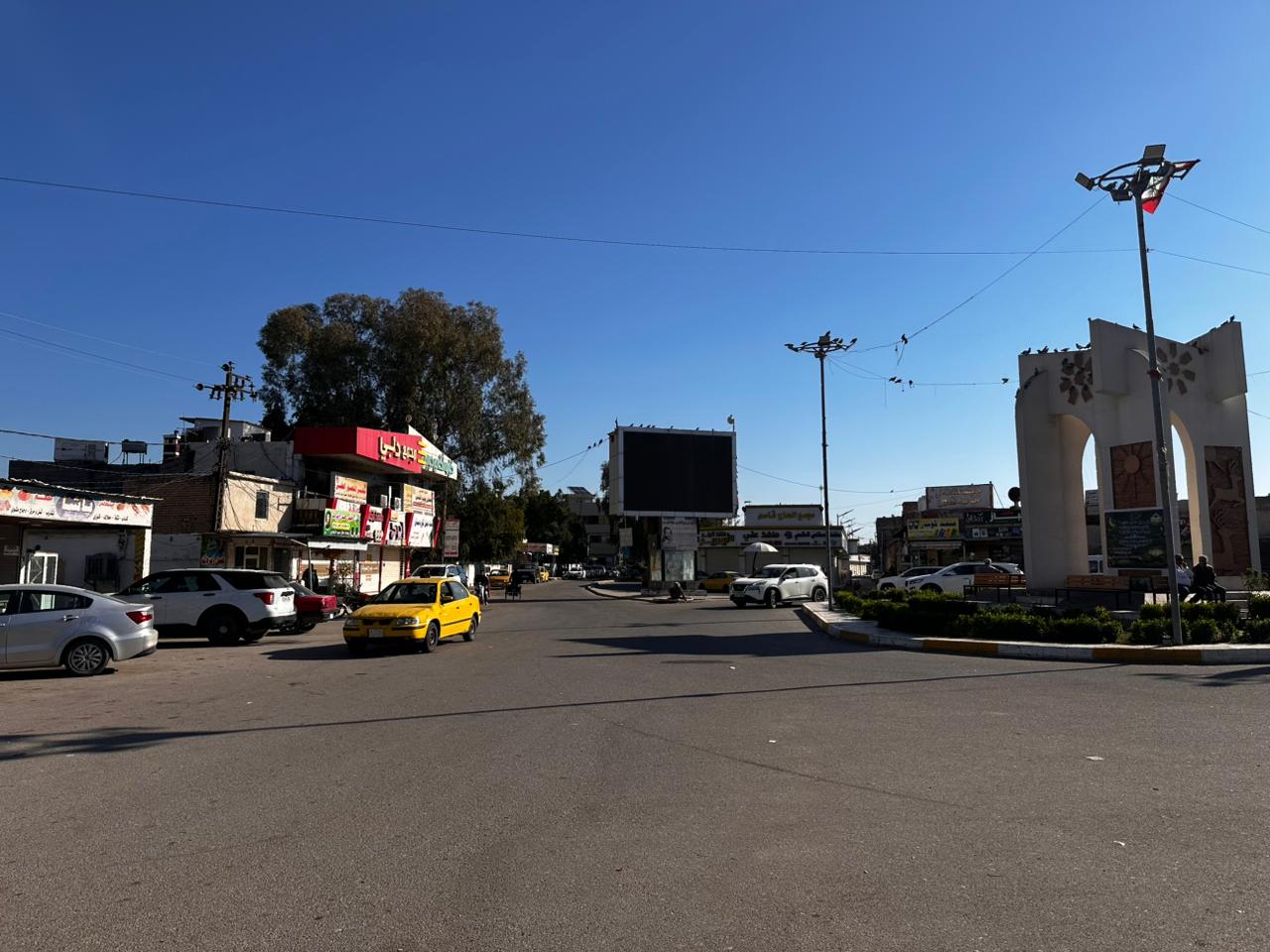

Plans to convert Jalawla, and Qara Tapa sub-districts into districts could shift the balance of power in favor of Sunni Arabs. The Shiites Arabs oppose the move, and while the Kurdish side has protested the decision, they are more concerned about Khanaqin, which faces the threat of being reduced and marginalized.
The Kurdish side interprets the decision as a violation of Article 140 of the Iraqi Constitution about the disputed territories, with fears of changing the political and demographic map of Diyala Province, affecting the future representation and administrative identity of these areas, considered part of the Kurdistan Region of Iraq KRI. The Shiites see this step as strengthening the position of Sunni Arabs and expanding their influence, especially in areas bordering Iran.
The future of Kirkuk province and other disputed territories between Baghdad and Erbil is governed by Article 140 of the Iraqi Constitution in 2005, which outlines a three-step process: normalization, a census, and a referendum which partially has been implemented up to the present.
A Turbulent Beginning
On December 31, 2024, the Diyala Provincial Council, by a majority of nine out of fifteen members, decided to upgrade the sub-districts of Qara Tapa, Jalawla, and Bani Saad to districts. This move sparked protests, suspicions, and conflicts between political blocs, which spilled onto the streets.
The debate continued for several months, particularly concerning Qara Tapa, until the Iraqi Ministry of Planning issued an administrative order on July 2, 2025, designating only Qara Tapa as a district, with the sub-district of Jabara included as its center.
The order stipulated that Qara Tapa would be the district's center. As a result of this decision, Khanaqin lost two sub-districts (Qara Tapa and Jabara).
Despite Kurdish protests and legal action, the creation of the Qara Tapa district was officially announced, and the district mayor assumed his duties on July 26, 2025.
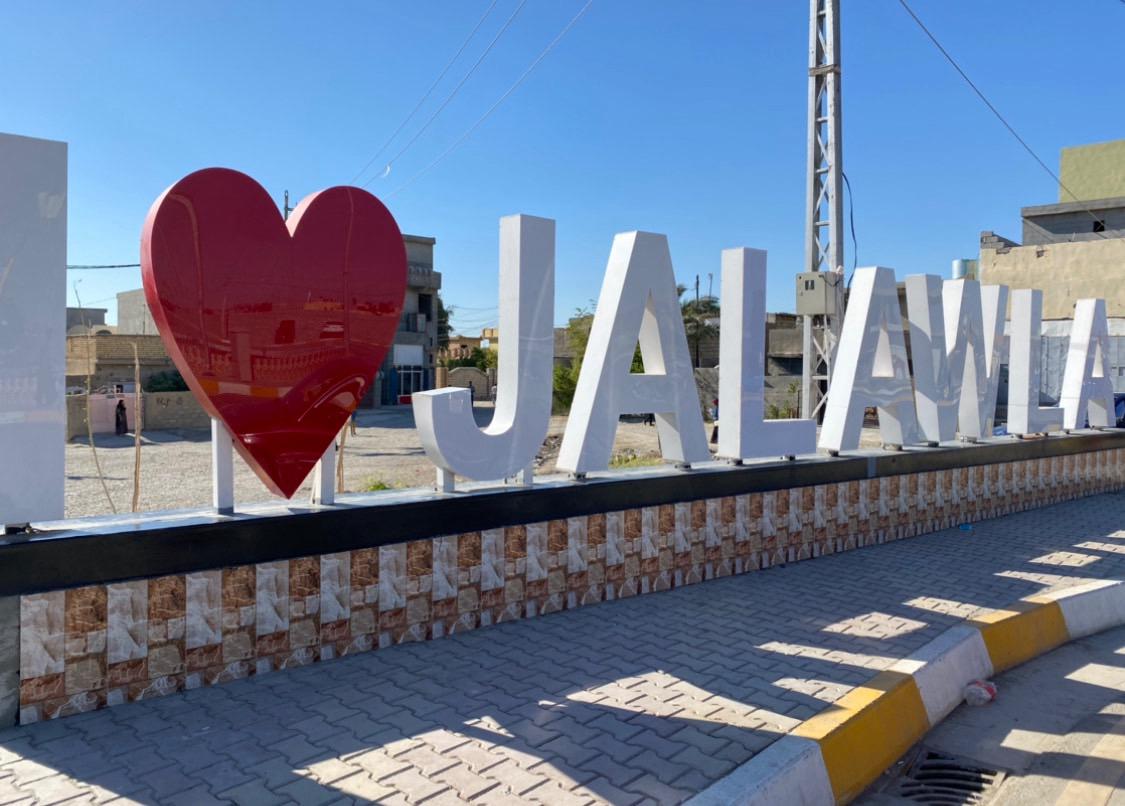
On February 19 of this year, approximately one year and two months after the provincial council's decision, the council chairman, Omar al-Karawi, announced in a video the conversion of the Jalawla sub-district into a district.
On February 23, 2026, the Iraqi Minister of Planning, Khalid Battal al-Najm, issued a ministerial order establishing the Jalawla district, which also includes the al-Saadiya sub-district. Following this decision, Khanaqin lost two more sub-districts: Jalawla and al-Saadiya.
Constitutional Dispute
The Kurdish side, across all political forces, insists that the decision to create the Jalawla and Qara Tapa districts is "illegal" and violates the Iraqi constitution. Nazik Ahmed, a member of the Iraqi parliament representing the Azm Alliance (a candidate of the Kurdistan Democratic Party), told KirkukNow that "the conversion of the Jalawla and Qara Tapa districts into sub-districts is unconstitutional and constitutes legal and constitutional violations. It appears the Iraqi government is not abiding by the constitution, as these areas fall within the disputed territories, and no changes should be made to their administrative units."
According to Article 140 of the Iraqi Constitution, Khanaqin and other parts of Diyala are considered disputed territories between the federal government and the Kurdistan Regional Government KRG.
According to the permanent Iraqi Constitution, the areas covered by Article 140 should not be subject to any fundamental changes in their administrative, demographic, or border status until all three phases of the article (normalization, census, and referendum) are implemented.
The procedures for establishing the districts of Qara Tapa and Jalawla were illegal
Aws Ibrahim, the sole member representing the Kurdish parties (Patriotic Union of Kurdistan (PUK)) in the Diyala Provincial Council, told KirkukNow that "the procedures for establishing the districts of Qara Tapa and Jalawla were illegal, and some procedures were circumvented. Therefore, regarding Qara Tapa, we resorted to the court and filed a complaint with the Administrative Court, awaiting the final decision which will be issued in March (2026)."
Aws Ibrahim sent a letter to the head of the committee implementing Article 140, requesting, as he put it, the suspension of all procedures for upgrading the administrative units in the areas covered by Article 140. The conversion of the Jalawla and Qara Tapa sub-districts into districts is unconstitutional.
Representatives of the Kurdish side are seeking to overturn the decision to convert the Jalawla and Qara Tapa sub-districts into districts through the courts, as well as to gain the support of other parties, particularly Shia Arabs.
In mid-September 2025, the Administrative Court in Baghdad rejected a lawsuit against the decision to create the Qara Tapa district, arguing that it was filed more than 30 days after the date of creation.
On July 20, 2025, the Diyala Provincial Council sent a letter to the Ministry of Planning requesting a halt to the procedures for creating the Qara Tapa district pending an investigation, but the procedures were not stopped.
Aws Ibrahim says that nine members of the council signed a letter to the Diyala Provincial Council presidency, suspending the decision and procedures related to converting the Jalawla sub-district into a district, and that they will seek to overturn the decision by Ministry of Planning.
The Kurdish parties in Diyala have one representative in the Iraqi Parliament and a single representative on the provincial council. The Patriotic Union of Kurdistan (PUK) participates in forming the provincial administration and the local council, along with several Sunni and Shiite Arab parties.
Nazik Ahmed stated that they proposed sending a delegation from the KRG to visit Baghdad and meet with the Ministry of Planning to discuss the issue, because "this issue has negative political and economic repercussions for Khanaqin."
Local Backlash
On February 25, all shops, bazaars, and public places in the Khanaqin district declared a general strike against attempts to "reduce and marginalize" the district by separating four sub-districts from it: Jalawla, Saadiya, Qara Tapa, and Jabara.
Qara Tapa was founded during the Ottoman era. Its population is 56,000, distributed across 10 neighborhoods and villages. The residents of Qara Tapa are a mix of Kurds, Arabs, and Turkmen, and the sub-district lies within the disputed territories.
The founding of Jalawla dates back to 1958, with 94,000 population, comprised of diverse groups. As for Saadiya, which is slated to be annexed to the Jalawla district, its population exceeds 40,000.
Civil activist and member of the Khanaqin Defense Committee, Salam Abdullah, told KirkukNow, "Our demands are summarized in two main points: first, the implementation of Article 140 of the Constitution, and second, the suspension of all decisions related to the creation of Jalawla districts."
Because Khanaqin currently has no sub-districts, they want to marginalize and shrink Khanaqin.”
According to the Iraqi Ministry of Planning, Jalawla received 80 points on the criteria for becoming a district. It also enjoys a strategic geographical location and serves as a meeting point between several provinces, in addition to its important infrastructure, including schools, hospitals, health centers, water and electricity projects, and tourism and agricultural potential.
Rabia Abbas, a civil activist in Khanaqin, told KirkukNow that Khanaqin has a rich history and has been aspired to be a province for decades, so no one can diminish its importance. The residents of the district, in all their diversity, stand against any attempt to undermine coexistence in Khanaqin and shrink the district.”
Khanaqin Minimized
The creation of the districts of Jalawla and Qara Tapa places Khanaqin in a geographical and economic siege that is leading to its suffocation, according to the district's mayor, Jawad Faydallah.
Faydullah told KirkukNow that "all procedures related to converting the sub-districts of Qara Tapa and Jalawla into districts involve violations, because the area is covered by Article 140 and no administrative changes should be made there."
Khanaqin, which became a district in 1921 and has a population, including residents of the sub-districts, of more than 260,000, was under the control of Kurdish parties until October 16, 2017, after the return of federal forces and the withdrawal of Peshmerga forces due to tensions following the independence referendum in the Kurdistan Region and the disputed territories.
Due to the decisions to create the districts of Qara Tapa and Jalawla, Khanaqin no longer includes any sub-districts and consists only of the district center. The mayor of Khanaqin explained that "according to a decision by the Ministry of Planning, Khanaqin has been encircled because the borders of Jalawla district extend to the geographical boundaries of Khanaqin district center, which are the boundaries of Khanaqin municipality. Based on this, all villages and agricultural lands will be separated from Khanaqin and annexed to Jalawla."
Shifting Political Balance
According to KirkukNow's correspondent, the members of the Diyala Provincial Council who signed the request to cancel the decision to create Jalawla district are representatives of the Shiite lists and parties within the council (Badr, Asa'ib Ahl al-Haq AAH, and al-Asas (The Foundation)), in addition to a representative of the Progress Party.
Shiite sources who spoke to KirkukNow do not hide their fear of the danger of strengthening the influence of Sunni Arabs in Diyala at the expense of Shiites and Kurds, especially in a sensitive region bordering Iran.
According to a decision by the Ministry of Planning, Khanaqin has been encircled
According to sources in Diyala, the Shia believe that the creation of the Jalawla and Qara Tapa districts will shift the balance of power by strengthening and expanding Sunni areas and establishing new administrative units, particularly near the Iranian border.
According to Kirkuk Now, Shia groups will not accept the creation of another Sunni district in Diyala, as this would diminish the influence of both Shia and Kurdish groups.
Diyala province currently comprises eight districts: four with Sunni influence, three with Shia influence, and only one, Khanaqin, with Kurdish influence.
With the addition of Jalawla and Qara Tapa, Diyala will have ten districts. In this scenario, the combined influence of Kurdish and Shia forces will not reach the same level as that of Sunni Arabs.
Regional Response
The General Authority for Kurdish Areas Outside the Kurdistan Regional Government Administration (a body specializing in disputed territories and affiliated with the KRG Council of Ministers) oversaw a meeting in Erbil on February 26th, which was attended by Kurdish parties present in Khanaqin. The Authority emphasized that "Khanaqin is not alone and enjoys the support of the region."
The head of the Authority, Fahmi Burhan, stated in a press conference attended by a KirkukNow correspondent that "an unconstitutional and illegal problem has emerged in Khanaqin, namely the transformation of the Jalawla and Qara Tapa sub-districts into districts."
Fahmi believes that what happened is an extension of previous policies aimed at separating original areas from their provinces.
"This is an unconstitutional endeavor and violates Article 140 of the Constitution, so we will strive to prevent these unconstitutional and illegal actions in these areas.”
Burhan stated that they assured the parties that "the people of Khanaqin are not alone, and that they have the support of all the people of Kurdistan and the regional government."
The Kurdistan Regions Authority and party representatives in Khanaqin called on the President and members of Parliament to "stand united against this injustice," because the threat is not limited to Khanaqin alone. If these efforts succeed, "the threat may extend to Kirkuk, Shingal (Sinjar), and other areas in the future."
However, the President, the Iraqi government, and the Iraqi Parliament have not yet commented on this matter.