



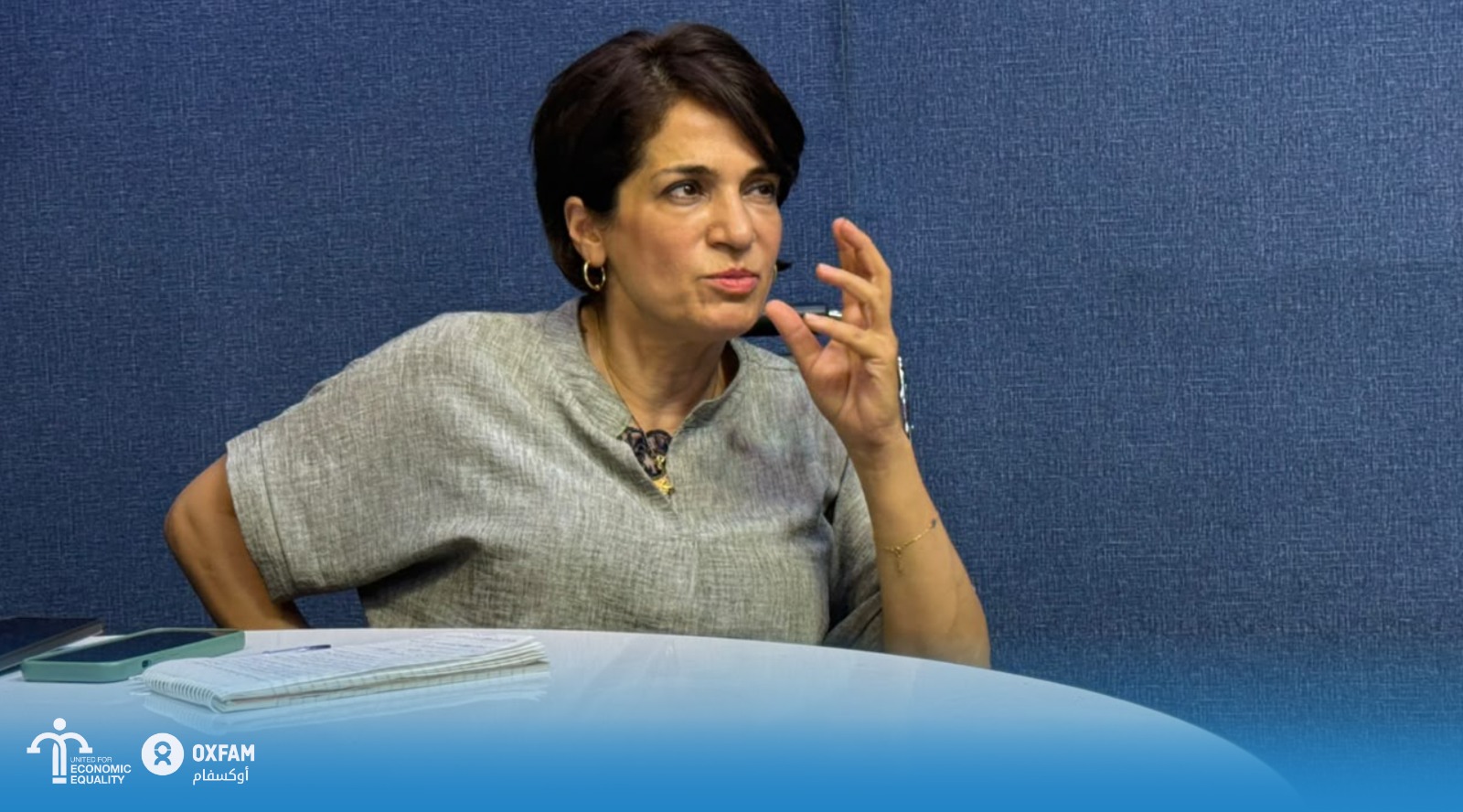

Sroud Mohammed, Director of the Al-Amal Association in Kirkuk, discusses the key financial and labor-market challenges confronting Iraqi women. She explains the meaning of economic equality, highlights initiatives aimed at addressing the systematic exclusion of women from economic opportunities, and outlines the role of a newly established coalition that includes activities across the governorates of the Kurdistan Region.
In her interview with KirkukNow, Mohammed also comments on one of Iraq's most pressing issues as the country witnesses Prime Minister Ali Al-Zaidi's campaign to combat corruption cases and recover misappropriated public funds.
KirkukNow: What are the main structural factors driving economic inequality in society?
Sroud Mohammed: Women's economic inequality stems from several interconnected causes. One of the most significant is the prevailing social culture, which often discourages women from working. Another major factor is the limited awareness many women have of labor legislation and social security rights, leaving them vulnerable to losing important legal protections.
In addition, women face inadequate workplace conditions, weak oversight by the Social Security Department due to a shortage of inspectors, and insufficient incentives for employers to register female workers under the social security system. Concerns about public safety and workplace harassment further discourage women from entering or remaining in the workforce, making these issues among the greatest barriers to women's economic participation.
KirkukNow: Are there other contributing factors that differ between regions or communities?
Sroud Mohammed: The experiences of working women differ across Iraq because of regional cultural and social differences. Compared with other parts of the country, the Kurdistan Region generally provides a more supportive working environment thanks to greater security, stability, and institutional oversight.
Elsewhere, however, women's labor issues often receive limited attention. Greater support is needed for the Ministry of Labor and Social Affairs because of its essential role in serving vulnerable populations, including older people, orphans, and women residing in shelters after surviving violence.
Government institutions should strengthen service agencies by recruiting qualified personnel and ensuring the Social Security Department effectively protects workers' rights, including retirement benefits, overtime compensation, and sick leave. These protections are particularly important for pregnant and breastfeeding women under Iraq's Workers' Retirement and Social Security Law No. 18 of 2023.
The law provides several important safeguards. Article 46 guarantees 14 weeks of paid maternity leave funded through the government's Maternity Guarantee Fund. Article 45 requires the fund to cover medical expenses resulting from pregnancy-related complications or surgeries when supported by official medical documentation. Article 29 allows women with at least three children and a minimum of 15 years of service to retire early with full benefits, enabling them to care for their children while maintaining financial security.
KirkukNow: How does economic inequality affect women in particular?
Sroud Mohammed: The lack of safe and supportive workplaces has serious consequences for women. It undermines their right to employment and increases their vulnerability to exploitation and abuse, particularly among widows, divorced women, and wives caring for family members with disabilities who serve as their households' primary earners.
To better protect women, authorities should strengthen workplace inspections through the Social Security Department, deploy monitoring teams to identify violations, establish confidential reporting mechanisms for harassment, and encourage women to use emergency services such as the 911 hotline when facing extortion or abuse.
Creating a supportive work environment also brings wider economic and social benefits. It encourages business growth, boosts domestic production, increases civic participation, and helps reduce problems such as child labor. Many displaced women and female heads of households have successfully launched small businesses with modest startup capital of around 25,000 dinars. These initiatives have enabled them to become financially independent, send their children back to school, and improve their families' long-term stability, demonstrating the positive social and psychological impact of women's economic empowerment.
It is heartbreaking to see children spending long hours under the hot sun working in markets or at road intersections simply to help support their families. Some children as young as nine or ten are already assisting their mothers with work instead of enjoying their childhood.
KirkukNow: What hidden barriers prevent women from achieving financial independence, and how do these obstacles affect families and society?
Sroud Mohammed: Women's economic empowerment continues to face significant legal and social barriers, especially in rural and remote areas. One major challenge is the belief held by some husbands that financial independence gives women greater authority, leading them to resist or undermine their wives' economic activities.
In projects supported by our organization, we have documented cases where husbands who had previously abandoned their families later returned to seize financial grants or business profits through intimidation or violence. These actions reflect social attitudes that view women's control over financial resources as a challenge to traditional patriarchal norms. As a result, women are often prevented from reinvesting profits, expanding their businesses, or improving their households' living conditions.
In addition, legal protections remain weak in many rural and remote communities. Limited police presence in villages and areas on the outskirts of cities often leaves abused women without effective recourse. In some instances, authorities reportedly decline to register complaints, citing social customs or because of personal connections between officials and the alleged perpetrators. Although these problems exist throughout the country, they tend to be more pronounced in rural areas than in urban centers.
KirkukNow: What initiatives are civil society organizations leading to reduce economic inequality, and what additional support is needed from the public and private sectors?
Sroud Mohammed: Through the "United for Economic Equality" campaign, we stress the importance of raising public awareness through social media and other communication platforms to challenge negative stereotypes surrounding women's employment. Iraq's Constitution guarantees the right to work, prohibits discrimination, and commits the state to protecting motherhood, childhood, and human dignity.
When women cannot access affordable loans or safe employment opportunities, financial hardship may push some toward harmful coping mechanisms that endanger their well-being. These may include leaving school, relying on child labor, arranging early marriages for their children, or becoming vulnerable to organ trafficking and human trafficking. It is contradictory for society to tolerate women begging while rejecting their participation in dignified and productive work that could become possible with proper financial support.
For this reason, government institutions and local communities must urgently strengthen support mechanisms by expanding access to affordable loans, helping women secure markets for their products, and increasing awareness of social security registration procedures to improve long-term financial security. Participants in our campaign also encouraged women to confidentially report harassment, exploitation, or extortion through the 911 emergency hotline. At the same time, we call on the media to continue highlighting these challenges and to promote women-owned small businesses as an essential pillar of women's empowerment and social development.
KirkukNow: Based on your field experience, what important issues do you believe the government continues to overlook when addressing economic inequality?
Sroud Mohammed: I hope future government policies shift from providing limited welfare payments to creating sustainable employment and economic integration programs for women. Instead of allocating public funds to modest cash assistance that barely meets basic needs, the government should invest in establishing national industries and revitalizing agriculture to harness women's productive potential. Such an approach would strengthen domestic manufacturing, reduce dependence on imports, generate lasting employment opportunities, and transform women into active contributors to Iraq's economy rather than long-term recipients of financial assistance.
Government agencies and civil society organizations should adopt comprehensive empowerment strategies to support sustainable income-generating projects for women across districts and sub-districts. Al-Amal Association has successfully implemented similar initiatives in Hawija, Dibis, and Rashad. These programs should include low-interest or interest-free loans, simplified application procedures, practical vocational training, continuous mentoring, and financial management support to maximize project success. Addressing infrastructure challenges—such as providing fuel for generators or encouraging renewable energy solutions like solar power—is equally important.
Our experiences in Rashad and Hawija have demonstrated that women can successfully manage projects suited to local conditions, including poultry farming, raising ducks and geese, producing eggs and honey, growing animal feed, and manufacturing handicrafts. The impact extends well beyond financial gains. Many participants also enrolled in literacy programs, with some continuing their education through university. These achievements have strengthened family awareness, contributed to reducing child marriage, and inspired younger generations to recognize women's capabilities and potential.
One education specialist argued that investing significantly in every student's education should be matched by efforts to ensure employment opportunities after graduation. This requires creating supportive work environments within both private and mixed sectors so that the state's investment in education translates into productive employment for young people and women alike.
Another important recommendation is to capitalize on Kirkuk's strengths as a center for oil production, agriculture, and livestock by establishing local industries that reduce reliance on imported goods while supporting local farmers through interest-free financing. Such measures could also encourage migration back to rural communities by creating sustainable economic opportunities.
Financial inclusion should also be expanded by introducing electronic wage payments for agricultural workers through bank cards, accompanied by digital literacy programs that help women protect themselves from online harassment and blackmail. Furthermore, labor inspections should be strengthened to ensure workers are registered with the social security system, while constitutional protections for maternity—including reduced working hours and lighter workloads where appropriate—should be fully implemented to safeguard women's rights and reinforce social cohesion.
KirkukNow: Do Iraq's current laws adequately address economic inequality, or is broader legislative reform still needed?
Sroud Mohammed: Although the Workers' Retirement and Social Security Law No. 18 of 2023 provides important protections, many of its benefits remain unrealized because of limited public awareness and weak enforcement. Greater government action is needed to fully implement the law, integrate more women into the labor force, and unlock the economic potential of a large segment of the population that remains underutilized.
A major challenge is that many workers and employers lack sufficient knowledge of legal rights and implementation procedures. This problem is compounded by a shortage of labor inspectors responsible for monitoring workplaces and ensuring employers register their employees with the social security system.
To encourage greater participation by women in the workforce, a package of incentives should be introduced for private companies, businesses, and civil society organizations that employ women. These measures could include simplifying administrative procedures, reducing bureaucratic obstacles, and offering tax reductions or exemptions to employers. Such incentives would help offset the costs associated with fulfilling legal obligations related to women's employment while promoting compliance with social security requirements and advancing gender equality in the labor market.
This approach should also recognize the physical, social, and family responsibilities associated with pregnancy, childbirth, and motherhood while ensuring that women are fully integrated into the workforce as productive contributors to Iraq's economic development.
KirkukNow: Before we conclude, what key message would you like to deliver to government officials and decision-makers to help change the current situation?
Sroud Mohammed: The government's priority should be the full implementation of the executive provisions of the Social Security Law, alongside stronger measures to eliminate or criminalize discrimination against women in the workplace. These reforms are essential to protect women from economic exploitation, wage violations, harassment, and physical abuse.
The Ministry of Labor should also strengthen its inspection system by increasing the number of inspectors, particularly female inspectors, to make it easier for women to report harassment, wage theft, and other workplace violations in a safe and supportive environment. Effective and transparent mechanisms must be established to help women recover their legal rights promptly.
At the same time, the private sector should be encouraged to employ more women through tax incentives, simplified administrative procedures, and other supportive policies that help offset the costs of complying with maternity protection requirements. The broader objective is to empower the large segment of society that remains outside the labor market, enabling more women to participate fully in economic life and contribute to Iraq's long-term growth and prosperity.