


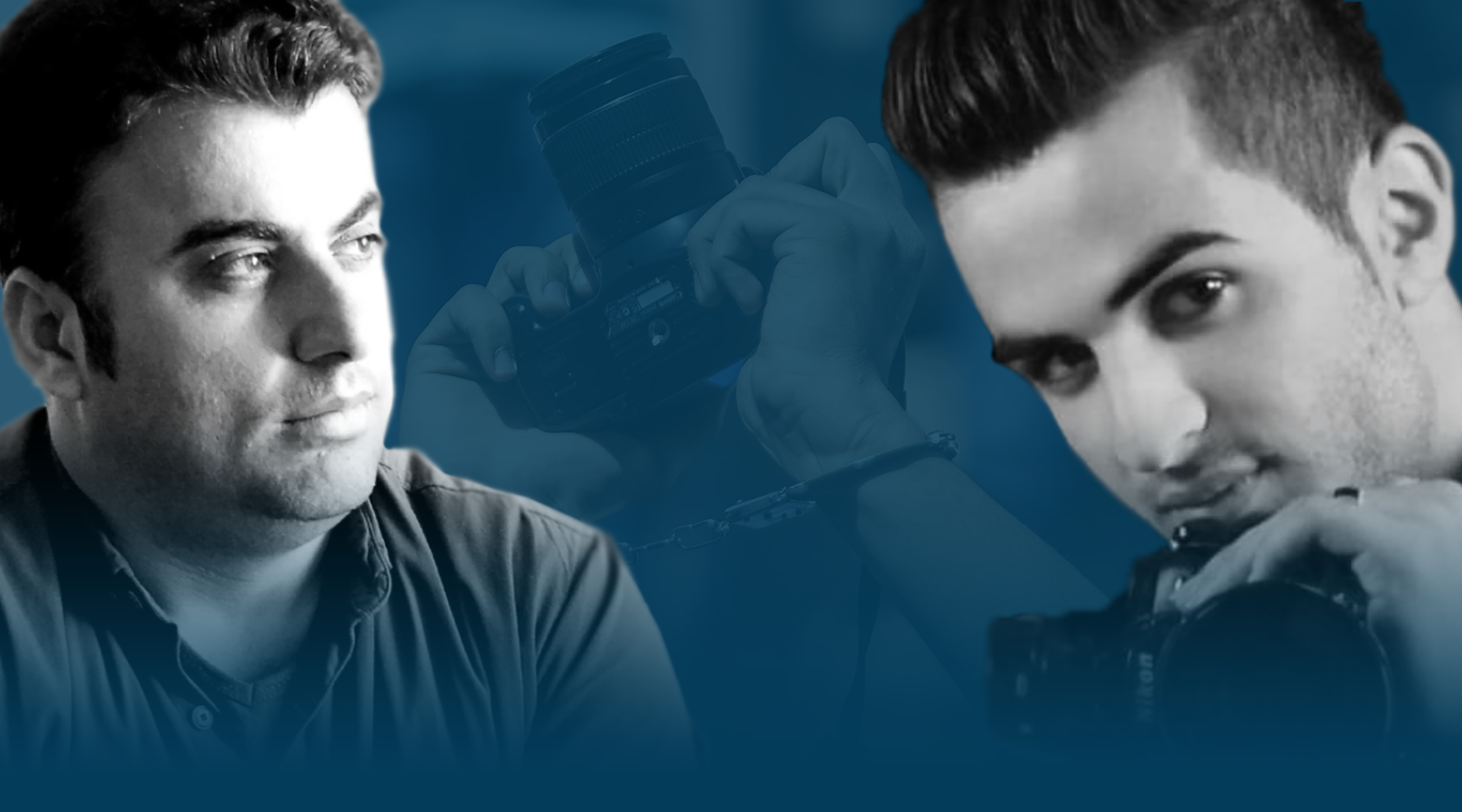

Currently, only two journalists remain imprisoned in Iraq, both held within the Kurdistan Region under the authority of the Kurdistan Regional Government KRG. Despite the small number, ongoing violations of press and expression rights continue to place the country in the “very dangerous” category, with its ranking worsening each year.
According to the 2026 Reporters Without Borders (RSF) index, Iraq—including the Kurdistan Region—has dropped seven positions, ranking 162nd out of 180 countries, compared to 155th the previous year. Both rankings still classify the country as highly dangerous for journalists. The report coincides with World Press Freedom Day on Sunday, May 3.
This decline is linked to multiple violations, including the detention of journalists. The two currently imprisoned—Sherwan Sherwani and Qareman Shukri—are both held in the Kurdistan Region and were sentenced under laws unrelated to journalism.
Sherwani has been detained for over five years and seven months following his arrest in October 2020 alongside other journalists and activists in Badinan. He is currently on a hunger strike, demanding temporary leave to visit his home and a transfer from Erbil to the Sulaimani Correctional Facility for the elderly. Both requests have been denied, according to his brother, Barzan Sherwani.
Barzan reported that Sherwan began his hunger strike on April 22 due to worsening health conditions, including high blood pressure and severe headaches, and intends to continue until his demands are met.
In February 2021, Sherwani was convicted by the Erbil Criminal Court on charges of espionage and attempting a coup, receiving a six-year sentence. Before completing that term, he was given an additional four-year sentence in July 2023 on fraud charges. Although he was expected to be released in September 2025, another sentence of four years and five months was imposed in August of the same year following a complaint by a prison officer.
His wife, Rwgash Jabari, appealed to the international community, urging them not to allow her husband to “die slowly in prison” for his work as a journalist and for meeting with U.S. diplomats.
RSF reports that global press freedom has reached its lowest level in 25 years, with 52% of countries now categorized as “difficult” or “very dangerous,” compared to less than 14% previously.
In Iraq, 182 violations against journalists were recorded last year, including arrests and restrictions, according to the Association for the Protection of Press Freedom. However, another organization, the Iraqi Association for the Protection of Journalists' Rights, reported 85 violations for 2025.
In the Kurdistan Region alone, the Metro Center documented 315 violations involving 252 journalists and media outlets, though the journalists’ union reported only 46 incidents for the same period.
The Metro Center has called for renewed investigations into cases involving deceased journalists, as well as amnesty measures and the release of Sherwani and Shukri.
Qareman Shukri, a photojournalist who worked with several media outlets, has been imprisoned for more than five years and three months after his arrest on December 27, 2021. He was denied the right to appoint a lawyer and sentenced to seven years in prison. He is currently held in Duhok, despite being eligible for release under a 2024 amnesty issued by the KRG.
His mother, Khawla Taha, expressed frustration and concern, stating that her son had done nothing wrong and that the family does not know where to seek help.
"My son has done nothing. We don't know who to turn to. May God help us," Khawla Taha, Qarman's mother, told KirkukNow in late February.
KirkukNow reports that within a single month in Duhok, a journalist, two activists, and a religious figure were killed. Meanwhile, in the Raparin administration of Sulaimani province, the media outlet Paytakht Media announced that a reporter, Jutyar Rasul, had gone missing; a few days later, it confirmed in a follow-up statement that he had been released on bail after more than 52 hours in detention.
Those detained in Duhok include Sabah Atroshi, the former head of NRT’s office, as well as Rebar Eminki, a teacher and activist who had protested against the high cost of electricity under the Runaki (lighting) project. Activist Divan Ahmad and cleric Rashid Kuchar were also among those arrested.
Hamdi Abdulbaqi, a lawyer and head of the Human Rights Organization in Duhok, visited Atroshi and Eminki in prison and told KirkukNow that both were in good condition.
He explained that their case falls under legislation related to the misuse of communication devices, noting that a judge has the authority to grant bail. Abdulbaqi added that such cases, along with similar incidents, harm the region’s democratic reputation on the international stage.
According to the United Nations, freedom of expression has declined by 10%, and at least 14 journalists have been killed since the start of this year. This brings the total number of journalists killed worldwide since 1993 to 1,860, including 204 in Iraq. Only one in ten of these killings has been resolved through legal processes.
Freedom House’s 2026 report classifies Iraq, including the Kurdistan Region, as “not free.” The country received an overall score of 31 out of 100, with 16 out of 40 for political rights and 15 out of 60 for civil liberties.