“I use 1,000 meters of plastic sheeting per donum. I know that plastic significantly harms the soil and reduces yields, yet I continue to use this method.” Farzad Faraidun is among thousands of farmers in the Kurdistan Region who rely on this traditional agricultural practice.
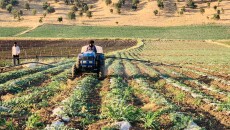
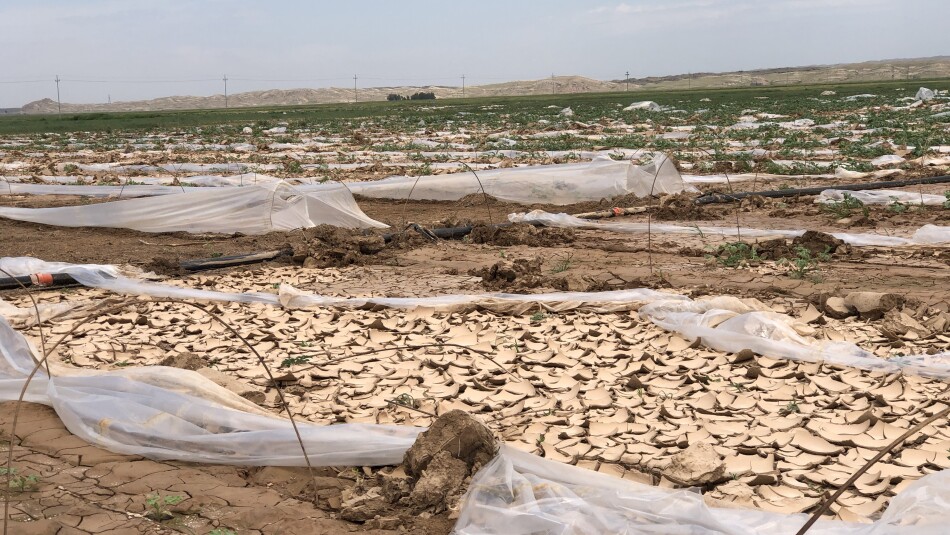
Across the Garmian and Sharazur areas of Sulaymaniyah Province, agricultural fields can resemble bodies of water or vast white plains as plastic sheeting covers large areas of farmland.
Farmers use plastic sheeting to grow dozens of types of crops and accelerate their growth. However, significant amounts of the material eventually remain scattered across the fields and become mixed with the soil.
Farzad Faraidun, a resident of Sayid Jazhn village in the Sarqala sub-district of Kifri district, cultivates between 40 and 100 dunums of land each year with various crops.
“I produce most of my crops using plastic sheeting and plastic drip tapes,” Farzad says. “This practice has reduced soil fertility and weakened its ability to absorb nitrogen, resulting in lower yields.”
While plastic sheeting can speed up crop growth, farmers say it can also affect production quality.
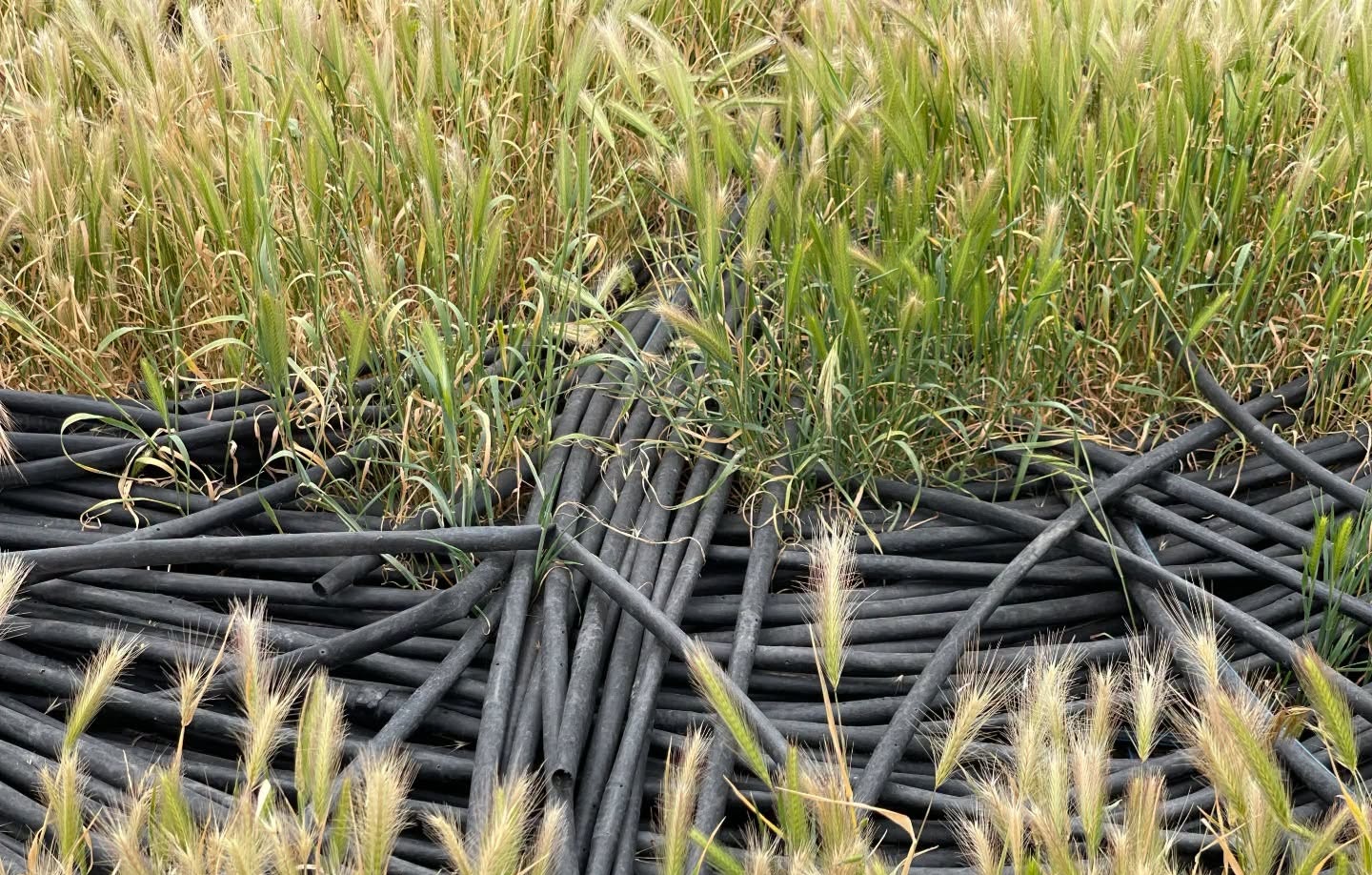
After each agricultural season, large quantities of nylon hoses and other plastic materials are left behind in the fields. Layla Ahmed.
The faster maturation of crops associated with nylon use has encouraged farmers to compete in applying larger quantities, often despite the environmental consequences.
Farzad is aware of the damage. He says that after the growing season, animals sometimes consume pieces of discarded nylon and become ill.
“If we were to gather the nylon and burn it right here on the land, it would harm soil fertility,” he says.
The problem also extends to irrigation systems, as drip irrigation tapes are made from nylon.
“This year, I used 11,000 meters of irrigation tape to cultivate 10 donums (4 hectares) of watermelon,” Farzad says.
Declining Production
Dilshad Ali, another farmer from the Garmian region, also relies heavily on nylon in his agricultural production.
“Nylon has caused significant damage to my farmland—damage that I notice during plowing, sowing, irrigation, and even when the crops mature. I use two tons of nylon every year,” he says.
Based on his experience, Dilshad says that he previously harvested tomatoes until the end of August. In recent years, however, production has ended in July, which he believes may be connected to the effects of prolonged nylon use.
He has also noticed a decline in overall production.
“In 2022, I was harvesting 600 kilograms of tomatoes a day, yet I produced only five tons of tomatoes throughout the entire course of last year,” he says.
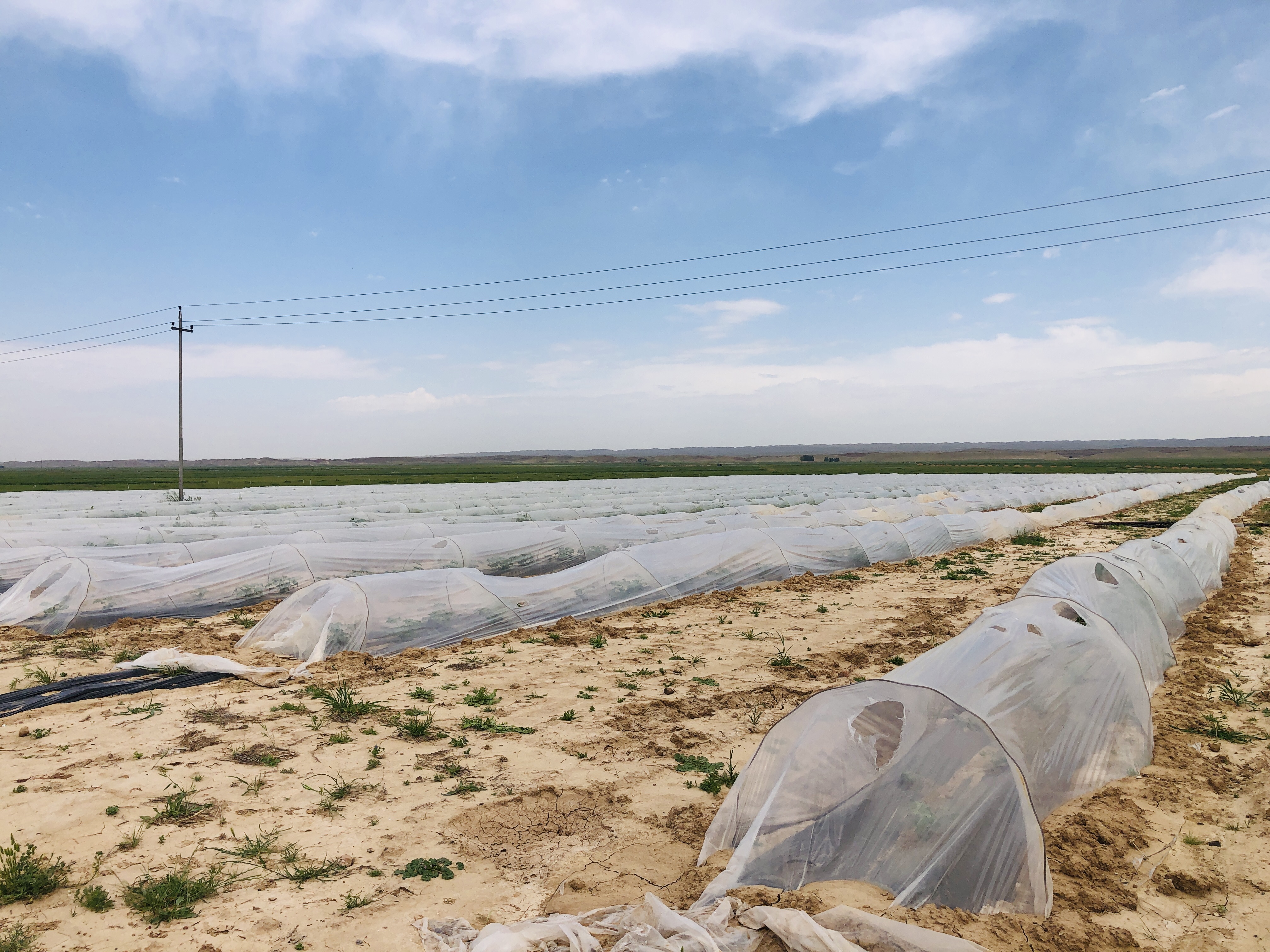
Garmian: Plastic sheeting used on agricultural land. Layla Ahmed
Dilshad attributes part of the problem to the failure to remove plastic sheeting after each season.
“The plastic is exposed to sunlight, causing it to break down and mix with the soil... Collecting all the plastic requires hiring workers, and we do not know where to dispose of it,” he says.
Long-Term Environmental Damage
Environmental and agricultural experts consider the continued use of plastic sheeting in agricultural fields—and allowing it to remain in the soil—one of the most damaging practices associated with modern intensive agriculture. While it may provide short-term benefits for crop production, they warn that its environmental consequences can persist for years.
Environmental specialist Dr. Karzan Abdullah explains that exposure to heat, sunlight, and rain causes plastic to gradually break down and become mixed with soil.
“When plastic is exposed to heat and sunlight, and the rainy season begins, it breaks down and mixes with the components of the soil. This means chemicals and toxins become incorporated into the soil that produces food for humans,” he says.
He adds that the breakdown of plastic can also affect soil temperatures.
“The disintegration of plastic in the soil, particularly during summer, causes soil temperatures to rise. When soil temperature changes, everything within it changes—including the destruction of essential bacteria and fungi,” Karzan says.
He further explains that these microorganisms are essential to healthy soil.
“Crops and the food humans consume cannot grow without the bacteria and fungi present in the soil. The soil depends on these organisms, and without them, it becomes infertile,” he says.
Farmers Seek a Solution
Farzad says farmers have never received adequate training on the environmental risks associated with agricultural plastics or on methods for reducing their impact.
Farmers themselves, however, have proposed a potential solution: establishing specialized facilities to collect, process, and recycle plastic sheeting, drip tapes, and other plastic materials used in agricultural production.
For farmers who depend on plastic to accelerate crop growth, the challenge is increasingly how to maintain its short-term agricultural benefits without sacrificing the long-term health and productivity of their land.