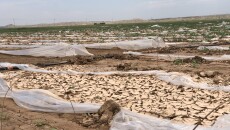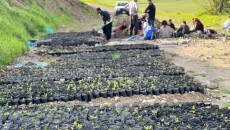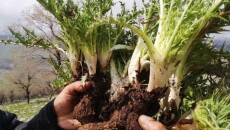
Farmers across the Kurdistan Region of Iraq KRI are increasingly battling dust storms that have become more frequent in recent years. The growing intensity of these storms has had a direct impact on agricultural production, damaging crops and reducing yields. Although dust storms are a natural phenomenon, agricultural experts say several practical measures can help minimize their effects.
Dust storms, rising temperatures, and declining rainfall are among the visible consequences of climate change. According to the United Nations, Iraq is ranked among the five countries most vulnerable to climate change. In the Kurdistan Region, farmers are among those most directly affected by these environmental changes.
Dust Storms Put Farmers at Risk
"Every year, dust damages our crops at some stage of the growing season," said Hemn Khalif, a farmer from Penjwen district in eastern Sulaymaniyah Province. "Experienced farmers often know how to reduce the damage, but those with less experience are much more vulnerable."
Now in his late thirties, Hemn has worked in agriculture since childhood, helping his father in the fields from the age of six. He says dust storms have become one of the greatest challenges facing farmers.
Every year, dust damages our crops at some stage of the growing season
"We have to remain prepared from the time we transplant seedlings until harvest," he explained. "If a dust storm occurs during transplanting, it can stop the plants from growing. When strong winds are accompanied by lightning, branches may break and flowers—the part that eventually produces fruit—can be destroyed. Severe dust storms can significantly reduce the harvest."
Based on his experience, crops such as tomatoes, cucumbers, watermelon, melon, and peppers are among the most vulnerable to dust damage.
Repeated exposure to dust also lowers the quality and appearance of fruits and vegetables, making them less attractive to buyers and reducing farmers' income.
Dust creates additional problems by encouraging the spread of insects that attack weakened plants. "Farmers often have to use chemical pesticides to eliminate these pests, which increases production costs," Hemn said.
Even with years of farming experience, he regularly seeks advice from agricultural engineers when dealing with severe dust-related damage.
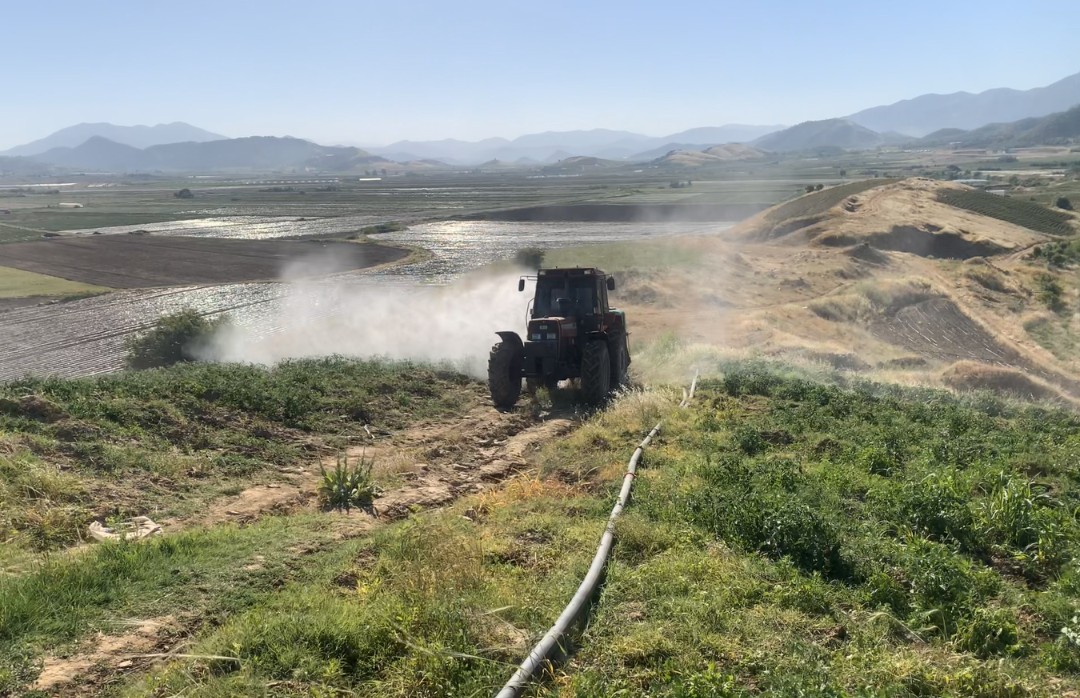
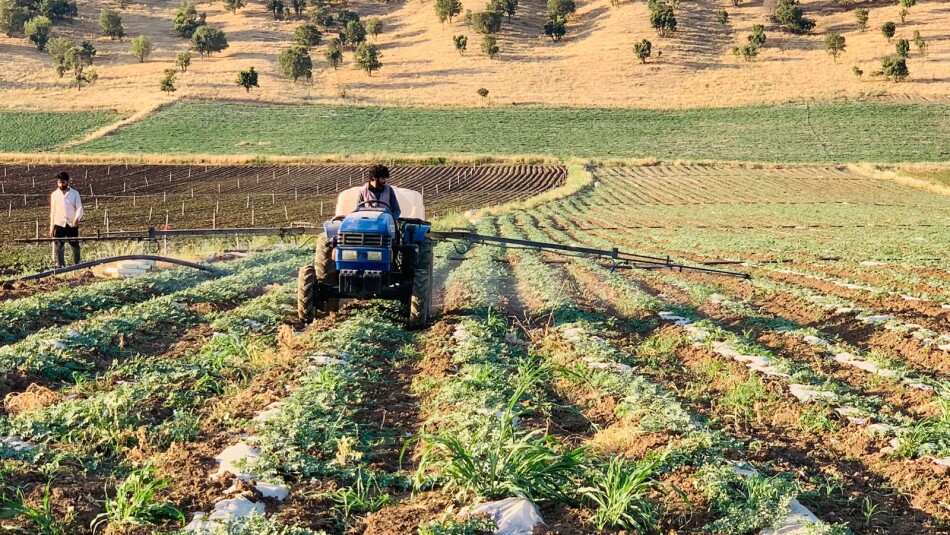
Spraying an agricultural field in the Kurdistan Region of Iraq.
Beekeepers Also Feel the Impact
Dust storms do not only affect crop farmers. Soran Hama Najm, a 37-year-old beekeeper from the Binari Suren villages in Said Sadiq district, Sulaymaniya, says his beekeeping business has also suffered.
"Dust destroys the flowers that provide nectar for my bees," Soran said. "As a result, the bee population declines and honey production decreases."
Without healthy flowering plants, bees lose their primary food source, making it difficult for colonies to survive and produce honey.
Treatment Is Possible, Experts Say
Dilshad Hussein, an agricultural engineer in Penjwen district, explained that dust settling on leaves and branches blocks sunlight from reaching the plant.
"When dust covers the leaves, it interferes with photosynthesis," he said. "The plant stops growing, produces fewer flowers, and eventually bears less fruit."
He recommends immediate treatment after a dust storm.
Dust places plants under severe stress
"If farmers do nothing, the plant may die or produce crops of poor quality and lower quantity. Dust places plants under severe stress, so after a storm we advise farmers to apply amino acids and seaweed-based nutrients using sprayers. This both removes dust from the leaves and helps the plant recover."
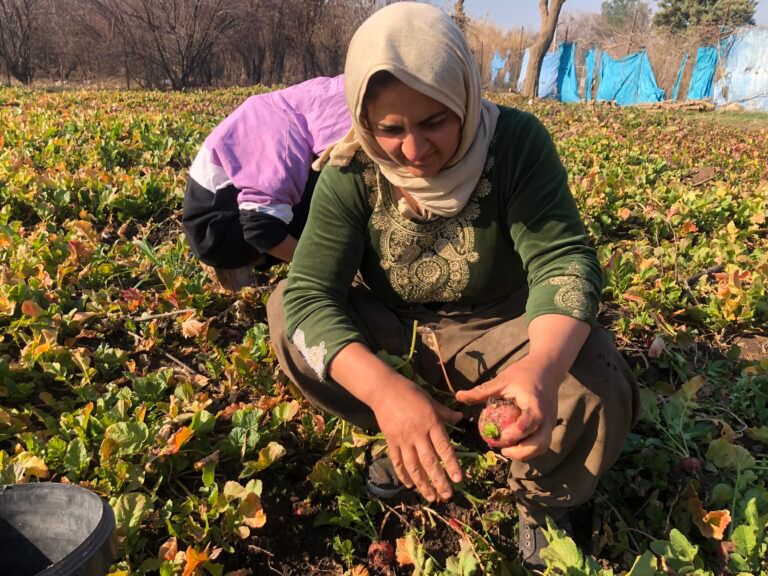
Some farmers attempt to wash dust from their crops with water. Mahmoud Mohammed, a farmer in the Quratu area of Garmian who grows potatoes, cauliflower, cabbge, and broccoli, follows this approach.
"After a dust storm, I wash the plants hoping to remove the dust from the leaves and flowers," he said.
However, Hussein cautions against this method.
"Washing with water increases humidity around the plant, creating conditions for other diseases. Proper agricultural treatments are a more effective solution."
He also agrees with many farmers that dust storms create favorable conditions for pests such as spider mites, which feed on plant sap and weaken crops even further.
Climate Change Intensifies the Problem
The Garmian region experiences particularly severe dust because of limited vegetation and its proximity to central and southern Iraq, where dust storms are more frequent.
According to Hussein, leafy crops such as strawberries and raspberries are generally more vulnerable because dust easily accumulates on their larger leaf surfaces, while tomatoes and peppers tend to be somewhat less affected.
Raising Awareness and Building Long-Term Solutions
The Sulaymaniyah Directorate of Agriculture encourages farmers to seek technical guidance through agricultural offices, social media platforms, and educational programs to better protect their crops.
Dr. Muslim Sulaiman, a university professor and environmental activist, regularly provides climate-awareness seminars for farmers.
"Dust slows plant growth, leaves become yellow quickly, and even reduces the nutritional value of plants consumed by livestock," he explained.
He believes long-term solutions are equally important.
"The most effective way to reduce dust damage is to establish green belts around cities, similar to projects underway in Erbil. Trees and vegetation help trap airborne dust. Some countries have even begun greening desert areas with drought-resistant plants such as prickly pear cactus."
This report was produced by the KirkukNow team as part of the project "Future Through Innovation: Together for Climate and Local Development," implemented by ADWI in the Kurdistan Region of Iraq with funding from the German Federal Ministry for Economic Cooperation and Development (BMZ).