


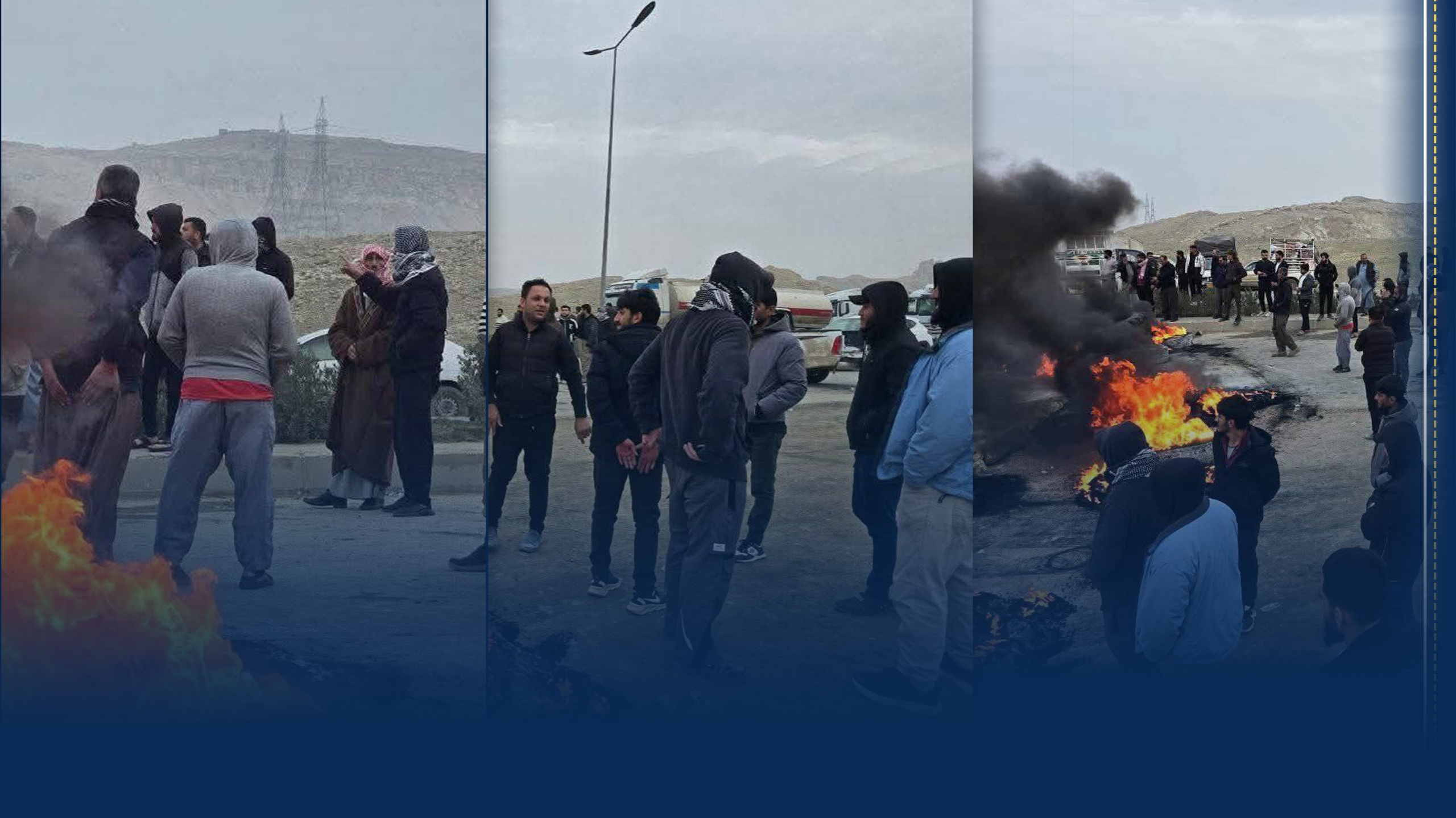

Dozens of protesters assembled early Tuesday morning, burning tires and shutting down the key roadway between Erbil and Makhmur. The demonstration came a day after the Iraqi National Security Service instructed checkpoint authorities to begin collecting taxes on food items and other goods transported from the Kurdistan Region into federal Iraqi provinces.
Zewar Haji Rustam, a resident of central Makhmur and participant in the protest, explained his frustration. “I cultivated 850 dunams of wheat and need fertilizers and chemicals to treat the crops on schedule,” he said. “But the checkpoints demand that we pay taxes before allowing these supplies into Makhmur.”
He described the policy as unreasonable and burdensome. “We are being taxed on everything brought from outside the district, even fruits and vegetables. This places significant pressure on us,” he added.
Makhmur, located southeast of Mosul, is considered a disputed territory. Following the collapse of the Ba'ath regime in 2003, the district fell under the administration of the Kurdistan Regional Government KRG. However, after October 16, 2017, when federal forces reasserted control over disputed territories, authority over Makhmur’s security and administration returned to Baghdad.
While taxes are now imposed on all incoming goods, farmers are particularly affected due to the current agricultural season, when wheat fields require fertilizers and chemical treatments. Data from the Makhmur Agriculture Department indicates that 75,000 hectares of wheat were planted this year across 112 villages in the district.
“Last year, we were promised that the tax issue would be resolved, but nothing changed,” Zewar said.
Each year, the Iraqi government supplies farmers with seeds and fertilizers. However, farmers say the assistance often arrives too late, and the quantities provided are insufficient compared to the size of their farmland. Agricultural officials and farmers also report that authorities sometimes fail to recognize the full area declared by farmers, resulting in smaller seed allocations than needed.
Sirwan Hussein, Director of Agriculture in Makhmur, confirmed to KirkukNow that the National Security Service’s directive—officially affirmed on February 9—extends beyond agricultural materials. “The decision applies to everything, from sewing needles to vehicles,” he stated.
Residents argue that geography further complicates the issue. Makhmur lies approximately 50 kilometers from Erbil but about 80 kilometers from Mosul, making transport from Mosul considerably more expensive. Hussein noted that local authorities intervened following the protests and that discussions are underway to ease restrictions on certain goods.
“We are monitoring the developments,” he said.
By the time this report was finalized, the main road had reopened after a security official at the scene pledged to address the concerns. However, he clarified that the directive to enforce the taxes originated from Baghdad.