



Although ongoing conflict has resulted in daily losses exceeding $180 million in Iraq’s oil revenues, it has also contributed to lifting a 35-month halt on oil shipments from Kirkuk to Turkey’s Ceyhan port.
In March 2026, exports from Kirkuk’s oil fields to Ceyhan totaled 2,772,217 barrels, marking the resumption of shipments after nearly three years.
The pipeline running through the Iraqi Kurdistan Region (IKR) into Turkey had been inactive since late March 2023. The shutdown followed a ruling by the International Court of Arbitration in Paris, issued after the Iraqi government filed a complaint regarding independent oil exports from the Kurdistan Region through Turkey.
This dispute stemmed from long-standing tensions between Baghdad and Erbil over control of oil production and exports.
Data released by Iraq’s Ministry of Oil on Monday, April 13, showed that crude exports in March reached 18,604,951 barrels, generating approximately $1.96 billion in revenue. In contrast, February exports totaled 100 million barrels, with revenues nearing $7 billion.
The significant decline in exports and revenues is attributed to the U.S.–Israeli conflict with Iran, which began on February 28 and lasted around 40 days before a ceasefire was implemented.
Compared to February, Iraq’s oil exports in March dropped by 81 million barrels—an 81% decrease—while revenues fell by 71%, representing a loss of about $5 billion. These figures indicate that Iraq suffered daily losses exceeding $180 million in oil income during this period.
Iraq also relies on oil exports via the Kurdistan Region, which began in October 2025 under an agreement between the federal and regional governments. In March, these exports exceeded 1.27 million barrels. Previous statements from the Ministry of Oil suggested that exports could be increased to 500,000 barrels per day, or around 15 million barrels per month.
Over the past three years, the majority of Kirkuk’s oil production has been used domestically or supplied to Iraqi refineries. Around 300,000 barrels per month were also shipped to Jordan by tanker, though this practice ceased two months ago.
This development follows a contract signed early last year between the Iraqi government and British Petroleum (BP) to rehabilitate and develop four oil fields in Kirkuk managed by the North Oil Company, with the goal of increasing output and improving oil and gas production efficiency.
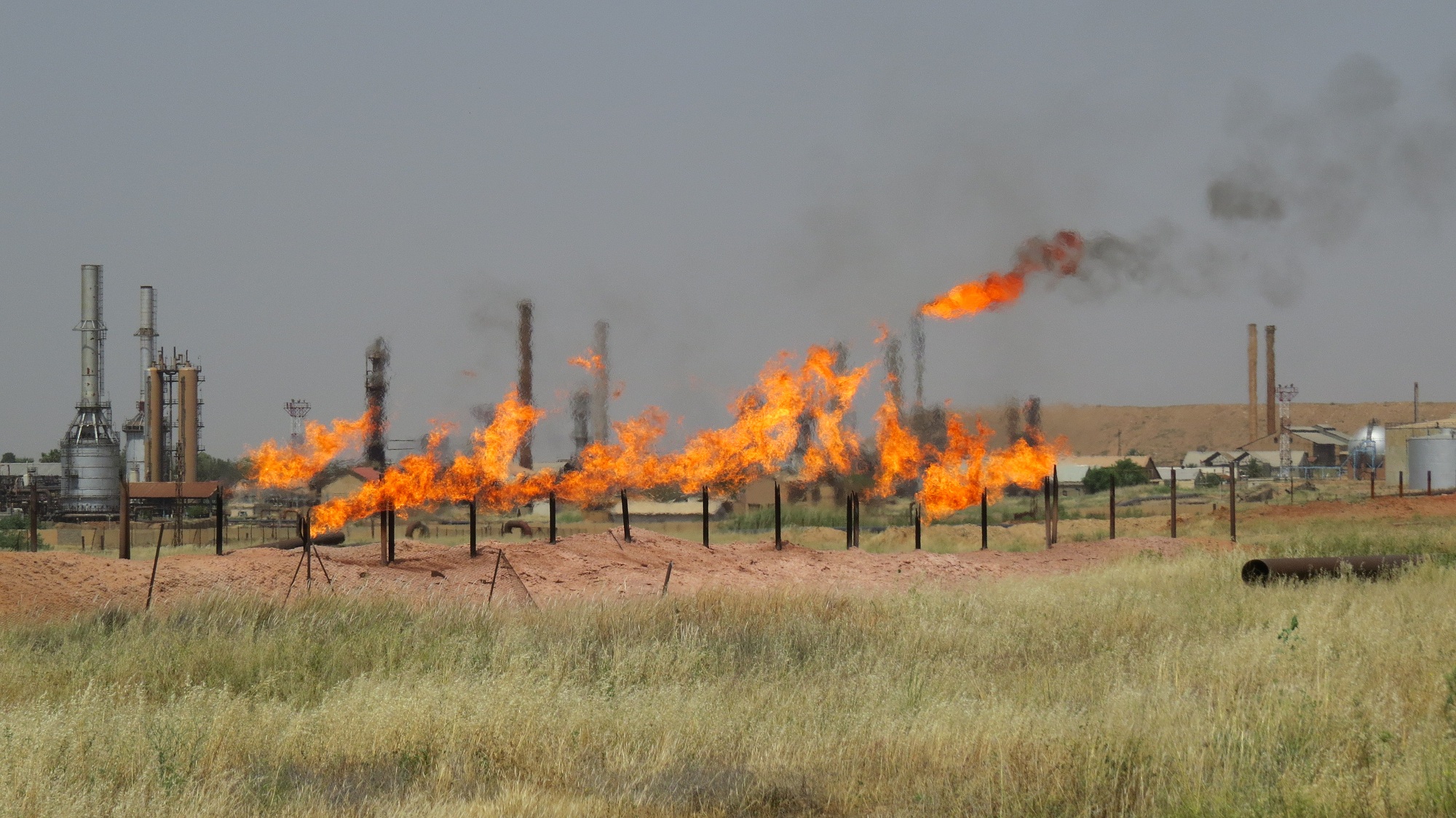
Kirkuk is home to five major oil fields—Avana, Bai Hassan, Qubba Baba, Jambur, and Khabbaz—all overseen by the state-owned North Oil Company.