



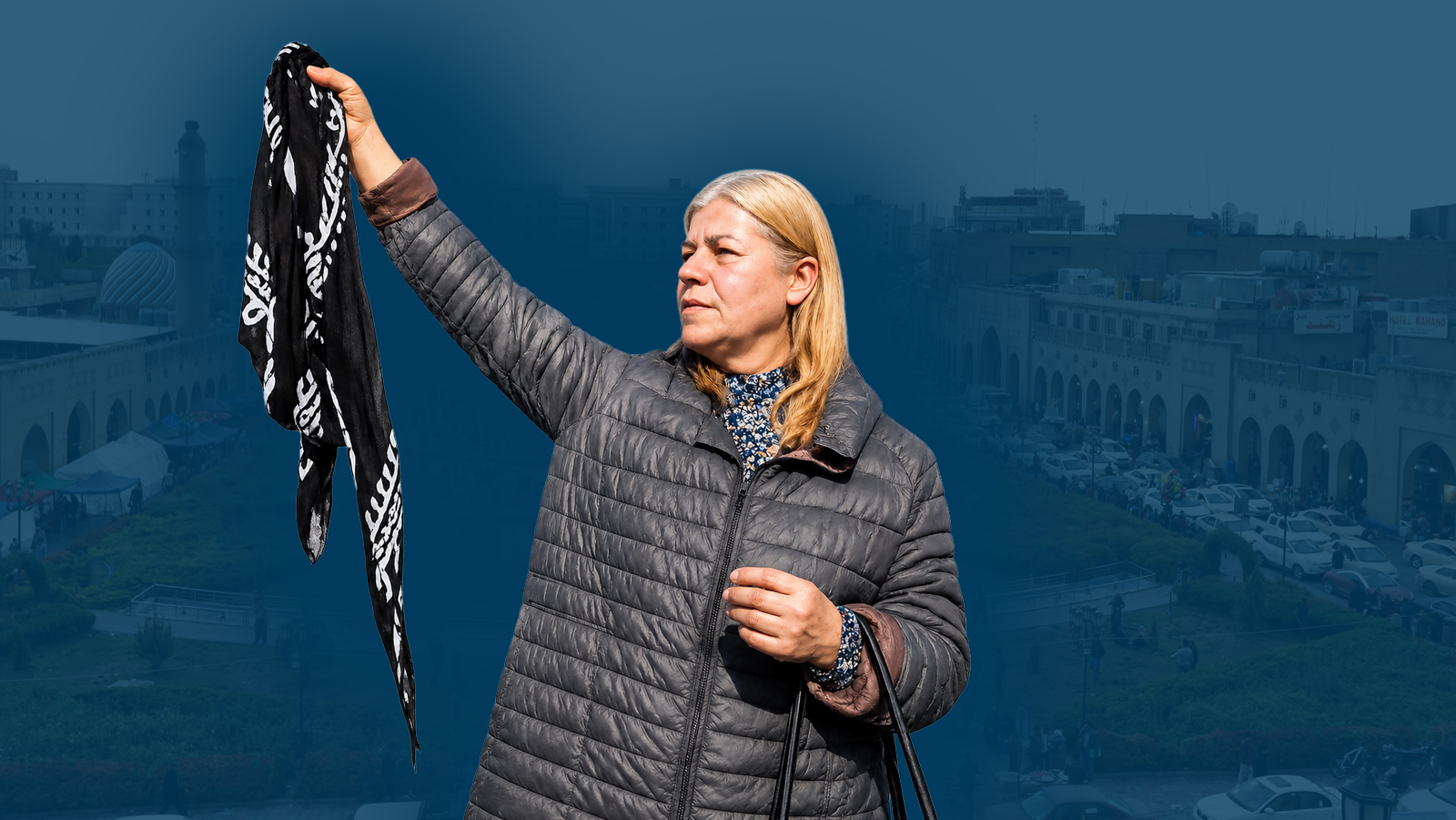

Bahar Ali's phone rang on July 14. The caller was an officer from a police station in Erbil, capial of the Kurdistan Region of Iraq KRI, informing her that she was required to report to the station immediately. When she arrived, she was told that she had to be arrested under a court order.
Although the arrest took place in July 2026, the case dates back to 2024, when Ali made several remarks during a 25-minute television discussion in which she voiced support for the Kurdistan Region's legal restrictions on polygamy.
Those comments have now become the basis of a criminal case accusing her of insulting Islam and its sacred values.
Ali, a women's rights activist based in Erbil and president of Our Organization for Human Development, has spent years advocating for women's rights. Today, however, she finds herself moving between police stations and courtrooms in response to legal complaints over her public statements.
The Origin of the Case
In June 2024, three Kurdish lawyers filed a lawsuit before Iraq's Federal Supreme Court challenging provisions of the Kurdistan Region's Personal Status Law that restrict polygamy. The case was submitted on behalf of Ismail Khurmali, a member of the leadership council of the Kurdistan Islamic Union (Yakgrtw).
The disputed provisions stem from amendments made by the Kurdistan Parliament in 2008 to Iraq's Personal Status Law No. 188 of 1959. Under those amendments, a man wishing to marry a second wife must satisfy several legal conditions rather than doing so without restriction.
One of the lawyers, Aso Hashim, argued that these restrictions have reduced Kurdish population growth compared with Arab communities. He further claimed that “limiting polygamy has contributed to increased violence against women, marital infidelity, and the spread of extramarital relationships.”
A few days after the lawsuit was filed, Rudaw aired a television debate featuring Bahar Ali and Aso Hashim.
During the discussion, Hashim argued that the Kurdistan Region's amendments contradict Islamic law because I
slam permits polygamy.
These restrictions have reduced Kurdish population
He then asked Ali whether she opposed Islamic Sharia. Ali replied: "I oppose a law that violates the rights of half of society."
"This religious text was introduced 1,500 years ago. Society cannot be pushed backward after all the progress that has been made," she added.
Those remarks later became the focus of a legal complaint filed by cleric Mullah Mazhar Khorasani, who accused Ali of insulting Islam. Khorasani, accompanied by several supporters, submitted the complaint to the Erbil Public Prosecutor's Office. Although Aso Hashim accompanied the group, he has stated that he acted only as Khorasani's lawyer and was not personally among the complainants.
Legal Challenge Rejected, Criminal Case Continues
In July 2024, Iraq's Federal Supreme Court dismissed the lawsuit challenging the Kurdistan Region's restrictions on polygamy. The court ruled that the plaintiffs had failed to demonstrate that Ismail Khurmali had suffered legal harm.
However, the criminal complaint against Bahar Ali remained active.
Hashim maintained that the legal challenge was based on Article 2 of Iraq's Constitution, which states that Islam is the official religion of the state and a primary source of legislation.
I oppose a law that violates the rights of half of society
Legal consultant Ramziya Jabari rejected Hashim's argument that restrictions on polygamy had increased violence against women or marital infidelity.
According to Jabari, many men who wished to marry a second wife simply traveled to areas under federal government control, such as Kirkuk, where different legal procedures applied, rather than seeking approval under Kurdistan Region law.
Under the Kurdistan Region's Personal Status Law, a second marriage requires judicial approval and is permitted only under specific circumstances, including the consent of the first wife or medical conditions such as infertility or illness.
Article 2 of Iraq's Constitution also states that no law may violate democratic principles or infringe upon the rights and freedoms guaranteed by the Constitution.
When contacted by KirkukNow, Ismail Khurmali declined to discuss the matter, saying only that it was a family issue.
Arrest Without Prior Notice
On July 12, a court hearing concerning Bahar Ali was held in her absence, resulting in an arrest warrant.
Ali says neither she nor her lawyer received any notification about the hearing or the court's decision.
"I was outside Erbil and could not attend. Neither I nor my lawyer received any legal notice from the court," she said.
Two days later, police called and instructed her to appear at the station.
After she arrived, officers informed her that they were required to arrest her and bring her before the judge.
Ali said it appeared that news of the arrest had reached others before it reached her.
"People were already at the courthouse holding a press conference. Everyone seemed to know before I did."
Despite her concerns, she said police officers treated her respectfully.
She remained in custody for approximately three hours before being released on bail pending trial.
"I Supported the Law, Not Insulted Religion"
Ali rejects the accusations against her.
"There was nothing in my remarks that justified a complaint. I was defending a law passed by the Kurdistan Parliament in 2008."
She said she believes pressure from those who filed the complaint influenced the prosecutor's decision to proceed with the case.
Ali faces charges under Article 372 of the Iraqi Penal Code, which criminalizes insulting religious beliefs, symbols, or figures held sacred by religious communities.
Mullah Mazhar Khorasani has previously criticized women's rights organizations and activists, at one point referring to some female activists as "dinosaurs" during a television shoq. He has also been involved in several legal disputes.
KirkukNow repeatedly sought Khorasani's response regarding the case. Although he acknowledged receiving questions through WhatsApp, he did not respond.
Meanwhile, Bahar Ali has filed a separate lawsuit against Khorasani and Aso Hashim over statements made during a press conference in which her organization was described as promoting moral corruption. That case remains before the courts.
Women's Rights Advocates Stand Firm
While Bahar Ali now faces prosecution over allegations of insulting religion, she maintains that her position has always been limited to supporting existing legislation regulating polygamy.
She says the case reflects broader challenges faced by women's rights defenders in the Kurdistan Region.
"The history of women's struggle in Kurdistan has always involved major challenges, but women have never retreated during difficult times."
The Women's Network Coalition, supported by supported by the March 8 Network, the Board of Advocates, the Joint Network of Organizations and a number of women's activists, also issued a statement expressing solidarity with Ali.
“Such legal pressure and intimidation would not weaken the movement but would instead strengthen its determination to continue working toward justice.”