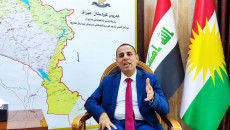



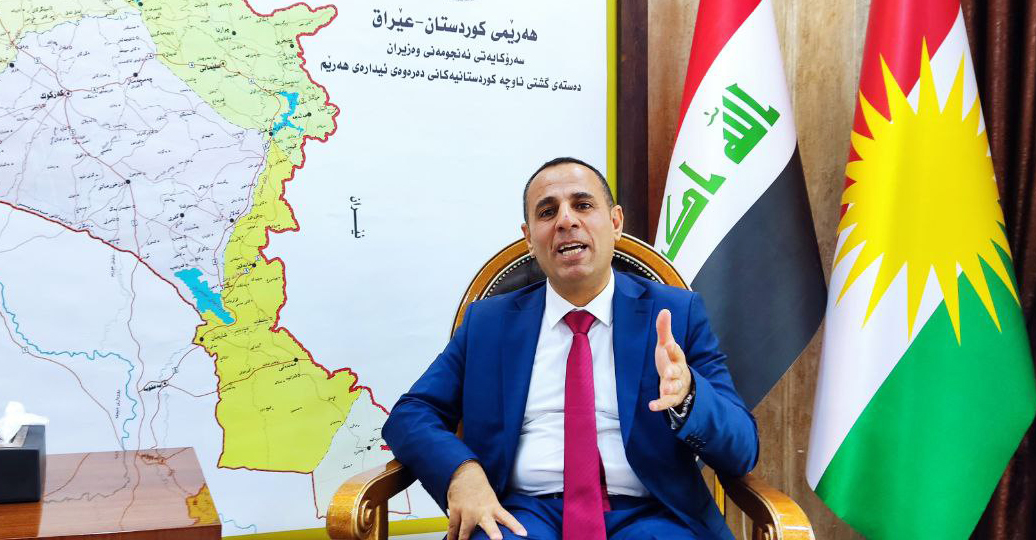

The head of the Commission for Kurdish Areas Outside the Kurdistan Region's Administration, which operates under the Kurdistan Regional Government KRG's Council of Ministers, has expressed concern over what he described as a significant influx of "strangers" into Kirkuk following Iraq's 2024 census.
In remarks to KirkukNow, Fahmi Burhan emphasized that his concerns were not directed against the city's Arab or Turkmen communities. "We have no intention of being hostile toward our Arab and Turkmen brothers," he said. "However, we cannot remain silent about what we see as the settlement of outsiders in Kirkuk at the expense of the Kurdish population."
Burhan stated that the Commission possesses statistical data documenting the arrival and settlement of these individuals but declined to release the figures. He nevertheless argued that Kirkuk has experienced an unusually sharp rise in population since the 2024 census, describing the increase as greater than that recorded in cities across central and southern Iraq.
The issue is closely tied to Article 140 of the Iraqi Constitution, which outlines a three-step process for determining the status of Kirkuk and other disputed territories. The process includes normalization, a population census, and a referendum.
Under the normalization phase, families who are not originally from Kirkuk—often referred to as "newcomers / settlers"—would be expected to return to their areas of origin. At the same time, families displaced during the Ba'athist era would be allowed to return to Kirkuk and other disputed territories, with compensation provided to both those returning and those relocating.
Burhan argued that preventing the settlement of outsiders in Kirkuk does not conflict with the principles of coexistence among Kurds, Arabs, and Turkmen. Instead, he said, it is necessary to uphold constitutional provisions and prevent violations of Article 140.
Although the Constitution set the end of 2007 as the deadline for implementing Article 140, the normalization stage was never completed. In 2019, Iraq's Federal Supreme Court reaffirmed that the article remains valid until all constitutional procedures are fully carried out.
The northern, oil-rich, multi-ethnic Kirkuk Province, home to more than 2.34 million people, remains one of Iraq’s disputed territories between the federal government and the Kurdistan Regional Government. Its future status is tied to Article 140 of the Iraqi Constitution.
Burhan further stated that every Iraqi citizen has the right to reside anywhere in the country. However, he argued that Kirkuk, Khanaqin, and other disputed territories hold a unique constitutional status, making current demographic changes particularly sensitive. According to Burhan, the recent influx threatens Kirkuk's Kurdish identity, claiming that newcomers have received preferential treatment and that new residential neighborhoods have been developed for them.
He also criticized the ministerial program of Prime Minister Ali al-Zaidi's government for failing to address Article 140, despite its longstanding importance in relations between the Iraqi Federal Government and the Kurdistan Regional Government.
Previously, Burhan stated that the government's four-year ministerial program, organized around four main priorities, failed to address the constitutional rights of citizens in the Kurdistan Region.
“The Kurdish leadership and the Kurdistan Regional Government would not accept any solution that falls short of implementing Article 140 as provided in the Constitution.”