



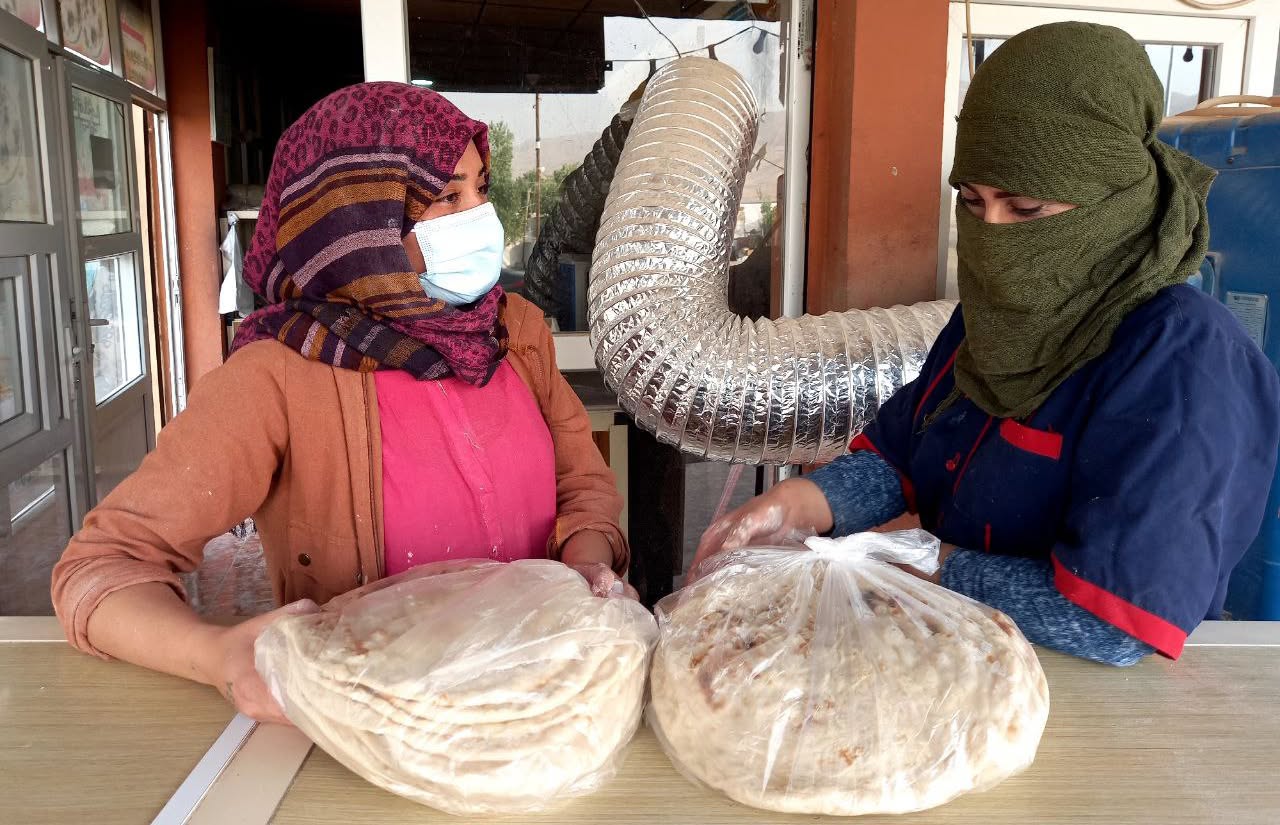

In their efforts to earn a living, Yazidi displaced women face two major forms of economic inequality: limited employment opportunities and a lack of suitable jobs. Many available positions involve physically demanding work that is difficult for women to undertake. In addition, women who find employment outside the camps often receive no financial assistance for accommodation or transportation.
This economic hardship has left many women with university and college degrees unemployed, spending their days under tents despite their desire to enter the labor market and utilize their qualifications.
Suad Hamo is one of hundreds of young women affected by these conditions. She lives with her family in Bajd Kandala camp in Zakho district of Duhok Northern Province, and earned an engineering degree specializing in energy two years ago.
Suad said she faces two major barriers to employment. The first is that jobs outside the camps for the interndally displaced persons IDPs require additional expenses for transportation and accommodation, costs that companies generally do not cover. The second is the limited availability of employment opportunities for women.
Despite these difficulties, Suad believes she has the skills and ability to succeed in her profession.
She found work with a solar energy installation company in Duhok, but left after one month because the company did not provide accommodation or transportation from the camp to her workplace.
Her monthly salary was between 600,000 (USD400) and 700,000 Iraqi dinars IQD. However, she estimated that renting an apartment would cost between 250,000 and IQD300,000 per month, while food would require another IQD100,000, not including other living expenses.
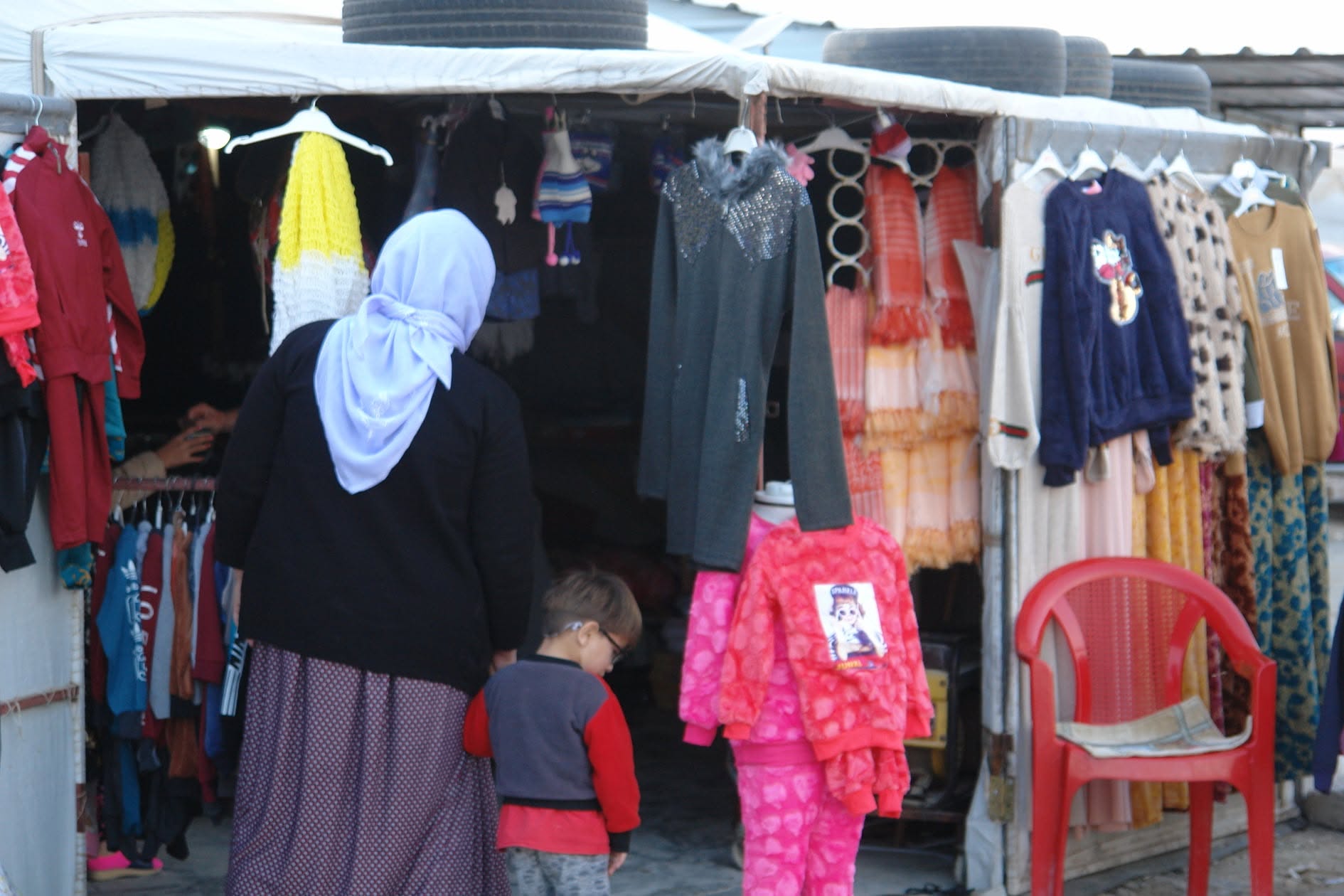
A woman buys clothes at a shop in Sharia camp for IDPs in Duhok. KirkukNow
Employment opportunities for Yazidi women inside the IDP camps are also scarce, particularly following the withdrawal of dozens of organizations that had previously provided many jobs and supported women's economic activities.
Khalida Shamo, 32, lives with her family in Khanke camp and holds a degree in psychology. She described Ezidi women as facing discrimination on two levels.
“We are victims twice. Once because we are women and there are fewer job opportunities for women, and again because we live in the camps rather than in the cities,” she said.
“Living in poverty and facing the difficulties of life under a tent is very difficult. Imagine studying for many years and earning a degree, only to spend your days under a tent without a job because of displacement,” Khalida added.
The situation is somewhat different for men, who have greater access to employment opportunities. However, many of the jobs available inside the camps involve physically demanding labor.
“The job opportunities in the camp are daily hard labor, which is not suitable for women,” Khalida said.
The Ezidis, an ethno-religious community in Iraq, experienced mass displacement, abductions and killings in 2014 when Islamic State of Iraq and the Levant (ISIL) fighters attacked their areas, including Shingal (Sinjar) district in Nineveh province.
The community continues to experience severe unemployment in the displacement camps, with women particularly affected.
More than 110,000 people remain in camps in Duhok province because of ongoing security and political instability in their areas of origin.
Although camp administrations have made it easier for IDPs to leave the camps for employment, this measure alone has not resolved the problem.
“We have no restrictions on women leaving the camp to work, but there are very few job opportunities available to them,” Pir Alo Kachal, director of Khanke camp in Duhok province, told KirkukNow.
Employment Opportunities Have Declined Dramatically
According to camp officials, the situation was different in previous years.
“Previously, there were four or five international and local organizations in each camp that supported women in finding jobs and encouraged them to work, but they have been gone for a long time, and there is no government support,” Kachal said.
Some women were employed directly by these aid organizations, while others received assistance to establish small businesses and create employment for themselves and others. These projects included hair salons, cosmetics sales, sewing and agricultural activities. Such support, however, has largely disappeared.
“Now there is only labor and hard work, which is not suitable for women,” Kachal said.
Abdulkarim Hamad, director of the Labor Office in Duhok province, said the absence of accommodation and transportation assistance are among the main reasons women living in camps struggle to find work in cities.
“Each IDP camp is at least half an hour away from the city, which makes transportation expensive,” Hamad said. He added that a lack of experience and professional skills is another factor contributing to the limited employment opportunities available to refugees.
The Duhok Labor Office has established a website where people seeking employment can register for available jobs. According to Hamad, refugees can also register through the platform.
“The abilities of Ezidi women are no less than those of women from other communities, but there is little support, and opportunities are not equal for everyone,” said Basna Khalaf, an Ezidi activist.