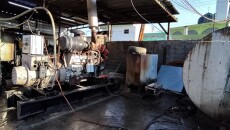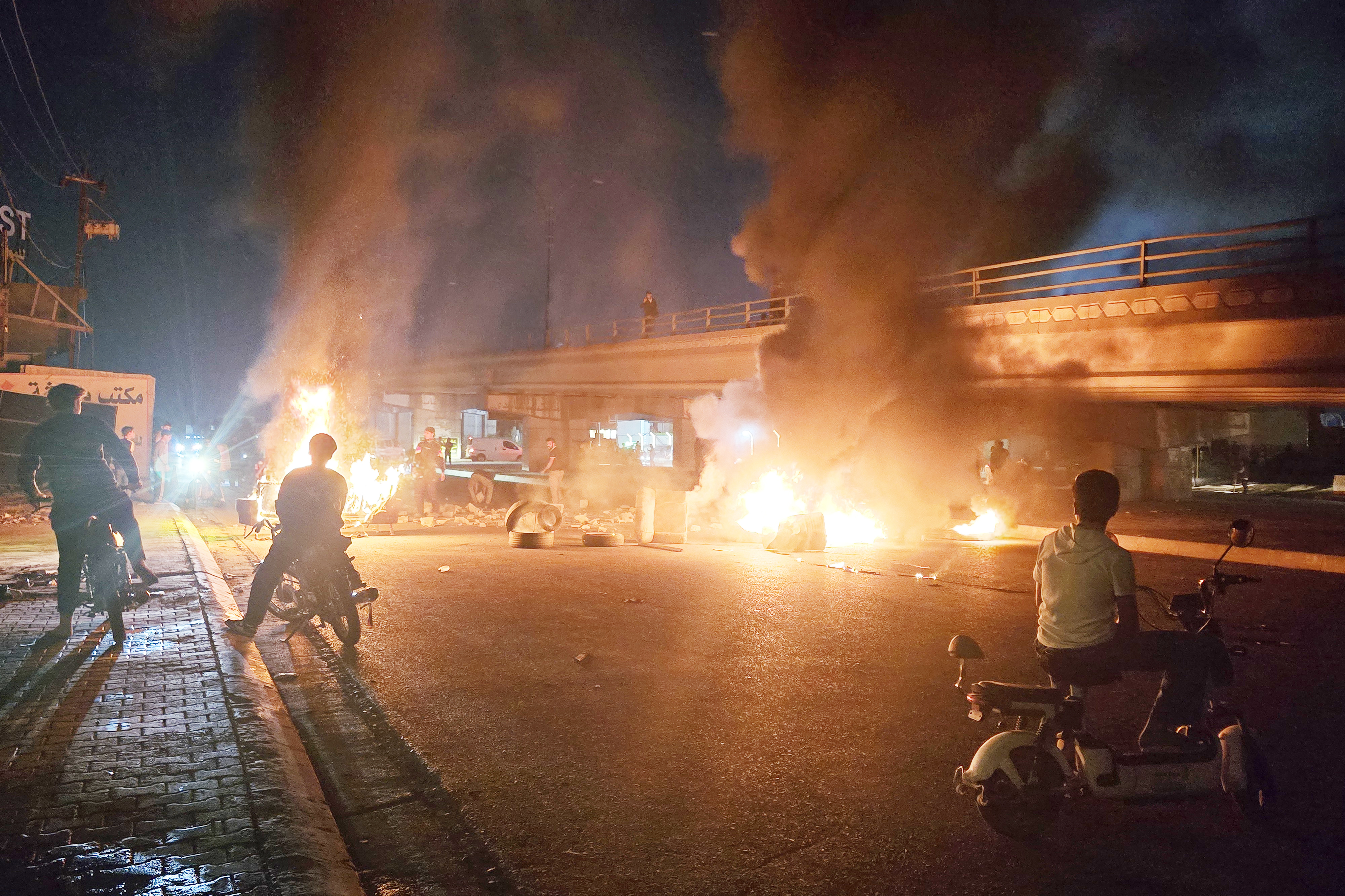

Two nights of public demonstrations over soaring electricity costs in Kirkuk have forced Baghdad to intervene, highlighting growing public frustration and the risk of further unrest if the crisis remains unresolved.
In response to the protests, the Iraqi federal government agreed to increase the oil-rich, multi-ethnic city’s national electricity supply by 150 megawatts and provide an additional five million litres of subsidised diesel for private generators. The measures paved the way for a reduction in the monthly generator subscription fee from 18,000 to 13,000 Iraqi dinars per ampere, offering protesters a temporary victory.
Public Anger Spreads Across Kirkuk
The demonstrations began after Kirkuk’s governor's office announced on the afternoon of November 1 that monthly subscriptions for private generator electricity would rise to 18,000 dinars.
The announcement quickly spread across social media, prompting residents in several Arab, Kurdish and Turkmen neighbourhoods to take to the streets that evening.
Protests intensified on the second night, with demonstrators blocking roads, burning tyres and chanting slogans against local authorities. Tensions escalated in some areas, prompting security forces to warn of the possibility of further unrest.
Ahmad Ramzi, a member of the Kirkuk Provincial Council, was among the first local officials to oppose the proposed increase, describing it as unacceptable and urging the federal government to intervene.
"Do not pay for the generators. Let them shut them down; we do not want them."
Residents also voiced their frustration over the growing financial burden. Mohammed Jalil, a teacher who joined the demonstrations in Shorija neighbourhood, said, “People had to stand up for their rights and our representatives in parliament and the provincial council to take a clear position.”
However, the Private Generators Association threatened to shut down the generators if the price dropped below IQD18,000.
Following the 1991 Gulf War, Iraq's infrastructure suffered significant damage, while the economic sanctions imposed on Saddam Hussein's regime further weakened the country's electricity system. Damage to transmission lines and substations left the state unable to provide adequate basic services.
Several years later, local authorities authorized the installation of private diesel generators in residential neighborhoods to help compensate for shortages in the national power supply. At the time, the state electricity network was able to meet only about half of the country's electricity demand, making private generators an essential source of power for many residents.
Fuel Shortages at the Heart of the Electricity Crisis
The immediate cause of the dispute is the shortage of subsidised fuel allocated to private electricity generators.
According to the association of private generator owners, the government supplies subsidized fuel at IQD450 per litre. However, the monthly allocation covers only around 10 days of generator operation.
For the remaining 20 days, operators are forced to purchase fuel from commercial markets at considerably higher prices. The cost of a barrel has reportedly climbed to approximately 270,000 dinars (IQD1,350 per litre), compared with 120,000 dinars at the beginning of the year.
The sharp increase in fuel expenses has placed additional pressure on generator operators, who have passed much of the burden on to consumers.
Under mounting public pressure, Kirkuk's administration initially lowered the proposed monthly subscription fee to 15,000 dinars. The decision failed to satisfy either residents or generator owners.
On November 2, the Kirkuk Provincial Council convened an emergency meeting and approved a further reduction, setting the monthly fee at 13,000 dinars.
Kirkuk requires more than 1,000 megawatts of electricity each day to meet the needs of its residents, but currently receives only 650 megawatts.
The northern, oil-rich, multi-ethnic Kirkuk Province, home to more than 2.34 million people, remains one of Iraq’s disputed territories between the federal government and the Kurdistan Regional Government. Its future status is tied to Article 140 of the Iraqi Constitution, which outlines a process involving normalization, census-taking, and public referendums.
Baghdad Steps In Amid Growing Security Concerns
As demonstrations expanded, concerns grew among security officials that the situation could develop into a wider public order crisis.
A source within the Kirkuk Police Command said security authorities had warned local officials and political parties that managing the demonstrations was becoming increasingly difficult.
There were also concerns that individuals from outside the province could exploit public dissatisfaction and use the protests to advance wider political agendas.
Following these warnings, political parties contacted their representatives in Baghdad and called for immediate federal intervention.
The federal government subsequently agreed to raise Kirkuk's national electricity allocation from 650 to 800 megawatts, adding 150 megawatts to the province's supply.
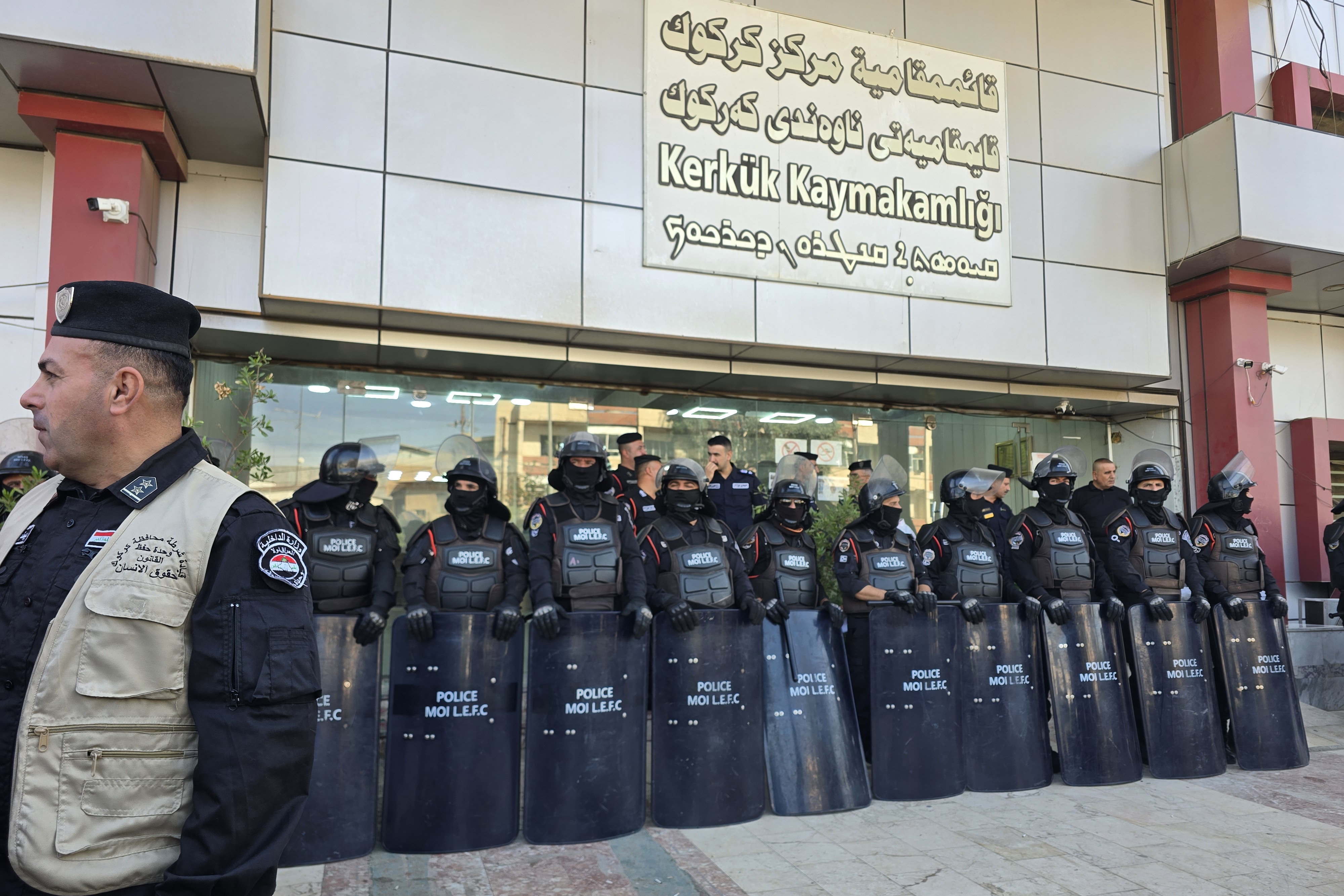
At the same time, security forces took measures to contain the demonstrations. A security source confirmed that 15 protesters had been detained over allegations of damaging public property, including setting fires and vandalising public facilities.
Forces from the Joint Operations Command were also deployed alongside local police to restore order.
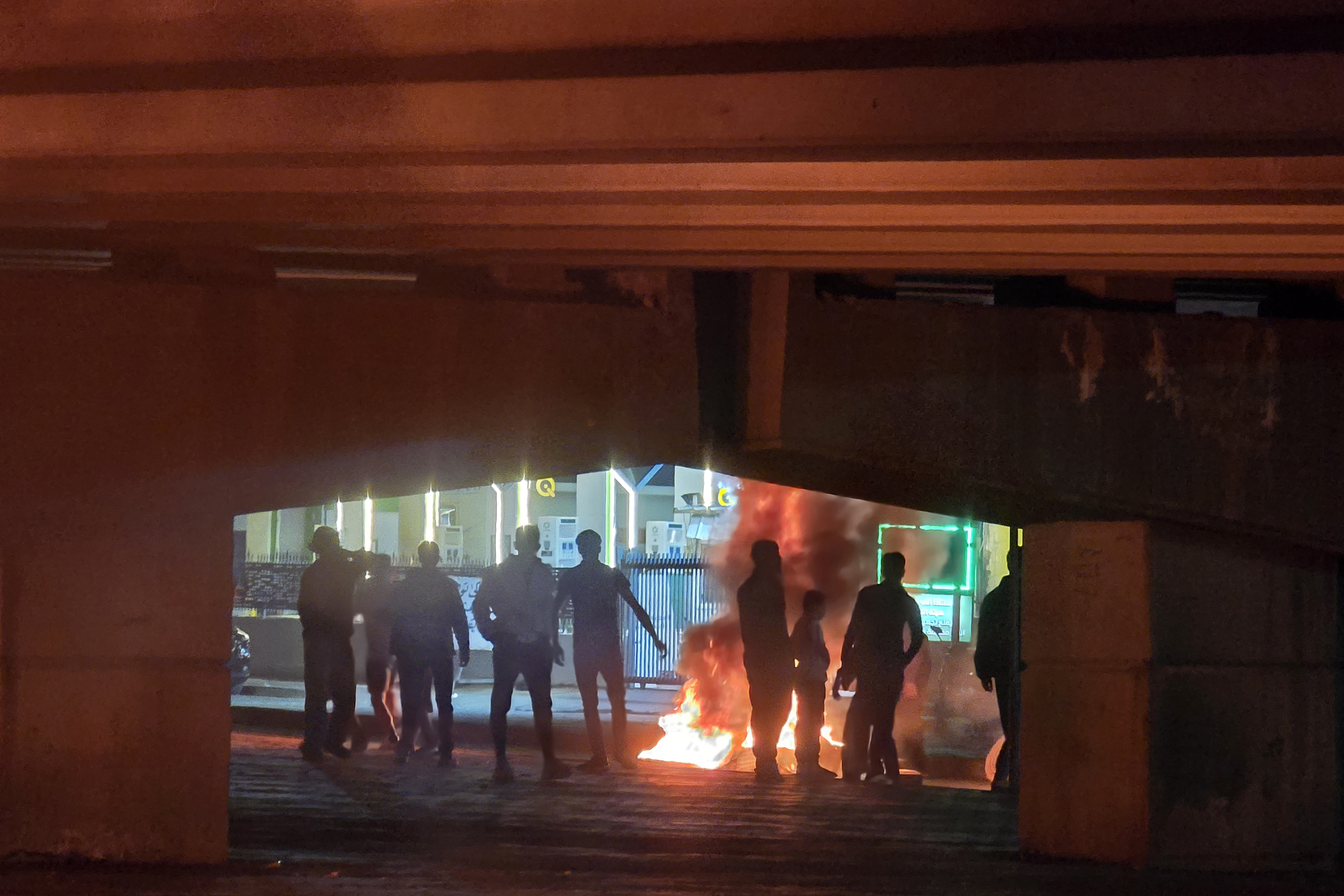
Kirkuk, November 2, 2026: Protesters set fire and disrupted traffic. Ahmed Kirkuki
Electricity Dispute Exposes Kirkuk's Political Uncertainty
Beyond the immediate electricity crisis, the protests have brought renewed attention to the unresolved political and administrative situation surrounding Kirkuk's governorship.
Mohammed Samaan, who was appointed Minister of State in the Iraqi federal government, has yet to formally relinquish his position as Kirkuk governor. This situation has contributed to administrative uncertainty and raised questions about the province's political leadership.
As the demonstrations gained momentum, Samaan suggested that some parties might be seeking to use the protests to undermine the Turkmen role in Kirkuk's administration.
Nevertheless, he acknowledged that “the electricity crisis was rooted in insufficient national power supplies and inadequate fuel allocations for private generators.”
“Peaceful demonstrations are constitutionally protected, provided that protesters respect public and private property and refrain from attacking security personnel.”
Meanwhile, the Iraqi Prime Minister's office called for the process of selecting a new governor to be accelerated in order to bring an end to the administrative uncertainty.
Prime Minister Announces Emergency Measures
On Tuesday afternoon, Iraqi Prime Minister Ali al-Zaidi met with Kirkuk representatives in the federal government and parliament to discuss the worsening electricity situation.
Following the meeting, he announced two key measures aimed at easing the crisis: an additional five million litres of fuel to support private electricity generation in Kirkuk and an increase of 150 megawatts in the province's national electricity allocation.
The government also announced plans to create employment opportunities for Kirkuk residents through foreign companies operating in the province, according to Justice Minister Khalid Shuwani.
The announcements represented a direct response to the demands raised during the demonstrations, although questions remain about how long the additional support can be maintained.
Temporary Relief, but Long-Term Questions Remain
Despite the federal government's intervention, the underlying electricity problem has yet to be resolved.
At a subsequent meeting attended by representatives of Kirkuk's administration, security officials and private generator owners, an agreement was reached to set the monthly subscription fee at 13,000 dinars per ampere for the current month.
However, the arrangement has raised further questions about the actual cost residents may eventually have to bear.
Although households are currently being asked to pay 13,000 dinars, the official calculation reportedly puts the subscription price at 24,000 dinars per ampere. The remaining 11,000 dinars is being recorded as outstanding debt.
It remains uncertain whether residents will eventually be required to settle this amount.
The protests in Kirkuk have opened a new chapter in the ongoing administrative vacuum surrounding the governor’s position. Although Mohammed Samaan was sworn in as Minister of State last month, he has yet to relinquish his position as governor.
“There is an urgent need to accelerate the process of electing a governor for Kirkuk and put an end to the administrative vacuum,” Zaidi’s office said in a statement.
“When a guest visits Kirkuk, many people come forward, arguing that Mohammed Samaan should not receive them because he is no longer the governor but a minister. However, when a crisis occurs, everyone expects me to resolve it in my capacity as governor,” he said.
“The electricity crisis in Kirkuk has not yet been fully resolved. We need to determine how long the Iraqi government will continue supplying Kirkuk with 150 amps of electricity,” an administrative source at the governor’s office said.
“The increase has only been in place for a few months. Whenever the issue of restoring the 11,000 dinar tariff comes up again, we fear that protests will resume. Therefore, a permanent solution must be found.”
The latest demonstrations have demonstrated the influence of public pressure on government decisions. However, the bigger challenge remains: ensuring that residents are not once again confronted with higher generator bills when the current emergency measures come to an end.