



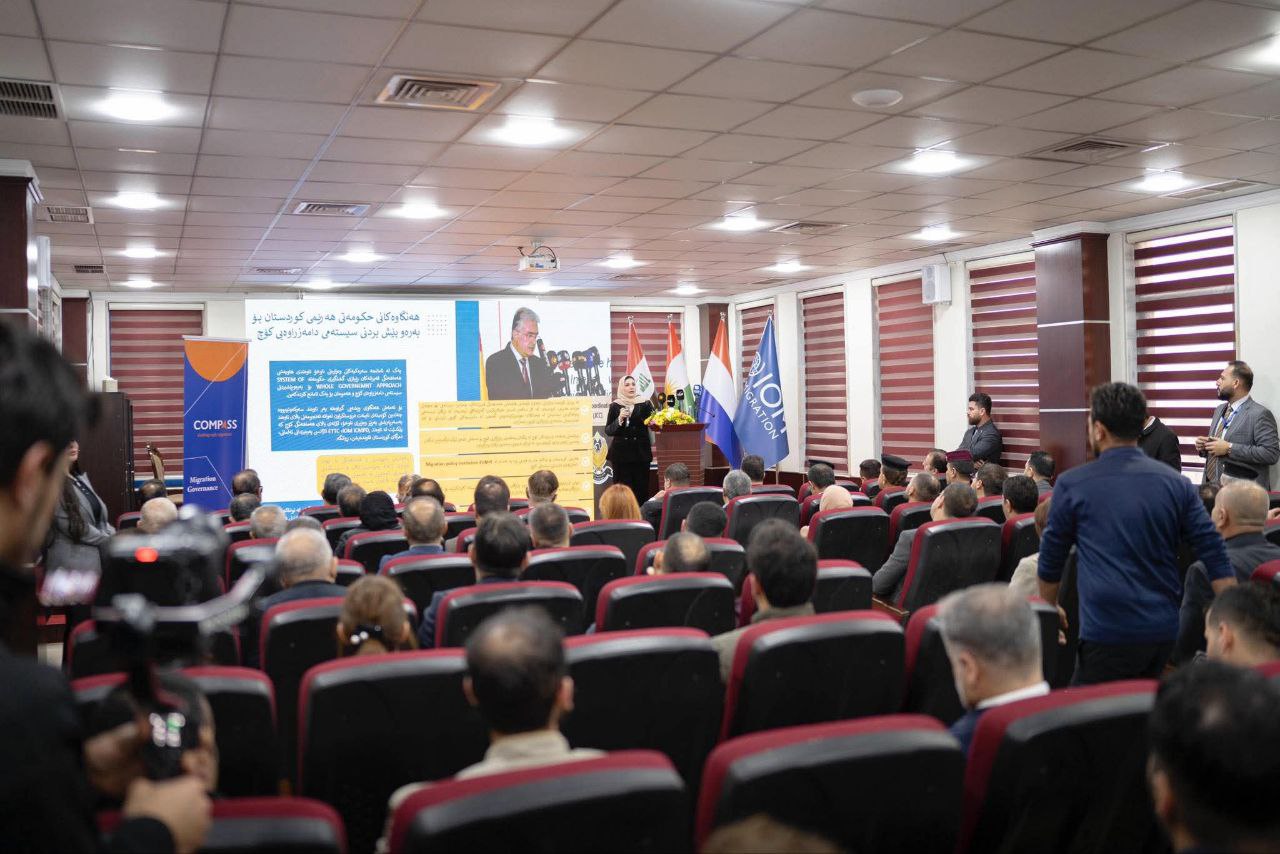

The National Referral Program is a newly established migration management initiative intended to provide employment opportunities and essential services for Iraqi refugees deported from European countries.
The initiative coincides with the German government’s announced plan to deport approximately 20,000 Iraqi refugees, the majority of whom are Ezidis (Yazidis).
On January 14, 2026, the program’s office was officially inaugurated in Duhok northern province with the support of the International Organization for Migration (IOM). The program seeks to facilitate employment, humanitarian assistance, and social reintegration for deportees returning to Iraq.
According to Pir Dayan Jafar, Director of the Department of Migration, Displacement, and Crisis Response within the Kurdistan Regional Government KRG, the office is headquartered within the department and serves two primary functions: registering returnees and identifying suitable employment opportunities for them.
He explained that the office will collaborate with relevant organizations and private-sector actors, including companies, factories, and businessmen, to help returnees reintegrate into society and secure sustainable livelihoods.
“Employment opportunities will be allocated based on individuals’ skills and professional capacities for those registered,” he added.
The establishment of the office follows official notification from the German government regarding its intention to deport approximately 20,000 Iraqi refugees, most of whom previously resided in Shingal (Sinjar) and displacement camps, as stated by Jafar last month.
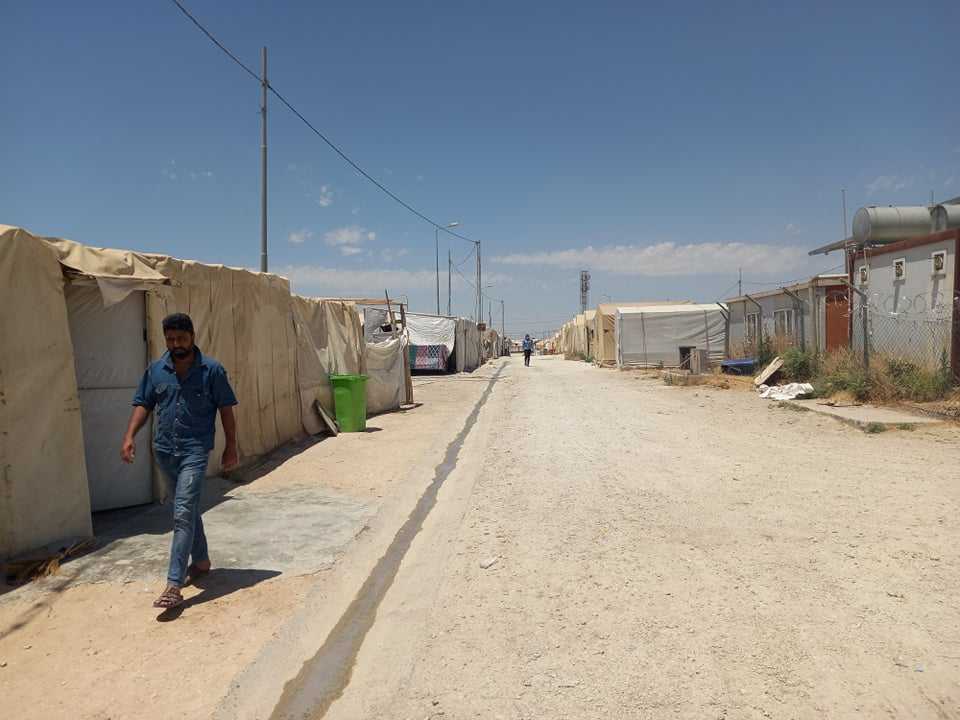
Dasen Shukri Rashid, a 30-year-old deportee who returned to Iraq in February 2025 after spending five years in Germany, welcomed the initiative, expressing hope that it would address the economic and living conditions of returnees.
Currently residing in the Shingal district, he works in a school cafe for a daily wage of 10,000 Iraqi dinars (USD7), which he described as insufficient to meet basic needs.
"When I immigrated to Germany, I didn't think about returning. There are thousands like me living in miserable conditions. They are forcibly returning us to Iraq."
Germany, long regarded as a destination for refugees, has intensified deportation measures against Iraqi nationals in recent years. Unofficial figures suggest that nearly 500 Ezidis have been deported over the past four years. Many returnees struggle to secure employment amid widespread unemployment, while others experience severe psychological distress.
Jafar concluded by stating that the National Referral Office remains open to all returnees, acknowledging the sacrifices they made in pursuit of safety and stability in Europe and the challenges they now confront upon their return.