



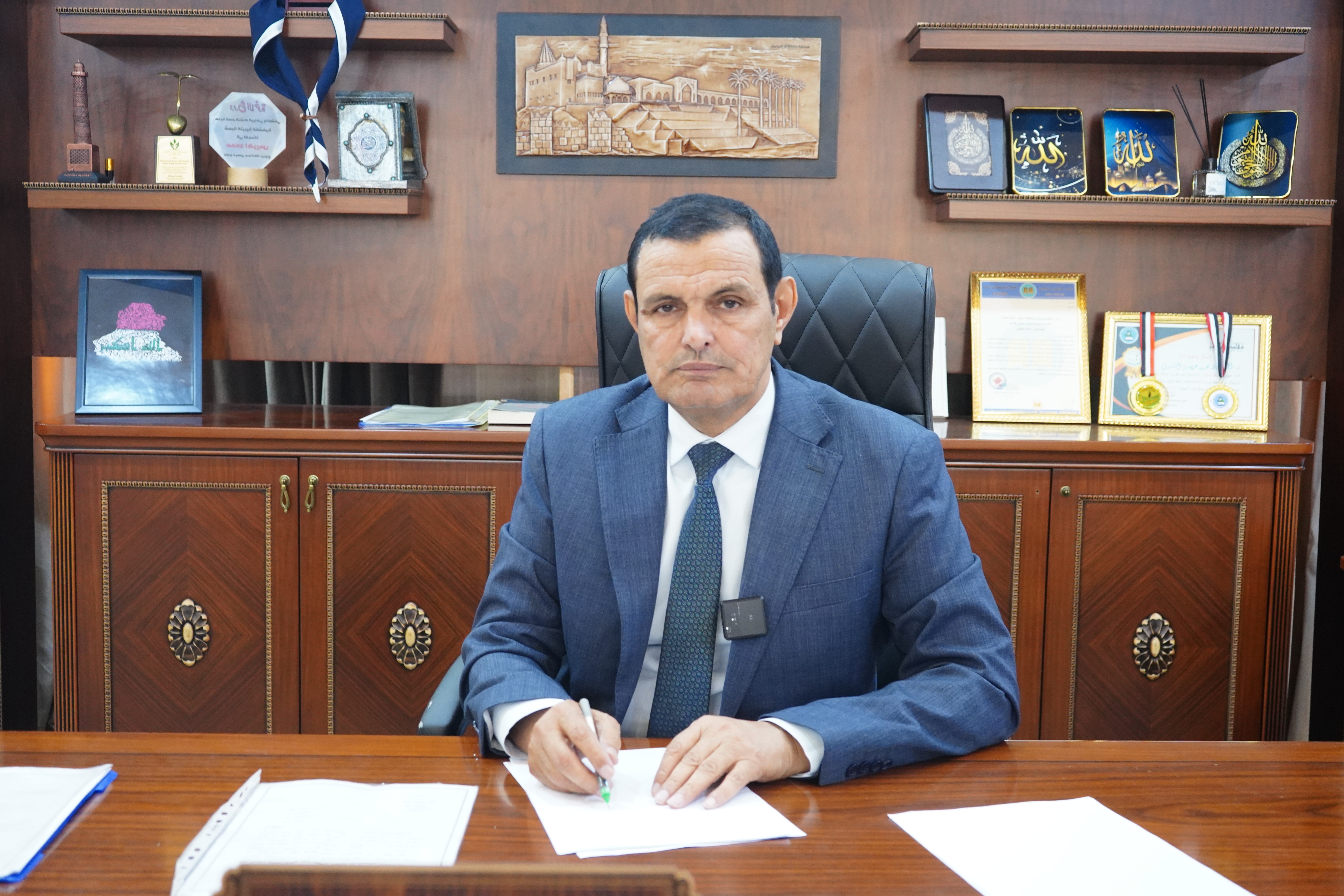

Nineveh Provincial Council member Mohammed Ahris says the province has completed around 145 previously stalled projects since the current local administration took office. However, he warned that the absence of federal funding and unresolved political disputes continue to obstruct reconstruction in Sinjar, delay compensation for conflict victims, and prevent nearly 200,000 displaced people from returning home.
In an interview with KirkukNow, Ahris discussed the council's legislative and oversight role, reconstruction efforts, ongoing political disagreements over local administrations, the challenges facing displaced communities, and measures taken to address corruption and administrative negligence.
Completing Stalled Projects
Asked to assess the council's performance since its formation, Ahris said cooperation between the provincial council and the local government has enabled the completion of nearly all previously suspended projects.
"The Provincial Council consists of several political parties and blocs, but none has obstructed projects in the province," he said. "Of the 148 stalled projects, only two or three remained incomplete, and these have now been finalized since the council and the governor assumed office."
He noted that several major projects remain under the responsibility of federal ministries, including the 400-bed German Hospital in Mosul, projects in Al-Ayadiyah, and sewage networks on both sides of the city.
"The Provincial Council continues to follow up with the relevant ministries, but these projects remain suspended because of insufficient funding—or what the ministries describe as a lack of funding," he said, expressing hope they would eventually move forward.
Reconstruction in Sinjar continues to face significant security and legal obstacles
Budget Shortfalls and Regional Disparities
Responding to concerns about uneven reconstruction between Mosul and districts such as Shingal (Sinjar), home to Ezidi (Yazidi) community, and the Nineveh Plain, Ahris said the province has not received its federal budgets for 2024 and 2025.
"Nineveh has relied on previous budget allocations," he said. "Many government and NGO projects did not reach western Nineveh because of terrorism and other security challenges. Only after the area's liberation were government institutions and aid organizations able to begin implementing projects."
“Reconstruction in Sinjar continues to face significant security and legal obstacles.”
Remaining Suspended Projects
Ahris estimated that about seven projects remain stalled, including the Sports City in Mosul's Cairo neighborhood, stadiums in Sinjar, Tal Afar, and Qayyarah, a social club in Mosul's Mansour district, and the German Hospital.
According to Ahris, these projects have been raised with the Prime Minister, the Minister of Health, and successive federal governments.
Oversight of Public Spending
On financial oversight, Ahris said “Each project data is submitted to both the Provincial Council and the governor before being approved.”
"All information is presented to the council, voted on, approved by the governor, and implemented according to the allocated budget," he said.
Nearly 200,000 People Still Displaced
Ahris acknowledged that displacement remains one of Nineveh's most pressing challenges.
"There are currently around 200,000 displaced people from Nineveh, most of them from Sinjar," he said. "Arab families are largely living in Mosul, while many Yazidis remain in Duhok and other cities in the Kurdistan Region."
He said their return depends on improved security, the withdrawal of armed groups from certain areas, and the restoration of essential public services.
In Rabia sub-district, he added, residents of five villages remain outside Nineveh's security control and continue to face severe hardship.
Compensation Still Awaiting Federal Action
Regarding compensation for families affected by conflict, Ahris said responsibility lies with the federal government.
"The compensation file has not yet reached Nineveh, even though most of the paperwork was completed in 2021," he said.
Sinjar's Administrative Deadlock
Ahris said the Provincial Council has voted on administrative arrangements for Sinjar but that implementation remains blocked by political disagreements.
"There are political issues that require agreement before the administration can be unified," he said.
Representation and Political Disputes
When asked about ensuring fair representation for all communities, Ahris said Iraq's Constitution already guarantees the participation of all ethnic and religious groups in local government and parliament.
Addressing months-long disputes within the Provincial Council, he argued that political disagreements had not affected development projects.
"These disputes did not halt any projects or hinder Nineveh's development," he said.
The Provincial Council summoned several officials and department directors, and voted to dismiss a number of them
Corruption Complaints and Administrative Accountability
Ahris said the council receives citizens' complaints daily and forwards them to the relevant committees for review.
He also cited several examples of accountability measures.
"The Provincial Council summoned several officials and department directors, and voted to dismiss a number of them, including the Director of Health," he said. "Assistant directors and several heads of administrative units were also replaced."