



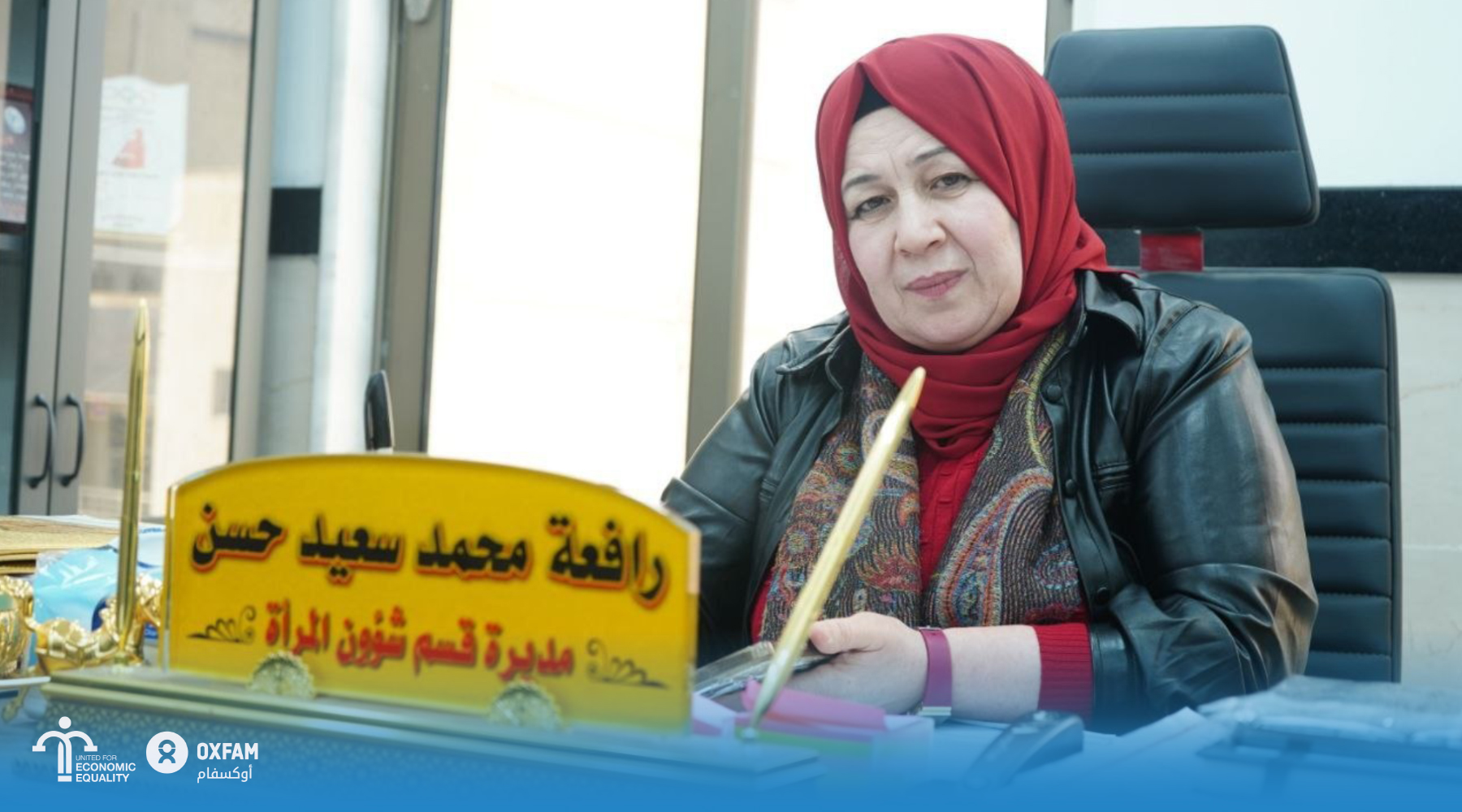

Years of conflict in Nineveh transformed the role of women in society. Many who had traditionally been responsible for managing their households suddenly became the primary providers for their families after the war. Yet despite this profound shift, women in the province continue to face significant economic barriers, including restrictive social norms, bureaucratic obstacles to registering businesses, and limited access to social protection.
In an interview with KirkukNow, Rafia Mohammed Saeed, Head of the Women's Affairs Department at the Nineveh Governorate Office, said her department has operated for the past seven years without receiving any financial support from the federal government.
"We have not received a single dinar in funding," she said, explaining that the department has relied almost entirely on self-financing and volunteer efforts.
She discussed the realities of women's economic participation in post-conflict Nineveh, the financial and administrative challenges facing institutions that support women, and the policies needed to expand opportunities for female entrepreneurs and vulnerable groups.
Female Entrepreneurs Face Administrative Obstacles
KirkukNow: How would you describe the current state of economic inequality affecting women in Nineveh? Are there indicators that illustrate the scale of the gap in urban and rural areas?
Rafia Mohammed: Women's economic participation is closely tied to the availability of funding. There is a shortage of financial support for women's businesses, limited employment opportunities, and social barriers that restrict women from entering certain professions.
Women also encounter difficulties when registering their businesses. Many are unable to obtain social security coverage or official recognition, making it harder to access opportunities and grow their enterprises. Even women who display their products in parks or public spaces often struggle to secure the necessary permits from government institutions.
Women Became Family Providers After the War
KirkukNow: Which groups of women are now the most economically vulnerable, particularly among displaced women, returnees, and female-headed households?
Rafia Mohammed: All of these groups have been deeply affected. The war dramatically changed women's responsibilities. Many suddenly became the sole providers for their families after previously focusing primarily on household duties.
Today, women need greater access to employment and entrepreneurship opportunities. At the same time, society must address cultural restrictions that discourage women from working, as these continue to limit their economic participation.
Women's Affairs Department Operating Without Government Funding
KirkukNow: What role does the Women's Affairs Department play in promoting women's economic empowerment? Does it have sufficient authority and resources?
Rafia Mohammed: Our role is primarily one of planning and coordination. We prepare annual strategies covering women's economic participation, social issues, political engagement, domestic violence, climate change, and preventing extremism.
However, funding remains our greatest challenge. For seven consecutive years, women's affairs departments have functioned without any government budget.
Previously, international organizations provided meaningful support, but that assistance has declined significantly. Today, very few organizations remain active.
The federal government should allocate dedicated funding for women's affairs departments and expand their authority so they can better serve women across multiple sectors.
Women's Needs Must Be Integrated into Development Plans
KirkukNow: To what extent are women's economic needs reflected in Nineveh's development and investment plans?
Rafia Mohammed: Women's concerns are considered to some degree, but not sufficiently.
Nineveh needs development strategies that actively integrate women into economic growth. Many women have successfully established small businesses despite difficult circumstances. Their participation should be expanded across all investment sectors; particularly as sustainable development becomes an increasing priority.
Measuring Progress Through Jobs and Businesses
KirkukNow: What are your priorities for reducing the economic gap between women and men?
Rafia Mohammed: Our priority is to design practical programs that place only a limited financial burden on government institutions while expanding women's opportunities.
We are focusing on awareness campaigns, skills development, vocational training, and annual plans that strengthen women's participation in the economy.
Although women are already involved in larger economic projects, their participation remains limited. We hope to see many more employment opportunities created.
The success of these initiatives can be measured by the number of women who benefit, the businesses established, and the broader contribution these projects make to economic development.
We also hope the new government will give greater priority to women's affairs across Iraq's provinces, especially in Nineveh, where women continue to require substantial support.
Stories of Resilience
KirkukNow: Have you witnessed success stories that demonstrate both the challenges women face and their ability to overcome them?
Rafia Mohammed: There are many inspiring examples.
Some women with disabilities have overcome tremendous obstacles and now operate successful businesses. Others survived domestic violence and even reached the point of contemplating suicide before receiving support that transformed their lives.
Today, some of those same women hold professional and managerial positions while continuing to develop their skills and careers.
These successes benefit not only individual women but society as a whole.
Decision-makers in Baghdad must recognize the value of investing in women's potential and ensure they are fully included in Iraq's economic development and long-term sustainability efforts.