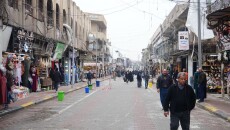



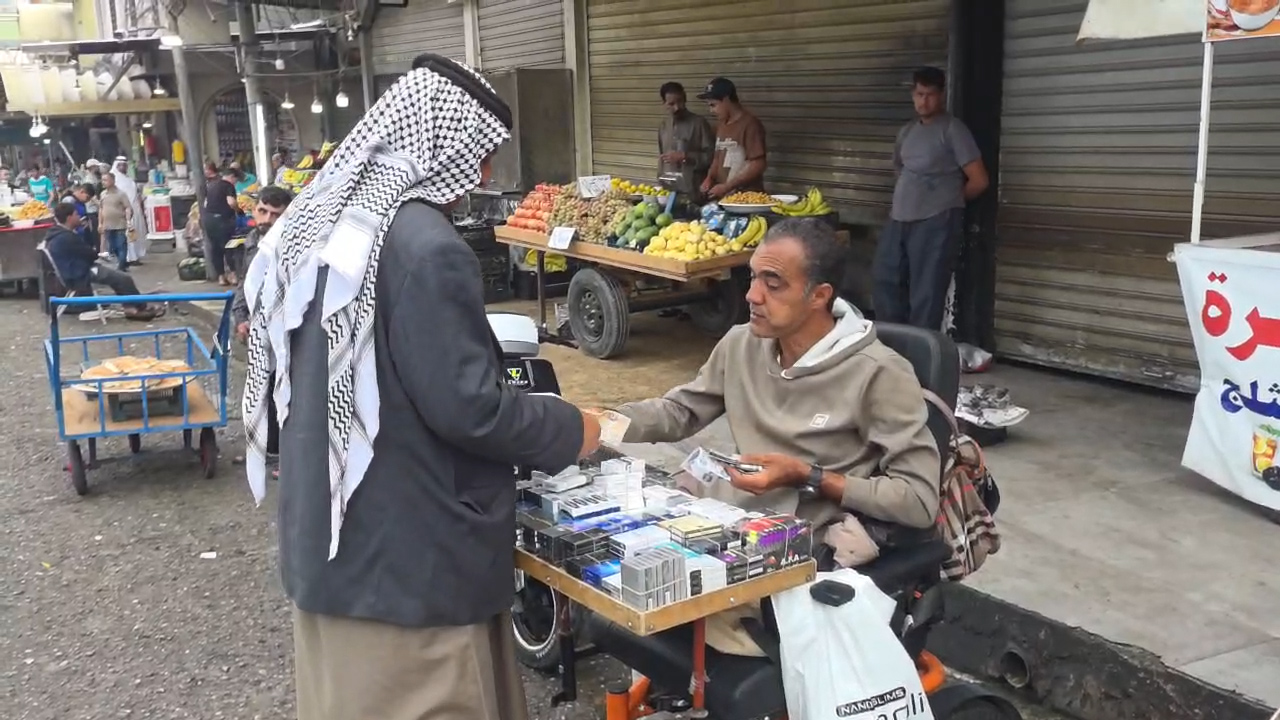

Abu Abdullah, a retired resident of Mosul who receives his pension in Iraqi dinars IQD, considers himself among the biggest losers from the recent exchange rate change. As the prices of imported goods rise, he says, his purchasing power is shrinking, making it increasingly difficult to afford everyday necessities.
“Since the exchange rate changed, the prices of everything have gone up. Some basic necessities are no longer affordable, including fruits, meat, and many other items,” Abu Abdullah said, expressing his anger over the decision to adjust the dinar’s value against the US dollar.
On October 7, 2026, the Iraqi Council of Ministers approved a change to the dinar-dollar exchange rate, increasing the cost of purchasing US dollars by 20,000 IQD per $100 compared with the previous official rate. The decision triggered uncertainty across the markets, particularly in the currency exchange sector.
Authorities have justified the measure as part of efforts to address a substantial budget deficit. Iraq has suffered a significant decline in oil revenues amid tensions in the Strait of Hormuz following the war involving Iran, the United States, and Israel, which have disrupted the country’s principal oil export route.
The Dollar Officially Rises to IQD152,000
Under the new exchange rate, $100 is priced at IQD152,000, compared with the previous official rate of 132,000.
The gap between the official exchange rate and the market rate had already been considerable. When the official rate stood at 132,000, the same amount was traded on the market for approximately 150,000. Following the latest decision, market prices became increasingly volatile as Dolar hit IQD185,000.
The Iraqi government and the Central Bank say the exchange rate adjustment is intended to mitigate the effects of regional and international crises while maintaining financial and liquidity stability.
According to a Central Bank statement, the decision is intended to support the national economy and citizens by encouraging domestic production and industry.
The Central Bank CBI argues that the measure could improve the competitiveness of domestically produced goods against imports, encourage industrial expansion, support the establishment of factories, and create a more favorable investment climate. These developments, it says, could generate employment opportunities for young people and help reduce unemployment.
This is not the first time Iraq has adjusted its exchange rate. In 2020, the official price of $100 was raised from 120,000 to 147,000.
Public Anger Grows as Markets Become Unstable
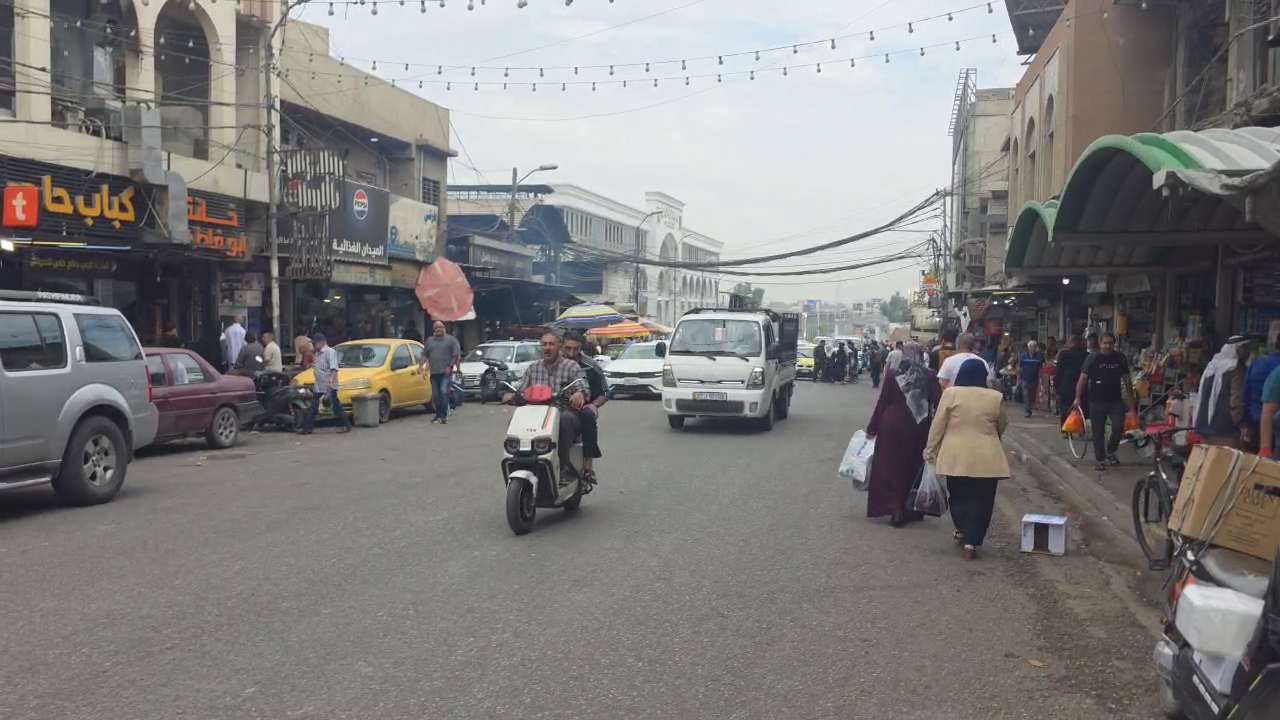
Following the announcement of the latest decision, markets experienced considerable uncertainty, particularly in currency trading. In Mosul, the selling price of $100 exceeded 170,000, while prices in some other provinces reportedly rose above 185,000 dinars.
According to KirkukNow, the exchange rate fluctuations have also affected the prices of everyday necessities, particularly food, electrical appliances, and electronic products, most of which are imported and priced in dollars.
Frustrated by the rising cost of household goods, Abu Abdullah raised a bag containing a can of tahini, known locally as rashi, and complained about the price increases.
“People, even rashi—which used to be food for the poor—is becoming food for kings and the rich,” he said.
Abu Abdullah receives a monthly pension of less than IQD600,000, of which more than 400,000 goes toward medication and medical expenses. He must also cover the costs of electricity from private generators and other basic necessities.
“The price of a kilogram of meat has reached 20,000 dinars,” he said.
Public frustration has extended beyond markets and streets to social media, where people have shared critical posts, videos, satirical comments, and expressions of anger since the decision was announced on October 7.
Mohammed Ghasoub, who spoke to KirkukNow and identified himself as a political observer, argued that the decision contradicts the commitments made by government officials and parliamentarians to protect citizens’ interests. He believes the measure serves political interests at the expense of ordinary people.
You are starving the nation
“You are now destroying the nation. In this difficult economic situation, by raising the value of the dollar, you are starving the nation,” Ghasoub said, addressing senior Iraqi officials.
The public anger comes amid a broader financial crisis in Iraq that has already halted spending on provincial development budgets, stalled numerous projects, and contributed to delays in salary payments in recent months.
What Do Parliament and the Government Promise?
While the government maintains that the exchange rate adjustment is intended to strengthen the economy and encourage domestic production, lawmakers are calling for concrete measures to ensure that these objectives benefit the public.
They argue that the policy must be accompanied by effective price controls and uninterrupted supplies of essential goods, particularly food and medicine.
Yousef Kilabi, a member of the Iraqi Parliament’s Finance Committee, said at a press conference that the government is facing a difficult financial situation and is struggling to secure the funds needed to pay salaries.
Parliament and the government are currently discussing the budget bill, which is expected to establish the exchange rate to be used in the budget, a decision that could influence market stability.
Mazhar Mohammed Saleh, the prime minister’s financial adviser, defended the exchange rate adjustment, describing it as a precautionary measure designed to preserve economic and financial stability amid the impact of regional and international crises on oil exports and public revenues, according to the semi-official Iraqi News Agency INA.
He also stressed that the change should not be interpreted as evidence of a worsening economic situation. Rather, he said, the objective is to create a financial and liquidity buffer that would help the country respond to potential disruptions affecting its foreign currency resources.
Since February, the dispute surrounding the Strait of Hormuz has disrupted approximately 85% of Iraq’s oil exports, which account for around 90% of the country’s public revenues.
Nawar Saadi, expert of International Economy, argues that monetary policy alone cannot resolve Iraq’s financial difficulties. He told Iraqi daily Sabah that addressing the liquidity crisis must be accompanied by broader economic reforms, including controlling government expenditure, improving tax collection, combating customs evasion, supporting the private sector, and expanding domestic production.
Without such complementary measures, Saadi cautioned,” the burden of addressing the country’s financial problems risks falling disproportionately on ordinary people.”