



The state-owned Northern Oil Company (NOC), which oversees Kirkuk’s major oil fields, has appointed Faisal Hammadi al-Jibouri as its new director, replacing Amer al-Muhairi. His appointment comes at a time when the company faces significant operational and political challenges, including renewed debates over balanced ethnic representation in government institutions across Kirkuk.
Background of the New Director
Faisal Hammadi officially assumed his position on June 14. According to a source within the Kirkuk provincial administration, he is considered close to the Taqadum Party, led by Mohammed al-Halbusi. The party currently plays a key role in Kirkuk’s local government alongside the Patriotic Union of Kurdistan (PUK) and the Iraqi Turkmen Front ITF.
An Arab from the Hawija district southwest of Kirkuk, Hammadi has spent nearly 30 years working within the Northern Oil Company. A trained engineer, he has held several senior positions during his career, including serving as chairman of the company’s board.
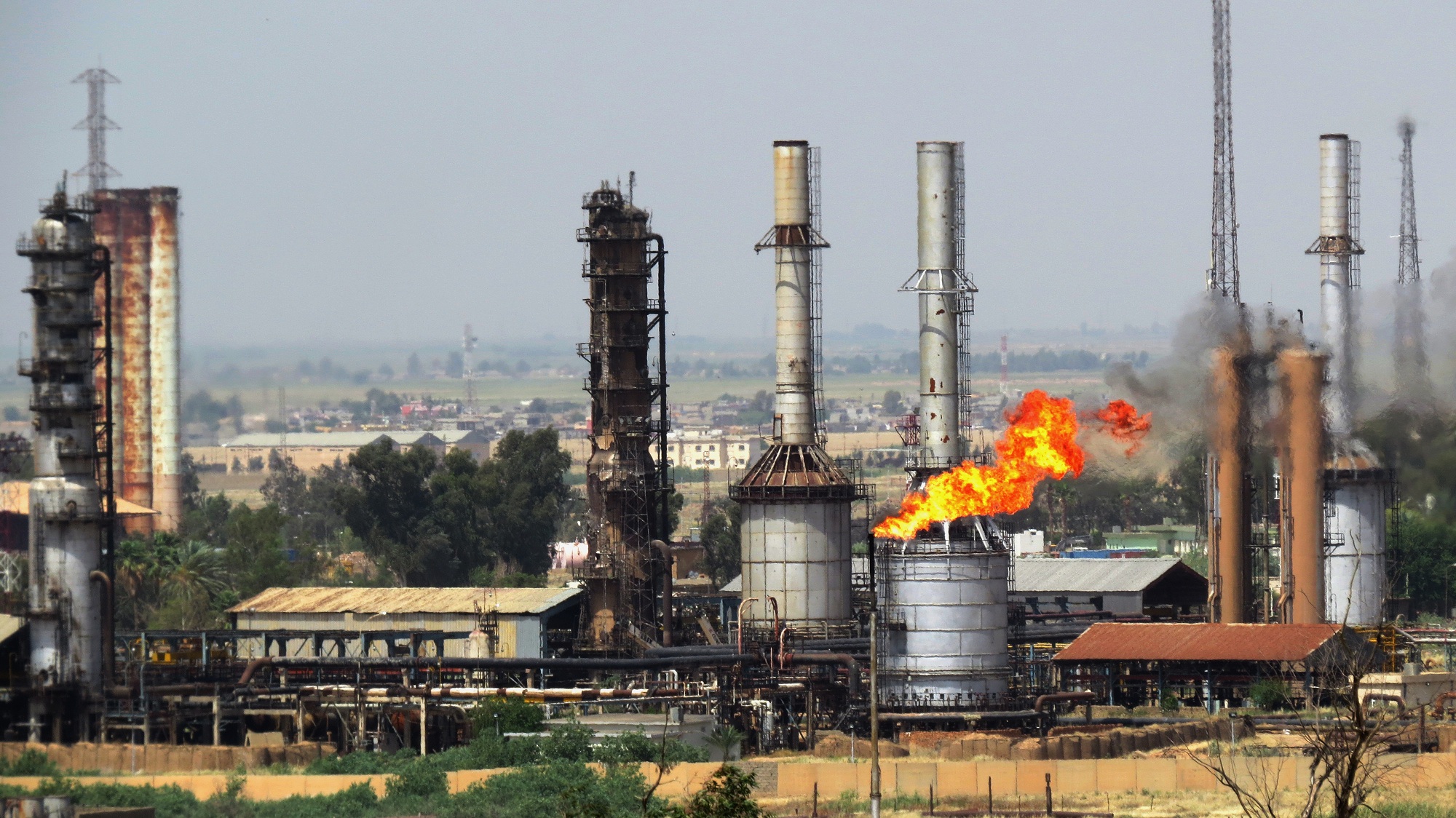
The Northern Oil Company manages five major oil fields in Kirkuk province: Avana, Bai Hassan, Qubba Baba, Jambur, and Khabaza.
Debate Over Ethnic Representation Returns
Hammadi’s appointment coincides with renewed discussions about ethnic balance within Kirkuk’s government institutions. Members of the provincial council are calling for corrective measures to ensure fair representation among the province’s communities.
The Northern Oil Company employs approximately 17,000 workers, including contract staff. The distribution of jobs among Arabs, Kurds, and Turkmen has long been a contentious issue.
According to Sirwan Mustafa, a geological engineer and oil expert, fewer than 1,000 Kurdish employees work at the company, representing less than 10% of the total workforce.
“Most employees and senior officials in the company are Arabs, followed by Turkmen and then Kurds,” Mustafa said.
The issue of representation has also emerged in other government sectors. Recently, Iraqi parliament member Muhaimen Hamdani secured approval to form a committee to examine workforce balance within Kirkuk’s Health Directorate. According to figures cited by Hamdani, leadership positions there are distributed as follows: 54% Turkmen, 39% Kurds, and 7% Arabs.
The discussion sparked reactions from the Iraqi Turkmen Front ITF. Provincial council member Ahmed Ramzi welcomed efforts to address imbalances but argued that reviews should extend to all major institutions in Kirkuk.
“The Health Directorate is largely controlled by Turkmen, the police command by Arabs, and the municipality by Kurds,” Ramzi stated.
Meanwhile, Abdullah Mirwais, head of the PUK bloc in the provincial council, emphasized that the issue should be addressed locally rather than through Baghdad.
“When discussing balance, all departments must be considered,” he said, noting the low percentage of Kurdish employees in the Northern Oil Company. He added that restoring balance would be difficult but remains an important local issue.
Challenges Facing the New Administration
Hammadi takes charge at a difficult time for the company. Among the most pressing concerns are repeated attacks and encroachments on oil infrastructure, as well as uncertainty surrounding security arrangements after the planned transfer of responsibilities from the Iraqi Army to the Ministry of Interior.
The Iraqi Ministry of Oil reports that the Kirkuk–Ceyhan oil pipeline has been targeted or illegally tapped roughly 4,000 times over the years by terrorist organizations and other armed groups.
Although the pipeline returned to Iraqi government control in 2018, restoration efforts have progressed slowly.
Experts note that repairing damaged oil infrastructure requires specialized technical knowledge, skilled labor, significant resources, and substantial funding.
Illegal activities around oil fields continue to pose a major challenge. While officials rarely identify perpetrators publicly, industry experts believe organized groups are involved in many cases.
“People working in the oil sector know the reality of the encroachments on oil fields, wells, and pipelines,” one expert explained.
Unauthorized drilling and pipeline tapping require advanced expertise and carry serious risks, including fires, gas explosions, and electrical accidents.
Currently, oil infrastructure is protected by a combination of army units, police forces, and the Popular Mobilization Forces PMF known as (Hashd al-Shaabi). If security responsibilities are transferred to the Ministry of Interior, the police will assume primary responsibility for protecting the pipelines and facilities.
Supporters of the transfer argue that it would allow the army to focus on securing provincial borders, while placing internal security under civilian authorities.
As a result, Faisal Hammadi begins his tenure facing a complex mix of operational, security, and political challenges that will shape the future of Kirkuk’s most important oil company.